
The old gatekeepers are losing their grip, and it’s about time.
For generations, minority creators had to beg for permission to tell their stories. We had to water ourselves down, code-switch, and squeeze into boxes that were never designed to fit us. The message was clear: you can participate in the culture, but only if you play by their rules.
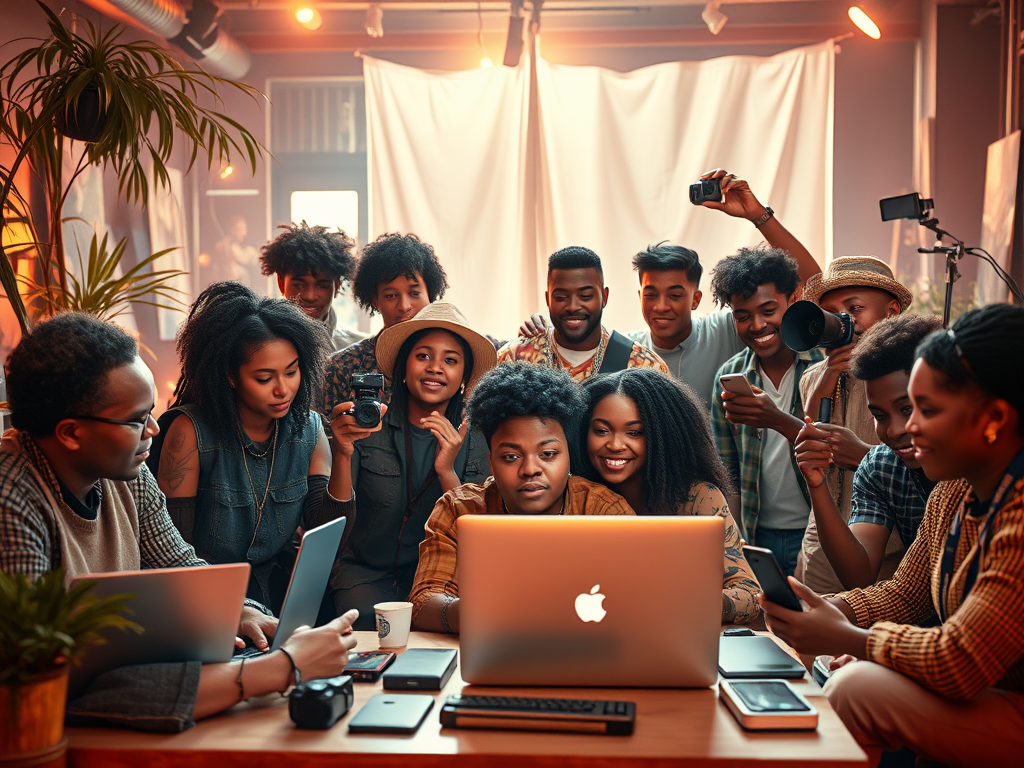
But digital platforms, social media, and the creator economy have blown those doors wide open. Now, minority creators are building empires from their bedrooms, garages, and group chats—no permission required.
The DIY Revolution
YouTube changed everything. Suddenly, you didn’t need a Hollywood executive to greenlight your show or a record label to distribute your music. You needed a camera, an internet connection, and something to say.
Early minority YouTubers understood this instantly. Creators like Ryan Higa, Superwoman (Lilly Singh), and Franchesca Ramsey built audiences in the millions by making content that traditional media would have dismissed as “too niche” or “not mainstream enough.”
They weren’t trying to be mainstream. They were creating for communities that had been ignored, and those communities showed up in force.
The same pattern played out across platforms. Wong Fu Productions pioneered Asian American storytelling on YouTube before Hollywood even pretended to care about representation. Spoken word poets like Rudy Francisco and Sarah Kay turned performance art into millions of views. Beauty YouTubers like Jackie Aina and Patrick Starrr didn’t just review makeup—they challenged an entire industry’s exclusionary standards.
Building Without Permission
What’s powerful about this shift is that it’s happening across every creative field.
In music, artists like Chance the Rapper proved you could become a Grammy-winning superstar without a record label. Bad Bunny became the most-streamed artist in the world while singing primarily in Spanish. Steve Lacy famously produced early hits on his iPhone.
In fashion, designers like Telfar Clemens and Kerby Jean-Raymond (Pyer Moss) built cult followings by staying true to their communities rather than chasing luxury fashion’s approval. Aurora James created the 15 Percent Pledge, leveraging her platform to force major retailers to commit shelf space to Black-owned businesses.
In literature, minority authors are increasingly choosing to self-publish or start their own imprints rather than navigate the predominantly white traditional publishing industry. They’re finding that direct connection with readers—through social media, Substack, Patreon—can be more sustainable and creatively fulfilling than the old model.
The Platform Economy’s Double-Edged Sword
Let’s be honest though: while platforms democratized access, they didn’t eliminate inequality.
Algorithms still favor certain voices, faces, and perspectives. Minority creators often have to work twice as hard to get half the visibility. Shadow banning, demonetization, and sudden platform policy changes disproportionately impact marginalized creators who are already operating with fewer resources.
And there’s the exhausting reality of being both creator and educator. Minority creators are expected to produce entertainment while also correcting misconceptions, calling out racism, and representing their entire community. It’s a burden white creators rarely carry.
But here’s what’s different now: minority creators are calling it out. Loudly.
When Black creators documented their content being suppressed on TikTok (the company apologized in 2020), they organized and spoke up. When LGBTQ+ creators said YouTube was demonetizing their content, creators built alternative revenue streams and pushed back collectively. When Instagram’s algorithm buried posts about social justice, creators figured out workarounds and demanded transparency.
Going Global, Staying Rooted
One of the most exciting developments is how minority creators are going global while staying culturally rooted.
K-pop and K-dramas aren’t successful because they tried to appeal to Western tastes—they’re successful because they stayed authentically Korean. Shows like Squid Game, RRR, and Everything Everywhere All at Once didn’t succeed by downplaying their cultural specificity; they succeeded because of it.
The same is true for individual creators. When Khaby Lame became TikTok’s most-followed creator, he did it without saying a single word—just his expressions and his Senegalese-Italian perspective were enough to connect with hundreds of millions.
The lesson? Authenticity translates. Your specific cultural perspective isn’t a limitation—it’s your superpower.
The New Gatekeepers
Here’s the uncomfortable truth: as minority creators build influence, some are becoming the new gatekeepers. And that comes with responsibility.
When you have a platform, who are you amplifying? When you get opportunities, are you bringing others along? When you succeed, are you changing the system or just your position within it?
The most inspiring minority creators understand that individual success isn’t enough. They’re building production companies that hire diverse crews. They’re starting labels that sign artists the industry overlooks. They’re creating fellowships, mentorship programs, and funding opportunities for the next generation.
Because the goal isn’t just to get your seat at the table—it’s to build bigger tables.
The Empire Mindset
What we’re witnessing is a fundamental shift from asking for representation to building ownership.
Minority creators aren’t just making content anymore—they’re building brands, launching product lines, starting investment funds, and creating generational wealth. We’re moving from being talent that gets exploited to being CEOs who control the means of production.
This is about more than going viral or getting famous. It’s about economic power, cultural influence, and the ability to shape narratives rather than just react to them.
The game is changing because we’re changing it. From underground to global, from permission-seekers to empire-builders, minority creators are rewriting the rules entirely.
And we’re just getting started.