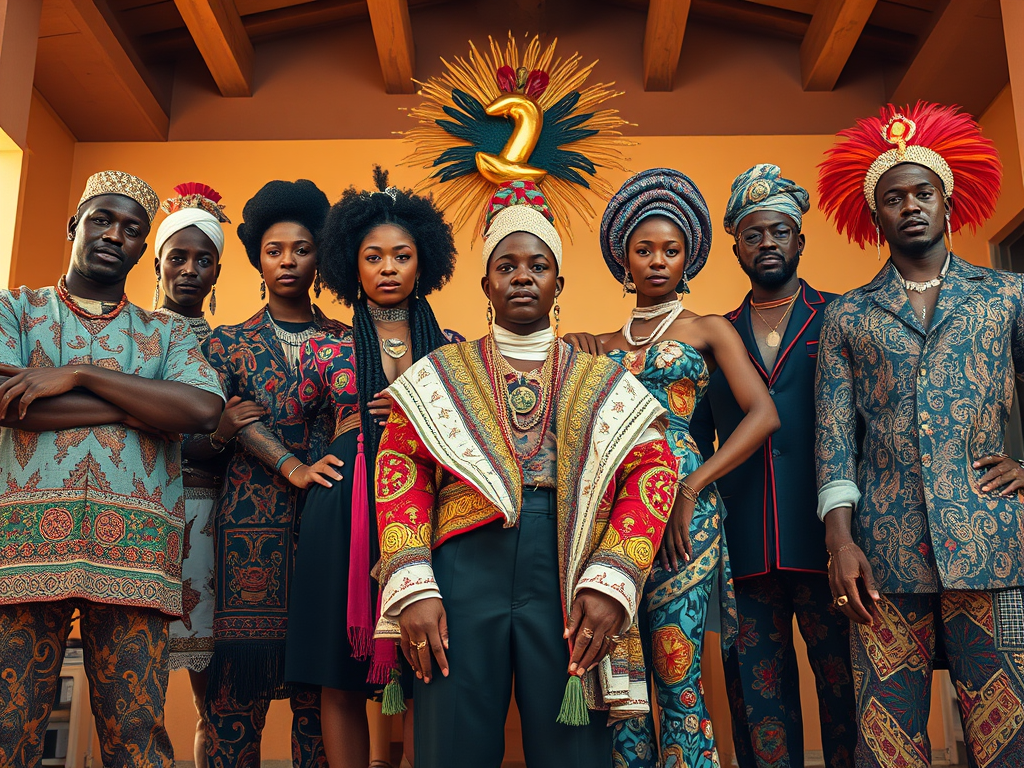

For too long, minority art and fashion have been celebrated when convenient and dismissed when inconvenient. We’re “exotic” until we demand fair pay. We’re “inspiring” until we take up space. We’re “trendy” until we talk about the cultural context that made our aesthetic meaningful in the first place.
Enough.
It’s time to reclaim not just our aesthetics, but the power to define what they mean, where they come from, and who profits from them. This isn’t about gatekeeping—it’s about ownership, context, and respect.
When Your Aesthetic Becomes a Costume
There’s a specific kind of violence that happens when your identity is treated as an aesthetic choice for others—a temporary costume they can put on for a festival, a photoshoot, or a viral moment, then discard when it’s no longer convenient.
Bindis become “festival fashion” worn by people who don’t understand their religious and cultural significance. Indigenous headdresses show up at music festivals worn by people who’ve never advocated for Native rights. Box braids and cornrows are “edgy” on white celebrities but “ghetto” on Black women in professional settings.
This isn’t cultural exchange—it’s cultural extraction. The difference is power. Exchange requires mutual respect, understanding, and usually some form of reciprocity. Extraction is one-sided: take the aesthetic, leave the people behind.
And the cruelty is that minority people often can’t even wear their own cultural markers without penalty. A Native person wearing traditional regalia might face discrimination, while a white person wearing a “tribal print” is fashionable. A Mexican person wearing traditional embroidery is seen as “ethnic,” but when a major fashion brand copies the same patterns, it’s “artisan-inspired.”
The Afrofuturism Explosion (That’s Actually Been Here)
Everyone’s suddenly obsessed with Afrofuturism—the aesthetic that blends African diaspora culture with technology, science fiction, and speculative futures. Black Panther made it mainstream. Janelle Monáe’s albums soundtracked it. Beyoncé’s Black Is King visualized it.
But Black artists, musicians, and writers have been creating Afrofuturist work since the 1950s. Sun Ra was blending jazz and cosmic philosophy. Octavia Butler was writing science fiction that centered Black women’s experiences. Parliament-Funkadelic was putting funk into space suits.
The aesthetic didn’t suddenly appear—it was finally allowed into spaces that had previously excluded it. And now that it’s “trending,” everyone wants a piece without acknowledging the decades of groundwork that Black creators laid.
This is the pattern: minority aesthetics exist in their communities, often for years or decades. Mainstream culture ignores them. Then, when they can no longer be ignored, they get commodified, stripped of context, and sold back without credit.
Asian Aesthetics Beyond “Minimalism”
Western design culture has spent years fetishizing Japanese minimalism and Scandinavian simplicity as the height of good taste. But this narrow reading of Asian aesthetics erases the diversity, complexity, and context of actual Asian design traditions.
Japanese design isn’t just minimalism—it’s also maximalist Harajuku fashion, ornate temple architecture, and bold ukiyo-e prints. Korean design isn’t just K-beauty’s “glass skin”—it’s also vibrant hanbok textiles and the organized chaos of Korean street markets. Chinese design isn’t just red and gold—it’s regional textile traditions, contemporary streetwear, and thousands of years of evolving aesthetics.
When Western brands cherry-pick the elements they like—usually the ones that require the least cultural knowledge to appreciate—they’re not honoring Asian design. They’re creating a sanitized, palatable version that fits their existing worldview.
Real appreciation requires engaging with the full complexity, the historical context, and the contemporary artists and designers who are actually creating new work. Not just copying the parts that feel trendy.
Latinx Aesthetics: More Than “Colorful”
The way mainstream culture engages with Latinx aesthetics is painfully superficial. It’s all bright colors, floral prints, and “fiesta” vibes—as if an entire hemisphere of diverse cultures can be reduced to a Cinco de Mayo party decoration.
Latinx design traditions are rich and varied: the geometric precision of pre-Columbian textiles, the baroque maximalism of colonial era art, the political power of Mexican muralism, the diasporic fusion of Caribbean color palettes, the working-class creativity of rasquache aesthetics.
But brands just want the vibes without the context. They want the colors without acknowledging the Indigenous and African roots. They want the patterns without paying the artisans who still create them by hand.
And then there’s the language barrier being used as an excuse. How many Latinx designers, artists, and creators are passed over because they’re “not marketable enough” or their work is “too niche”—code for “we don’t want to invest in translation or marketing to Spanish-speaking audiences”?
Decolonizing Your Aesthetic Education
If you love minority aesthetics—and let’s be real, everyone does, because we’re the ones creating the most interesting, boundary-pushing visual culture—then you have homework to do.
Learn the history. Understand the context. Know where the aesthetic came from, what it means to the community that created it, and what struggles that community faces.
Support actual minority artists and designers. Buy from them directly when you can. Follow them on social media. Share their work with credit. Commission them for projects. Invest in their businesses.
Stop erasing the cultural origins. When you adopt an aesthetic, acknowledge where it comes from. If you’re inspired by a specific culture’s design traditions, say so—and make sure people from that culture are involved in the creation process.
And when minority creators call out appropriation or ask for their work to be credited, listen. Don’t get defensive. Don’t make it about your intentions. Just listen, apologize if necessary, and do better.
Creating New Visual Languages
The most exciting development isn’t just minority creators protecting traditional aesthetics—it’s the new visual languages being invented right now.
Artists are blending influences in ways that reflect actual lived experience. What does it look like to be Nigerian-American and anime-obsessed? How do you visually represent being queer, Indigenous, and raised on the internet? What aesthetic emerges when you’re code-switching between three languages and two continents?
These hybrid aesthetics aren’t confused or diluted—they’re the future. They’re what happens when you stop trying to fit into existing boxes and instead create entirely new forms of visual expression.
And they can’t be appropriated as easily because they’re personal, specific, and constantly evolving. They’re not meant to be “trends” that everyone can adopt—they’re meant to be authentic expressions of specific experiences.
The Power to Define Yourself
Reclaiming the aesthetic means reclaiming the power to define what your cultural markers mean, how they’re used, and who gets to participate.
It means saying no sometimes. No, you can’t use our traditional designs without permission. No, you can’t wear that without understanding what it means. No, you can’t profit off our creativity while we struggle for recognition.
And it means saying yes on our own terms. Yes, we’ll collaborate—with credit and compensation. Yes, we’ll share our culture—with context and respect. Yes, we’ll create beauty—on our timeline, in our way, for our communities first.
Art and fashion are never just aesthetic choices. They’re political acts, cultural statements, and economic decisions. When we reclaim our aesthetics, we’re reclaiming power.
The box was never designed to fit us anyway. It’s time to stop trying to squeeze in and start building entirely new structures—ones where we define the terms, control the narrative, and keep the profits.
Our aesthetics, our rules.