
In 1921, a white mob destroyed the wealthiest Black community in America. Thirty-five square blocks of Black-owned businesses, homes, hospitals, schools, and churches—burned to the ground in less than 24 hours.
The Tulsa Race Massacre wasn’t just about hatred. It was about economics. And the lessons are ones Black communities still need today.
What Was Black Wall Street?
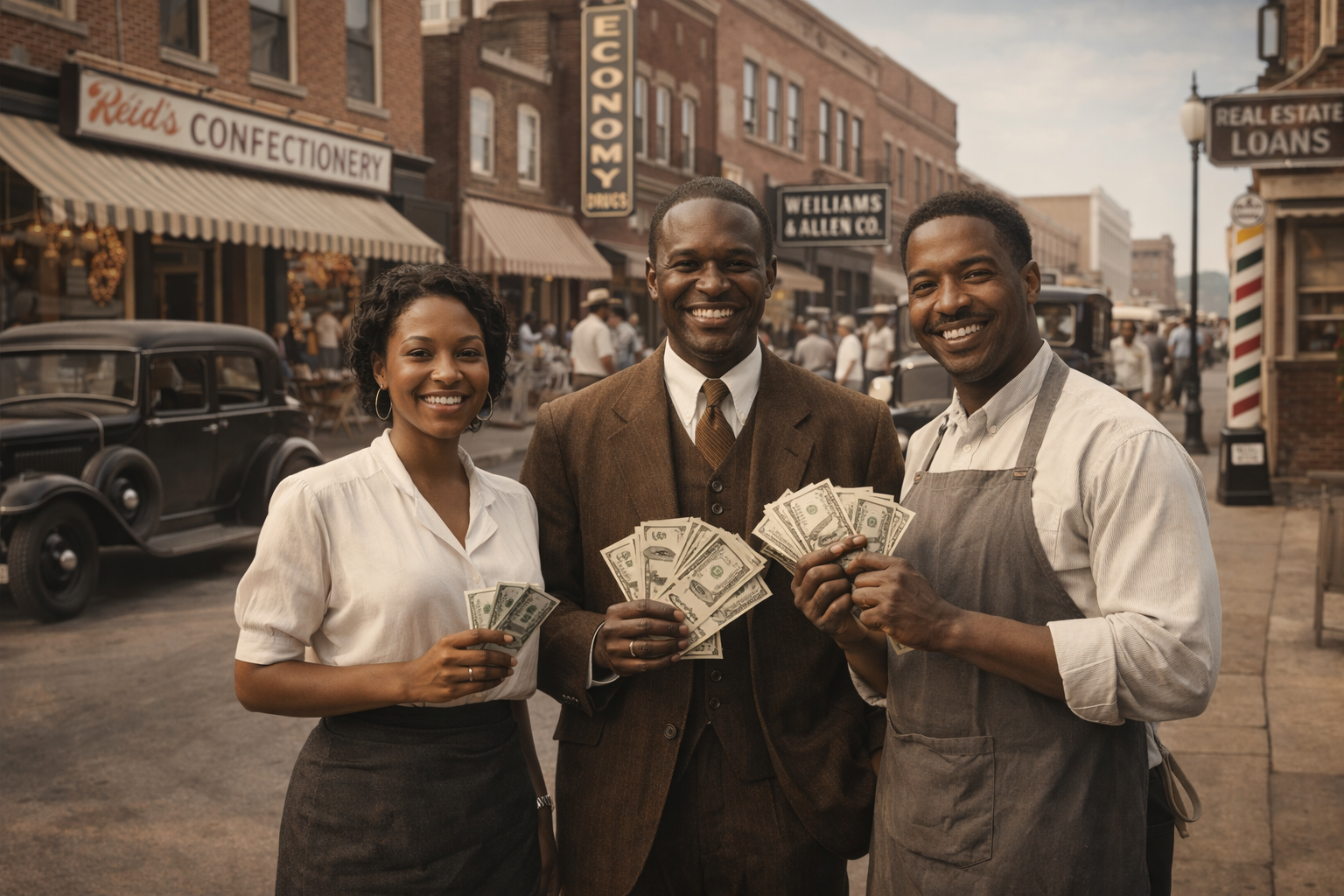
The Greenwood District in Tulsa, Oklahoma, was thriving. Black doctors, lawyers, business owners, and entrepreneurs created a completely self-sufficient economy. There were luxury hotels, movie theaters, grocery stores, and even a bus system—all Black-owned, all serving a Black community that had been shut out of white Tulsa’s economy.
O.W. Gurley and J.B. Stradford built hotels. A.J. Smitherman ran a newspaper. Loula Williams operated a confectionery. The wealth circulated within the community, multiplying with each transaction.
By 1921, the Greenwood District had over 10,000 Black residents and was known as “Black Wall Street”—a name that stoked resentment among many white Tulsans.
The Destruction
The official story claims it started with a Black man, Dick Rowland, allegedly assaulting a white woman in an elevator. It didn’t matter that she later declined to press charges. A white mob descended on the courthouse where Rowland was held, determined to lynch him.
Black veterans, many who’d fought in World War I, showed up armed to protect him. That’s when the white mob turned on Greenwood itself, and what was destroyed wasn’t a threat of violence but a monument to Black economic independence.
Over the next 16 hours, white mobs—some deputized by police—looted and burned Greenwood. They dropped incendiary devices from airplanes. Firefighters were blocked from saving Black homes and businesses. As many as 300 Black people were killed. Thousands were left homeless.
Insurance companies refused to pay claims. The city prevented rebuilding and later built a highway through Greenwood. Survivors were arrested and detained in internment camps. Many fled and never returned.
And the massacre was erased from history books for decades.
The Economic Message
The Tulsa Race Massacre sent a clear message: Black economic power will not be tolerated.
This wasn’t an isolated incident. Throughout the late 1800s and early 1900s, thriving Black towns and neighborhoods across America—Rosewood, Florida; Wilmington, North Carolina; countless others—were destroyed by white violence.
The pattern was always the same: Black people build wealth through hard work and community investment. White neighbors grow resentful. Violence erupts. Black wealth is destroyed. No one is held accountable.
Why Economic Independence Scared Them
Black Wall Street proved that when Black people controlled their own resources, they didn’t need white approval, white employment, or white charity. They could educate their children in their own schools, treat their sick in their own hospitals, and build generational wealth through their own institutions.
That level of autonomy threatened the entire structure of white supremacy, which depends on Black economic dependence.
The Modern Parallels
Today, Black communities still face economic sabotage—it just looks different. Redlining, predatory lending, underfunded schools, food deserts, and the racial wealth gap all serve the same function: keeping Black people economically dependent and preventing wealth accumulation.
When Black neighborhoods gentrify, it’s not progress—it’s displacement. When Black-owned businesses struggle to get loans while white-owned businesses get venture capital, that’s intentional. When Black professionals are paid less for the same work, that’s systemic.
The lesson from Tulsa isn’t just about what was lost. It’s about what’s still being prevented.
What Black Wall Street Teaches Us Now
Build Parallel Infrastructure: Don’t wait for inclusion in systems designed to exclude you. Create your own banks, investment funds, business networks, and supply chains.
Circulate the Dollar: When Black money stays in Black communities, it multiplies. Support Black-owned businesses even when white-owned options are closer or cheaper.
Protect What You Build: Economic power requires political power. Vote, organize, and demand policies that support Black wealth building, not white gentrification.
Document Everything: The Tulsa massacre was hidden for generations. Record your history, your successes, and your struggles. They’ll try to erase them.
Expect Resistance: Black economic independence will always threaten those who benefit from Black economic dependence. They’ll call you divisive, separatist, or racist. Build anyway.
Reparations and Restitution
Tulsa survivors and their descendants are still fighting for reparations. In 2025, Tulsa’s first Black mayor, Monroe Nichols, launched the Greenwood Trust, a $105 million private fund for housing, revitalization, and descendant scholarships under his “Road to Repair” plan. Many survivors’ descendants say direct reparations are still owed.
But reparations aren’t charity. They’re what’s owed. The wealth destroyed in Tulsa would be worth billions today. That stolen wealth funded white Tulsa’s growth while Black survivors started over from nothing.
Every conversation about “bootstraps” and “personal responsibility” ignores that the boots keep getting burned.
Moving Forward
Black Wall Street wasn’t a miracle. It was what happens when Black people have access to resources and the freedom to build. The fact that it was destroyed doesn’t mean it failed—it means it succeeded so well that it had to be eliminated.
The descendants of that community are rebuilding. Black entrepreneurs nationwide are creating new versions of economic independence. And this time, we’re not asking permission.
We know what happened when we built before. We’re building anyway.
That’s the real lesson of Black Wall Street: they can burn it down, but they can’t burn out the drive to be free.
Keep reading: Afrofuturism: Imagining Black Futures Beyond Survival · The Black Panther Party’s Community Programs Nobody Talks About · Black Feminism and Intersectionality: A Primer