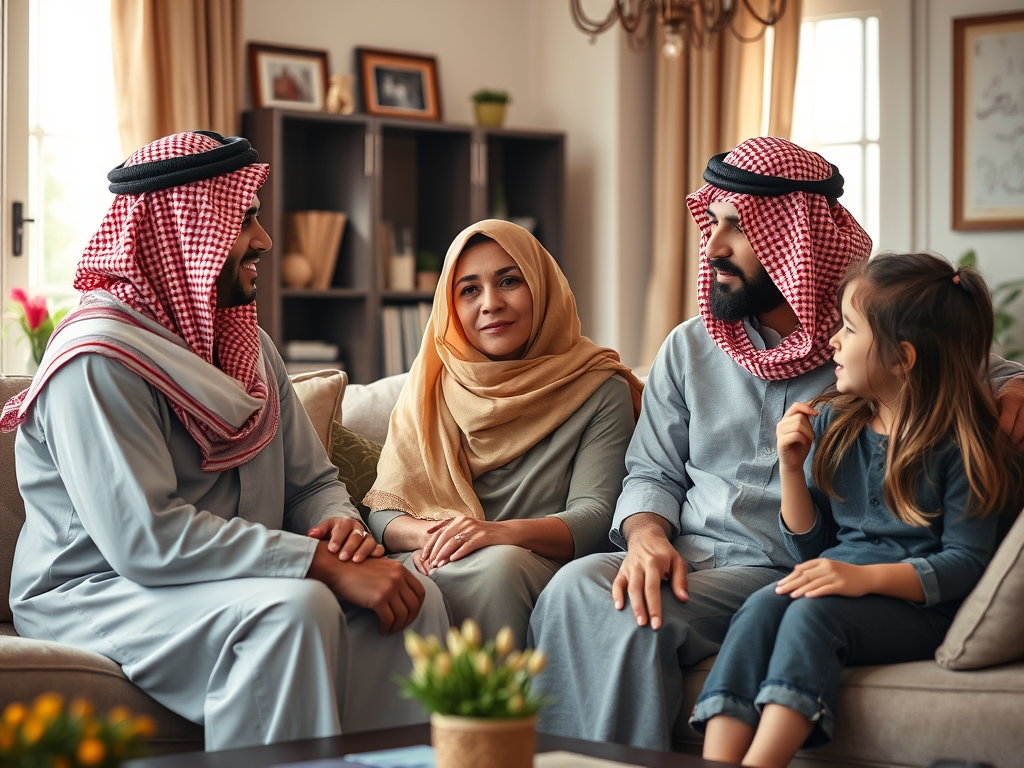

Second-generation Arab Americans—those born in the U.S. to immigrant parents—occupy a unique space: too American for their parents’ homeland, too Arab for their classmates. You’re the translator, the mediator, the bridge between worlds that often don’t understand each other.
This is what it’s like living between cultures without fully belonging to either.
The Cultural Translator Role
From childhood, you’ve been translating. Not just language (though you’ve done that countless times at doctor’s offices, parent-teacher conferences, and government offices), but entire cultural systems.
You explain to your parents why American schools work the way they do. You explain to your teachers why your parents expect what they expect. You translate American individualism to parents raised on collectivism. You translate Arab family obligations to friends who don’t understand why you can’t just move across the country.
This role starts early and never ends. You become an expert at code-switching, navigating between cultural contexts so frequently you don’t even notice you’re doing it.
Language: Gift and Burden
For many second-generation Arab Americans, Arabic is the language of childhood, of family, of emotion. But it’s also often incomplete. You speak but don’t read well. You understand but struggle to express complex ideas. You’re fluent in domestic conversations but lost in formal Arabic.
This creates a particular grief: knowing you’re losing something precious, watching your connection to your parents’ language (and by extension, their world) weaken with each generation.
Some second-generation Arab Americans speak only English, their parents having chosen assimilation over heritage. They mourn the loss differently—knowing they’re cut off from half their family, from texts in their parents’ language, from fully understanding their own history.
Others fight to maintain or reclaim Arabic, taking classes, traveling to Arab countries, immersing themselves in media. They know language is more than communication—it’s identity, memory, connection.
Family Expectations vs. American Individualism
Arab culture tends toward collectivism. American culture celebrates individualism. Second-generation Arab Americans live in the tension between these values.
Your parents expect:
– Family approval for major life decisions
– Living at home until marriage
– Regular family gatherings taking priority over personal plans
– Supporting extended family financially and emotionally
– Marrying within the culture (or at least marrying someone they > approve of)
– Career choices that bring family honor (doctor, lawyer, engineer)
American culture expects:
– Independence by 18
– Individual choice above family preference
– Personal happiness as primary goal
– Distance from family as “healthy boundaries”
– Marrying for love regardless of background
– Career choices based on passion
You’re navigating these competing expectations constantly, often disappointing everyone while trying to honor both value systems.
The Marriage Pressure
Few areas highlight the culture clash more than marriage. Arab families often have strong preferences about who you marry: another Arab, someone from your specific country, someone Muslim (or Christian), someone your parents choose or at least approve of.
American dating culture—casual relationships, cohabitation before marriage, marrying for love regardless of background—contradicts many traditional Arab values.
Second-generation Arab Americans navigate this by:
– Dating secretly
– Introducing serious partners after relationships are established
– Choosing partners who check some cultural boxes but not others
– Marrying outside the culture and managing family fallout
– Following traditional expectations while resenting them
– Completely rejecting family involvement in partner choice
There’s no easy answer. Whatever you choose, someone will be unhappy—your parents, your partner, yourself.
Career and Success
Many Arab immigrant parents pushed education hard. They sacrificed enormously to get you here and want you to succeed. But “success” often means specific careers: medicine, engineering, law, pharmacy.
When you want to be an artist, teacher, social worker, or entrepreneur, you face:
– Disappointment from parents who see these as financially unstable
– Pressure to choose more lucrative paths
– Questions about why you’re “wasting” your education
– Comparison to cousins who became doctors
But following your passion means potentially letting down parents who gave up everything for your future. That guilt is heavy.
Identity Negotiation
Second-generation Arab Americans constantly negotiate identity:
*In white-dominated spaces:* You might downplay your Arab identity to fit in, avoid bringing “ethnic” food to school, anglicize your name, laugh off terrorist jokes.
*In Arab spaces:* You might feel inadequate because your Arabic isn’t perfect, you don’t know all the cultural references, you’re “too American.”
*With other minorities:* You find common ground in marginalization while navigating your specific experience.
*With first-generation immigrants:* You share heritage but have fundamentally different experiences of America.
*With third-generation Arab Americans:* You envy their easier relationship with American culture while they envy your connection to heritage.
This constant negotiation is exhausting. You learn to be a chameleon, adapting to each context while never fully being yourself anywhere.
The Eldest Daughter/Son Burden
If you’re the oldest, you carry additional weight:
– Responsibility for younger siblings
– Higher expectations to succeed and set an example
– Less freedom than your younger siblings will get
– More pressure to maintain cultural traditions
– Greater obligation to care for aging parents
You’re often the one who “breaks ground” with your parents—fighting battles so your siblings have it easier. You’re both pioneer and cautionary tale.
Mental Health Stigma
Arab culture often stigmatizes mental health issues. Depression is “weakness.” Anxiety is “overthinking.” Therapy is for “crazy people.”
Second-generation Arab Americans face enormous pressure while lacking support for dealing with that pressure. You’re navigating:
– Immigrant parents’ trauma (which they likely never processed)
– Your own experiences of racism and discrimination
– Identity conflicts
– Family obligations
– Professional pressure
– Cultural isolation
But seeking mental health support means confronting family stigma, finding culturally competent therapists (which is rare), and potentially hiding treatment from family.
What You’re Building
Despite these challenges, second-generation Arab Americans are creating something new:
– Identities that authentically combine Arab and American elements
– Families that blend traditions from multiple cultures
– Careers that follow passion while honoring family sacrifice
– Communities that support rather than police cultural performance
– Mental health awareness in immigrant families
You’re not just bridges between cultures—you’re architects of a new culture. One that doesn’t require choosing between Arab and American identity but holds both simultaneously.
For Second-Generation Arab Americans
*You don’t owe anyone cultural purity.* Your mix of Arab and American identity is valid exactly as it is.
*Translation is labor.* You deserve recognition and support for the constant cultural mediation you provide.
*Your parents’ sacrifices don’t mean you owe them your life choices.* Gratitude and autonomy can coexist.
*Imperfect Arabic doesn’t make you less Arab.* Language is one connection to culture, not the only one.
*Your mental health matters.* Seeking support isn’t betraying your family.
*You can love your parents while disagreeing with them.* Family loyalty doesn’t require cultural stagnation.
*Your identity is not a betrayal.* Being fully you honors both your heritage and your experience.
The bridge you’re building connects more than two cultures—it connects past and future, tradition and innovation, obligation and autonomy. That’s powerful work.
Keep building. The path you’re creating makes it easier for those coming after you.