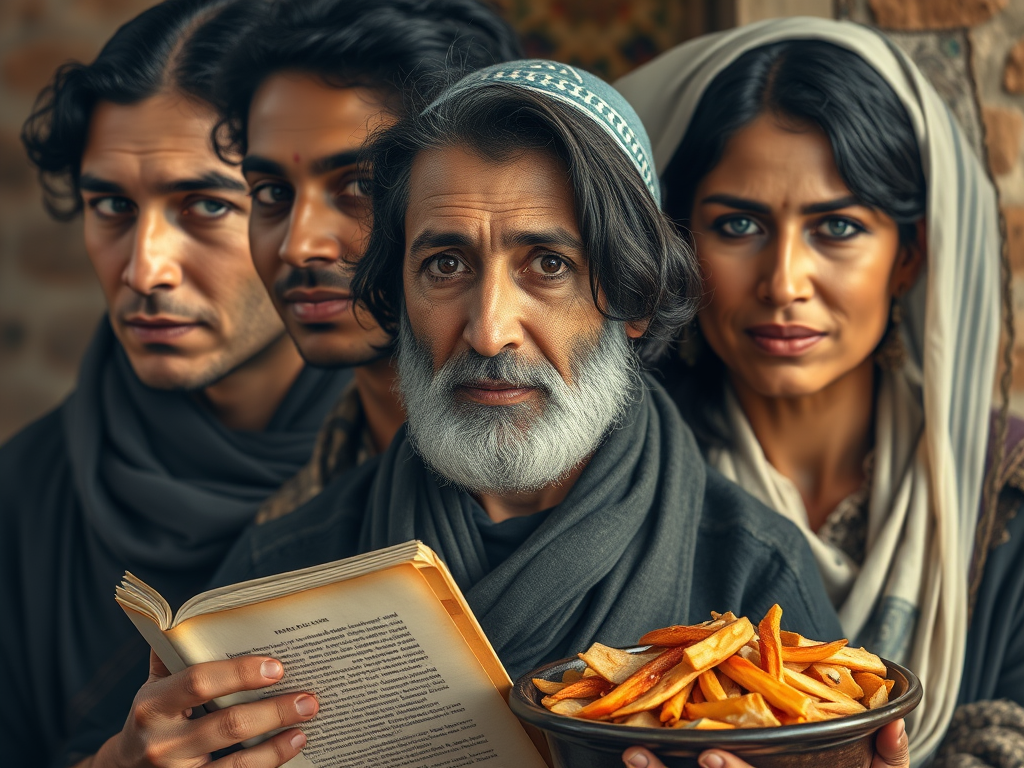

When Americans think about Jewish people, they usually picture Ashkenazi Jews—those whose ancestors came from Central and Eastern Europe. But Ashkenazi Jews represent only part of the global Jewish community. Sephardic Jews, whose ancestors lived in Spain, Portugal, and North Africa, and Mizrahi Jews, whose ancestors lived throughout the Middle East, make up a significant portion of the world’s Jewish population.
In America, these communities face a particular kind of erasure. They’re Jewish, so they’re assumed to have access to the same privileges as white Ashkenazi Jews. But many of them are visibly brown, speak Arabic or Ladino at home, and have cultural practices that look nothing like the Ashkenazi-dominated American Jewish establishment. Their relationship with whiteness isn’t just complicated—it’s often nonexistent.
The Sephardic Story
The Sephardic Jewish story begins with expulsion. In 1492, the same year Columbus sailed to the Americas, Spain expelled all Jews who refused to convert to Christianity. Tens of thousands of Sephardic Jews fled to North Africa, the Ottoman Empire, the Netherlands, and eventually the Americas.
These communities maintained distinct cultural practices, including Ladino (a Judeo-Spanish language), unique liturgical traditions, and cuisine influenced by Mediterranean and North African cultures. Many Sephardic Jews have olive skin, dark hair, and features that don’t read as stereotypically white to American eyes.
Yet when Sephardic Jews immigrated to America, they were expected to assimilate into Ashkenazi-dominated Jewish institutions. Their religious practices were sometimes treated as exotic or lesser. Their languages weren’t taught in Hebrew schools. Their cuisine wasn’t served at Jewish delis. They were told they were white on census forms while being treated as exotic or foreign within their own community.
The Mizrahi Experience
Mizrahi Jews—from countries like Iraq, Iran, Yemen, Syria, and Morocco—have an even more complicated relationship with American racial categories. Many Mizrahi Jews are brown or Black. Many grew up speaking Arabic, Persian, or Judeo-Arabic dialects. Their cultural practices have more in common with their Muslim neighbors from their countries of origin than with European Jewish traditions.
In Israel, Mizrahi Jews have faced systematic discrimination from the Ashkenazi-dominated establishment. They were directed to development towns, given inferior housing and education, and subjected to policies that devalued their cultural heritage. Many had their children’s Yemenite or North African names changed to Hebrew ones. Their religious practices were marginalized.
When Mizrahi Jews come to America, they face a double erasure. They’re told they’re white because they’re Jewish. But they’re also visibly brown in ways that subject them to the same racialization as other Middle Eastern and North African people. They don’t fit neatly into American categories of white or person of color, and they often feel homeless in both Jewish and broader minority spaces.
The Ashkenazi Default
One of the biggest challenges Sephardic and Mizrahi Jews face in America is the assumption that Ashkenazi Judaism is Judaism. Period.
When people think of Jewish food, they think of bagels and lox, not Yemenite jachnun or Moroccan tagine. When they think of Jewish music, they think of klezmer, not Ladino romances or Mizrahi piyyutim. When they think of Jewish history, they think of shtetls in Eastern Europe, not the ancient Jewish communities of Baghdad or Fez.
This Ashkenazi dominance extends to American Jewish institutions. The largest Jewish organizations, synagogues, and cultural centers were built by and for Ashkenazi Jews. Sephardic and Mizrahi traditions are often treated as interesting ethnic variations rather than equally valid expressions of Jewish life.
This creates a painful dynamic for Sephardic and Mizrahi Jews: they’re expected to assimilate into Ashkenazi norms to be accepted as legitimately Jewish, while simultaneously being told they have white privilege because they’re Jewish.
The Racialization Question
Many Sephardic and especially Mizrahi Jews don’t look white. They have brown skin, Middle Eastern features, and Arabic-sounding names. They face racialization in America that Ashkenazi Jews often don’t.
They’re pulled aside for extra screening at airports. They’re asked “Where are you really from?” They’re subjected to post-9/11 Islamophobia even though they’re Jewish. They experience the same kind of everyday racism that other brown people in America face.
Yet they’re categorized as white on demographic forms. They’re told they have white privilege in diversity conversations. They’re excluded from spaces for people of color because Jewish is read as white, regardless of their actual skin color or lived experience.
This creates an impossible situation: too white to claim minority status in some contexts, too brown to actually experience whiteness in others.
Colorism Within Jewish Communities
It’s also important to acknowledge the colorism that exists within Jewish communities themselves. Lighter-skinned Sephardic Jews often have an easier time assimilating into Ashkenazi-dominated spaces than darker-skinned Mizrahi Jews. North African Jews might be accepted more readily than Yemenite Jews. Persian Jews who can pass as white face different challenges than Ethiopian Jews who are visibly Black.
This internal hierarchy mirrors broader American racism while adding layers of cultural and religious complexity. It means that even within minority Jewish experiences, there are gradations of privilege and marginalization based on skin color and proximity to Ashkenazi norms.
Cultural Loss and Preservation
Many Sephardic and Mizrahi families have experienced profound cultural loss through pressure to assimilate. Ladino and Judeo-Arabic languages are dying. Traditional foods are disappearing. Religious melodies and customs are being replaced by Ashkenazi defaults.
Some younger Sephardic and Mizrahi Jews are working to reclaim these traditions. They’re learning their grandparents’ languages, cooking traditional foods, and demanding that Jewish institutions make space for non-Ashkenazi practices. But this work is difficult when the dominant culture treats your traditions as optional add-ons rather than core Jewish expressions.
The Census Problem
The struggle over how Middle Eastern and North African (MENA) people should be categorized on the census directly affects many Sephardic and Mizrahi Jews. For decades, MENA individuals were classified as white. A separate MENA category was approved in 2024, but as of 2026 it hasn’t reached the census.
For Sephardic and Mizrahi Jews from North Africa and the Middle East, this debate is personal. Being forced to check “white” erases their lived experience of racialization and cultural specificity. But some worry that a separate MENA category could be used for discrimination, especially in the current climate of anti-Muslim sentiment.
This census debate highlights the absurdity of trying to fit complex diasporic identities into rigid American racial categories.
Finding Space for Complexity
So where does this leave Sephardic and Mizrahi Jews in America? In a complicated in-between space that requires holding multiple truths at once.
They’re part of an American Jewish community that gained broad social acceptance in the 20th century, and that today faces rising antisemitism. But they’re also often visibly brown, which subjects them to racialization and discrimination. They’re part of the Jewish community, but that community is dominated by Ashkenazi norms that don’t reflect their experience. They’re told they’re white, but they experience life as brown people.
This isn’t a contradiction to be resolved—it’s a reality to be acknowledged. Sephardic and Mizrahi Jews deserve to have their specific experiences recognized without being lumped into either white Jewish privilege or erased from Jewish identity altogether.
Moving Forward
Creating space for Sephardic and Mizrahi Jewish experiences means several things. It means Jewish institutions need to actively include and honor non-Ashkenazi traditions, not just as exotic additions but as equal expressions of Jewish life. It means acknowledging that Jewish privilege is complicated by race, that not all Jews benefit equally from whiteness, and that colorism exists within Jewish communities.
It means fighting for better demographic categories that don’t force people to choose between their religious and ethnic identities. It means including Sephardic and Mizrahi voices in conversations about both Jewish identity and the experiences of people of color.
Most importantly, it means recognizing that when we talk about Jewish identity in America, we’re not talking about a monolith. We’re talking about diverse communities with different histories, different relationships to whiteness, different cultural practices, and different experiences of both privilege and marginalization.
Sephardic and Mizrahi Jews have been navigating this complexity for generations. It’s time the rest of us caught up.
Keep reading: Arab Americans: Too White to Be a Minority, Too Brown to Be Safe · Persian Americans: Navigating Identity Post-Revolution · Lebanese, Syrian, and Egyptian Americans: The MENA Paradox