
Count Dracula. The Beast. Alice. Dorian Gray. These characters are iconic, instantly recognizable, embedded in our cultural consciousness. But what if everything you know about them is just one version of who they could be?
That’s the question driving our reimagined classics at Rose Angel Publishing. We’re not just giving these characters a fresh coat of paint—we’re stripping them down to their narrative essence and rebuilding them through entirely different cultural frameworks. The results are transformative, revelatory, and sometimes more true to the original themes than the originals themselves.
The Aztec Dracula: Bloodlust Meets Ancient Cosmology
Bram Stoker’s Dracula is a Victorian novel dripping with anxiety about foreignness, sexuality, and the decline of British empire. The Count is literally an invader from the East, bringing corruption and chaos to proper English society. It’s a great gothic horror story, but it’s also deeply rooted in its specific cultural moment and prejudices.
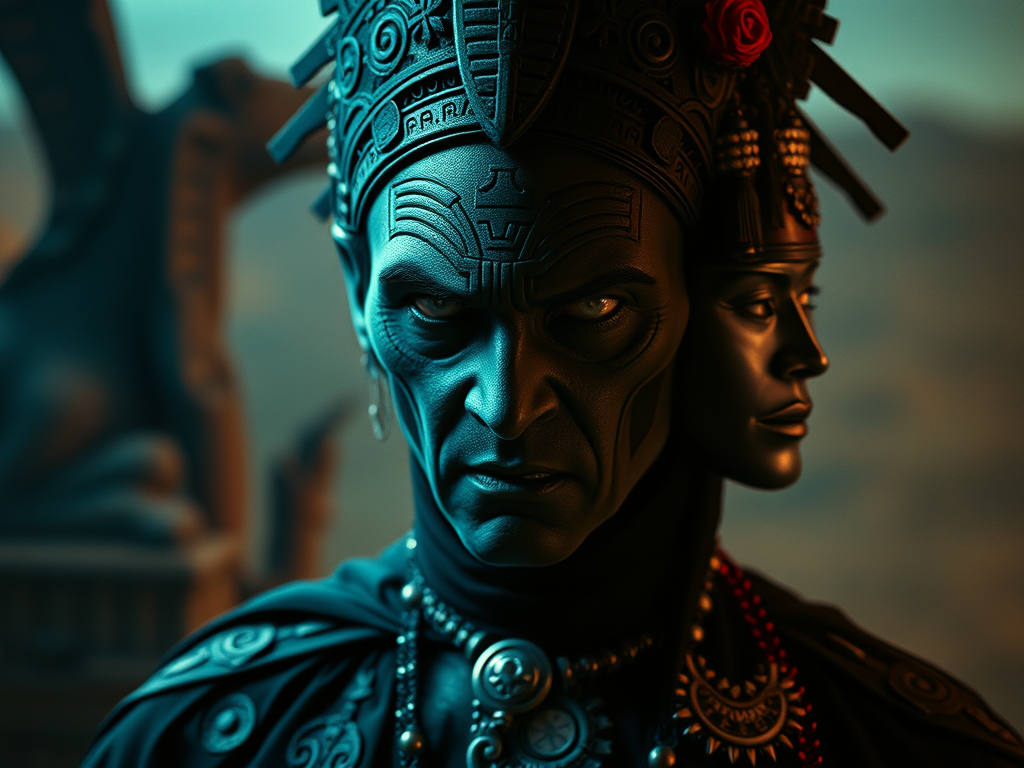
Now imagine Dracula reimagined through Aztec mythology. Suddenly, the vampire isn’t a European aristocrat but a figure connected to ancient Mesoamerican beliefs about blood sacrifice, the sun’s journey through the underworld, and the thin boundaries between life and death in indigenous cosmology.
This isn’t random. Aztec culture had sophisticated concepts about blood as life force, about sacrifice as necessary for cosmic balance, about deities who existed between human and divine states. A vampire story filtered through this lens becomes something richer than simple good-versus-evil. It engages with colonialism (what happens when ancient power meets modern invasion?), with indigenous epistemology (what if the “monster” operates according to a completely different understanding of life and death?), and with cultural memory (what does it mean when the old gods won’t stay buried?).
The character we get isn’t Dracula with brown skin. It’s a fundamentally reimagined figure whose monstrosity and magnetism emerge from entirely different cultural roots.
Beauty and the Beast: African Kingdoms and Different Standards of Beauty
The European Beauty and the Beast is about seeing beyond surface appearances, about inner beauty versus outer form. It’s a lovely message. It’s also delivered through a very specific lens of what beauty means—one tied to European aesthetics, aristocratic settings, and particular gender roles.
Transport that story to an African kingdom and everything shifts. African cultures have diverse beauty standards, different relationships between humans and animals (including totemic traditions and shape-shifting folklore), and their own rich traditions of teaching stories about seeing beyond appearance.
An African Beauty and the Beast isn’t just the same story with different scenery. It’s an opportunity to engage with African storytelling traditions, with the continent’s diverse concepts of beauty and transformation, with folklore that already contains shape-shifters and tests of character. The Beast might draw on different animal symbolism. Beauty’s journey might involve different kinds of growth and revelation. The resolution might engage with community in ways the individualistic European version doesn’t.
And yes, representation matters here in immediate, practical ways. Young Black girls who read this version see themselves as the beauty, not as an afterthought or alternative. They see their cultural context as worthy of fairy tale magic. They get to be the princess in a story that reflects their heritage.
Alice in Anime Wonderland: When East Meets West in Dreamscapes
Lewis Carroll’s Alice’s Adventures in Wonderland is surreal, nonsensical, dreamlike—qualities that translate beautifully across cultures. But imagine Alice’s journey filtered through anime aesthetics, Asian folklore, and Eastern philosophical concepts.
Suddenly, Wonderland’s absurdity might engage with Zen koans and the Buddhist concept of reality as illusion. The talking animals might draw on East Asian folklore traditions. The visual style might incorporate anime’s emotional intensity and imaginative landscapes. Alice herself might be reimagined as a character navigating not just a strange land but the space between cultural worlds.
Done with care, cultural consultants, and sensitivity readers, it’s homage rather than appropriation. Public domain works are free for everyone to adapt, and Asian creators (and creators inspired by Asian aesthetics) have every right to filter these stories through their cultural lenses. The result is something that honors both the original’s surreal creativity and the rich artistic traditions of anime and Asian storytelling.
The Glow-Up Philosophy: Essence Over Imitation
What makes these reimaginings work isn’t surface-level changes. It’s identifying the essence of what made the original compelling—the themes, the emotional arcs, the core conflicts—and then asking: how would these same essential story elements manifest through a completely different cultural lens?
Dracula is essentially about ancient power, forbidden desire, invasion, and the corruption of innocence. Those themes can be explored through Aztec cosmology just as effectively as Victorian gothic—maybe more effectively, because you’re not dragging along the original’s xenophobic baggage.
Beauty and the Beast is essentially about seeing beyond appearance, about transformation and redemption, about what we fear versus what we love. African folklore has been exploring these themes for millennia through its own frameworks.
Alice in Wonderland is essentially about the absurdity of adult rules, the strangeness of growing up, the thin line between nonsense and wisdom. These are human universals that every culture grapples with.
Why This Matters: Beyond Representation
Yes, representation matters. Yes, kids of color deserve to see themselves in classic stories. But there’s something even deeper happening here.
These reimaginings prove that the narrative structures we’ve been taught to revere as “universal” are actually quite particular. They show that the same thematic territory can be explored through infinite cultural frameworks. They demonstrate that “classic” doesn’t have to mean “European.”
They also do something crucial for readers of all backgrounds: they denaturalize the originals. They make it impossible to see the standard versions as the only versions, as the definitive versions, as the way these stories had to be told.
When you’ve read both Stoker’s Victorian Dracula and an Aztec-inspired vampire story, you understand that both are interpretations. Both are specific cultural products. Neither is more “real” or “authentic”—they’re just different, each bringing its own insights and blind spots.
The Divine in the Details
What we’re doing at Rose Angel Publishing isn’t just publishing books. We’re engaging in cultural world-building. Every reimagined classic is illustrated with care, researched with respect, crafted to honor both the narrative power of the original and the cultural richness of its new framework.
From Dracula to divine, from beast to beautiful, from wonderland to worldwide—these characters are getting the glow-up they deserve. And in the process, they’re becoming more than characters. They’re becoming proof that stories belong to everyone, and everyone’s cultural lens can reveal new truths.
The classics aren’t finished evolving. They’re just getting started.
Keep reading: Minorities in the Margins: What Classic Literature Left Out—and How We’re Fixing It · When Literature Gives Back: How Rose Angel Publishing Supports Diverse Voices and Donates with Every Sale · We Illustrate the Unseen: Why Visual Representation in Classic Books Still Matters · Explore the Rose Angel book series