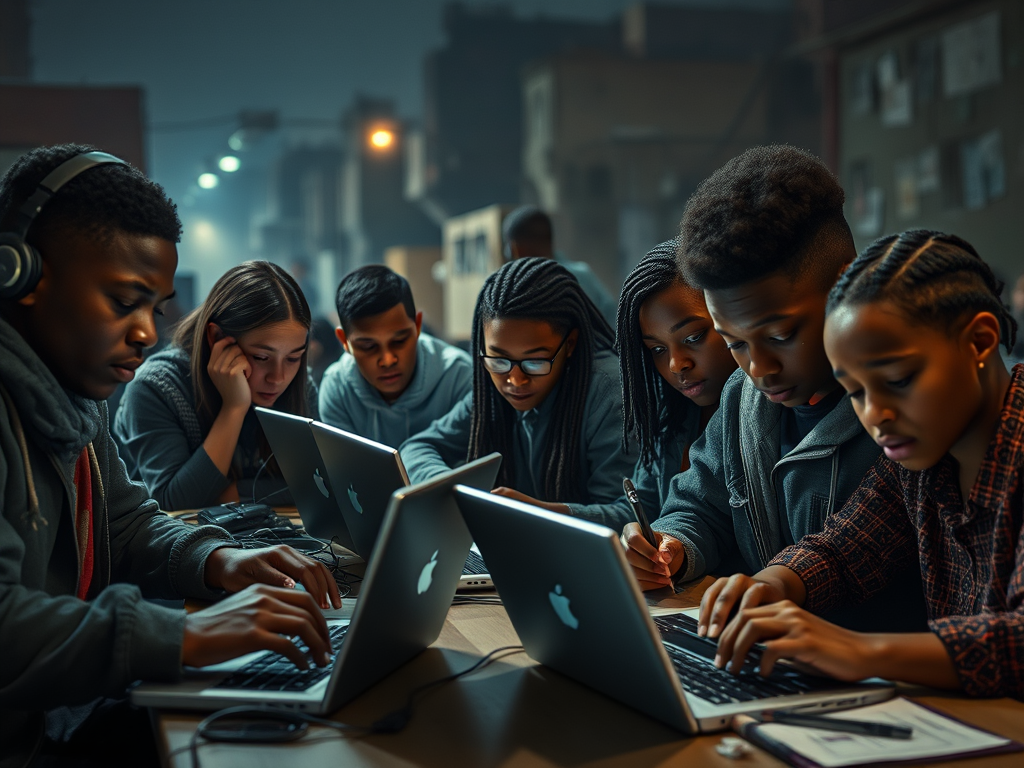

In 2025, internet access isn’t a luxury—it’s oxygen. But millions of people in minority communities are being suffocated by a digital divide that determines who gets educated, who gets employed, and who gets left behind.
The Homework Gap Is a Justice Gap
When schools closed during the pandemic, we called it “remote learning.” For millions of Black, Latinx, and Indigenous students, it was educational abandonment. No device. No internet. No ability to attend class, submit assignments, or stay connected to teachers. While their more privileged peers zoomed through virtual classrooms, these students fell further behind—not because of lack of ability, but lack of access.
The homework gap didn’t start with COVID and it didn’t end when schools reopened. In 2024, 35% of Black households and 31% of Latinx households still lack high-speed internet access at home. That’s not just about homework—it’s about every online scholarship application, every virtual college tour, every Khan Academy video that could have made the difference.
The Job Search Dead End
Want to apply for a job? Go online. Want to take the skills training that might qualify you for a better position? Online. Want to build a LinkedIn profile, research companies, or prepare for video interviews? You need consistent, reliable internet access.
For communities without it, the digital divide becomes an employment divide. When job applications are online-only, when gig economy platforms require smartphones and data plans, when “work from home” requires high-speed internet, tech access isn’t about convenience—it’s about economic survival.
The cruelest irony? The communities with the least access are often the ones where internet service would be most transformative, where a single connection could change a family’s entire economic trajectory.
Healthcare’s Digital Gatekeeping
Telemedicine is revolutionary—if you can access it. During the pandemic, telehealth became the primary way to see a doctor. But what happens when you don’t have a reliable internet connection or a device that can handle video calls?
Minority communities, already experiencing worse health outcomes, got even less access to care. Prescription refills, mental health counseling, specialist consultations—all moved online, all requiring technology that millions don’t have. The digital divide became a health equity crisis.
And it’s not just about infrastructure. Many health apps and portals are only in English, aren’t designed for users with low digital literacy, and assume a level of tech access that doesn’t match reality for many communities.
The Broadband Redlining
Here’s the part they don’t want you to know: internet service providers have essentially redlined minority neighborhoods. Areas with high concentrations of Black and brown residents often have slower speeds, higher prices, and fewer provider options than whiter, wealthier areas—even when they’re in the same city.
ISPs claim it’s not profitable to invest in infrastructure in these communities. But that’s the same logic used to justify redlining in housing, food deserts in retail, and branch closures in banking. The result is digital segregation that mirrors every other form of systemic inequity.
The Device Divide
Even when internet access exists, the device divide remains. A smartphone isn’t equivalent to a laptop for completing job applications, writing essays, or learning to code. Shared family devices mean competition for screen time. Older devices can’t run modern educational software. No devices means no digital literacy skills.
The students who graduate without mastering spreadsheets, presentations, and online collaboration tools are already behind in a job market that assumes these skills. The adults who never learned to navigate online systems are locked out of opportunities that seem to disappear every year.
What Real Solutions Look Like
Municipal broadband—internet as a public utility, not a profit center—works. Cities that have implemented it have seen dramatic improvements in educational outcomes, business creation, and quality of life. But telecom lobbyists fight these efforts viciously because they threaten the monopoly pricing model.
Community technology centers, where people can access devices, internet, and training, make a difference. So do programs that provide low-cost devices to families, digital literacy training that meets people where they are, and multilingual tech support.
But the real solution is recognizing that internet access is infrastructure, like roads and water. We don’t tell people to find their own road to their house—why do we expect them to find their own digital infrastructure?
The Innovation We’re Missing
Every student without internet access is potential lost. Every entrepreneur who can’t research their market or build an online presence is an innovation we’ll never see. Every artist who can’t share their work, every organizer who can’t mobilize their community, every voice silenced by lack of access—that’s the cost of the digital divide.
Minority communities aren’t tech-averse. We’re tech-deprived. Given access, we build apps, start businesses, create content, and use technology in ways the industry never imagined. The digital divide isn’t about ability—it’s about opportunity.
Bridging the Gap Ourselves
While we wait for policy solutions, community organizations are building their own infrastructure. Mesh networks in Indigenous communities. Community WiFi in public housing. Tech training programs in libraries and churches. We’re not waiting for Comcast to decide we’re worth serving—we’re creating our own solutions.
Because in a world where internet access determines who gets educated, who gets hired, who gets heard, and who gets ahead, the digital divide isn’t just about technology. It’s about justice.
And we’re done waiting for someone else to connect us to the future we’re building.