
Your biological family doesn’t understand your queerness. Your relatives think your career choice is foolish. Your parents can’t comprehend why you’re in therapy. Your siblings don’t get your activism. You love them, maybe, but you don’t feel seen by them. You don’t feel held by them.
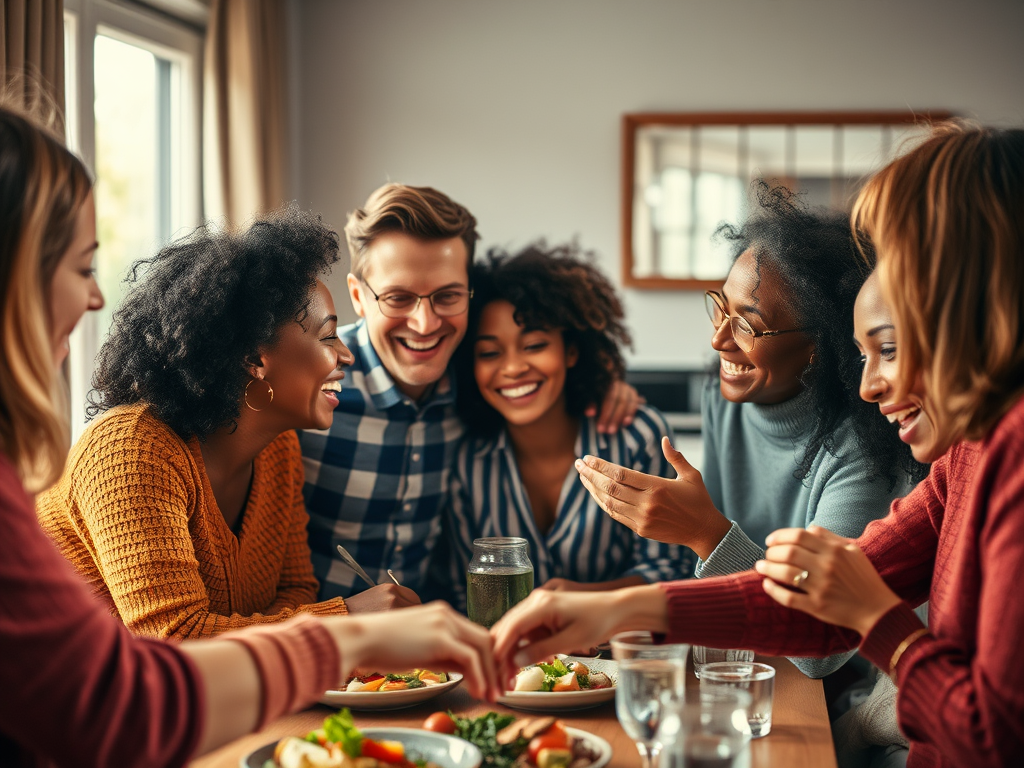
So you build something else. You find your people—the ones who choose you, who celebrate you, who show up when it matters. Welcome to the world of found family, where kinship is created, not inherited.
When Blood Disappoints
The expectation is simple: Family is supposed to be your foundation. The people who share your DNA are supposed to be your safe place, your support system, your unconditional love. But what happens when they’re the ones causing the harm?
For many of us—especially LGBTQ+ folks, people who’ve left toxic family systems, immigrants who’ve been disowned for “dishonoring” the family, people whose families enable abuse—biological family isn’t safety. It’s a minefield. It’s the place where you have to hide parts of yourself to be tolerated. It’s performing a version of you that they can accept while the real you suffocates.
Walking away or setting boundaries with biological family comes with judgment. Society tells us “family is everything” and “blood is thicker than water.” We’re guilted, shamed, and told we’re selfish for prioritizing our wellbeing over family dysfunction.
But here’s the full quote that often gets cut short: “The blood of the covenant is thicker than the water of the womb.” In other words, the bonds we choose can be stronger than the ones we’re born into.
What Found Family Looks Like
Found family isn’t a replacement—it’s a creation. It’s the friends who become your siblings. It’s the mentor who parents you in ways your actual parents couldn’t. It’s the chosen aunties and uncles who show up to your milestones. It’s the people who hold you through breakups, celebrate your wins, and call you out when you’re wrong—all because they love you, not because they’re obligated to.
For queer folks, found family is often literal survival. When biological families reject you for who you love or who you are, your queer community becomes your lifeline. The drag mothers who take you under their wing. The trans siblings who teach you how to exist in your truth. The chosen family who witnesses your transition, your coming out, your full blooming into yourself.
For people of color navigating predominantly white spaces, found family might be your cultural anchor. The other brown people at work who understand without explanation. The group chat that gets it when you’re experiencing microaggressions. The community that holds your language, your food, your references, your inside jokes.
For survivors of abuse and trauma, found family is the proof that healthy love exists. It’s unlearning what family taught you and discovering that care doesn’t have to come with conditions.
The Labor of Chosen Family
Let’s be honest: Found family isn’t free. It requires intentionality, communication, and work. Blood family might show up (or not) out of obligation. Found family shows up because of mutual commitment—and that commitment has to be tended.
You have to navigate conflicts without the built-in forgiveness that biological ties sometimes afford. You have to be explicit about needs and boundaries because you can’t assume shared history. You have to actively maintain connection in a world that doesn’t recognize or validate chosen family bonds.
There’s no legal framework for found family. Your chosen sister can’t make medical decisions for you unless you have legal paperwork. Your found family can’t access your hospital room like “real” family can. Society doesn’t recognize your grief when a chosen family member dies the way it recognizes the loss of blood relatives.
You have to create the structure, the rituals, the traditions that biological families get by default. You have to fight for visibility and validity in systems that only recognize blood and law.
Navigating the Complexity
Found family doesn’t erase biological family complexity. Some of us maintain relationships with blood relatives while also building chosen family. We love our birth family from a distance while finding our real home elsewhere. We code-switch between family gatherings and chosen family hangs, holding multiple truths simultaneously.
There’s grief in this. Grief for the family you wish you had. Grief for the acceptance you deserved but didn’t receive. Grief for having to build from scratch what should have been given freely.
But there’s also liberation. Liberation in choosing who gets access to you. Liberation in building relationships based on mutual respect, shared values, and authentic connection. Liberation in knowing that the people in your corner actually see you.
When Found Family Becomes Biological Family’s Mirror
Sometimes, the existence of your found family forces biological family to reckon with their failures. Your parents see how your chosen family celebrates your queerness and wonder why they couldn’t. Your siblings notice how your found family shows up and realize they didn’t.
This can lead to repair. It can also lead to more rupture. Either way, you’re not responsible for their feelings about the family you’ve built.
Your found family isn’t a punishment for your biological family. It’s a gift you gave yourself—the gift of being fully known and still fully loved.
The Beauty of Expansion
Here’s the radical possibility: Found family doesn’t have to be an either/or. For some of us, it’s both/and. We have biological family members who do see us, who do show up, who have done the work to earn their place in our lives. And we also have found family who fills in the gaps and creates new kinds of connection.
Found family expands our definition of what kinship can be. It teaches us that family can be fluid, chosen, and diverse. It shows our kids (biological or chosen) that there are multiple models of love and belonging.
It creates networks of care that don’t rely on one household or one nuclear structure carrying everything. It’s aunties and uncles and siblings and chosen parents all holding each other up in a web of mutual support.
The Revolution of Choosing Each Other
In a world that tells us we’re supposed to endure family dysfunction in the name of “keeping the peace,” building found family is rebellion. It says: I deserve better. It says: Love should feel safe. It says: I’m worthy of being chosen, not just tolerated.
Found family is how we survive systems that were designed to isolate us. It’s how we heal from childhoods that hurt us. It’s how we build futures that include us fully.
Blood might be an accident of biology, but chosen family? That’s intentional. That’s radical. That’s what happens when people decide to love each other on purpose, to show up on purpose, to build kinship that honors the full complexity of who we all are.
You are allowed to choose your family. You are allowed to build love that looks different from what you were given. You are allowed to create the belonging you always needed.
That’s not just survival. That’s architecture. You’re building home from scratch, and there’s nothing more beautiful than that.