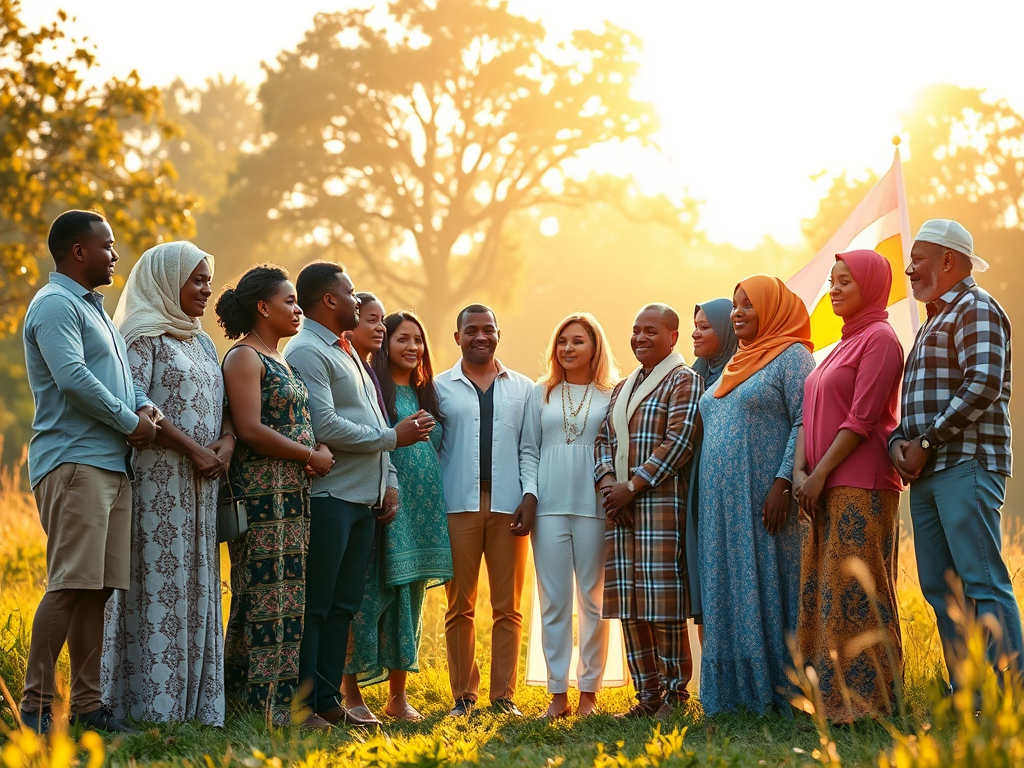

You’re tired of the divisions. The Oppression Olympics. The constant comparisons of who has it worse. The way conversations about identity devolve into competitive suffering or mutual dismissal. You want to honor your Greek, Italian, Irish, Armenian heritage without dismissing or appropriating others’ struggles. You want solidarity, not separation.
Good. That’s possible. But it requires moving beyond simplistic frameworks and engaging with real complexity.
Solidarity doesn’t mean pretending we’re all the same or facing the same challenges. It means understanding difference while finding genuine common ground. It means showing up for each other’s fights even when they’re not yours. It means building coalitions across identity lines without erasing the specifics of anyone’s experience.
This is hard work. Let’s talk about how to do it.
Start With Honest Assessment
Real solidarity requires honesty about where you stand. You can’t build bridges on false foundations. If you’re Italian American, Irish American, or from most other white ethnic groups, you need to acknowledge: yes, your ancestors faced discrimination, and yes, you now benefit from whiteness in ways that people of color don’t.
If you’re MENA, Jewish, or from other white ethnic groups that still face marginalization, you need to acknowledge: yes, you face real discrimination, and also, when you’re perceived as white, you have access to certain privileges that darker-skinned people don’t.
This isn’t about self-flagellation or guilt. It’s about accuracy. You can’t build genuine solidarity on lies or exaggerations. You have to know where you actually stand.
Once you’re honest about your position, you can figure out what genuine solidarity looks like from that position.
Find True Common Ground
Solidarity built on false equivalencies crumbles immediately. “We all face discrimination” doesn’t work when the types and degrees of discrimination are vastly different. But there is real common ground if you look honestly:
Cultural preservation struggles. Irish families that lost their language, Native communities fighting to revitalize theirs, immigrant families navigating assimilation—these aren’t identical experiences, but they share genuine themes. All involve the tension between maintaining heritage and fitting into dominant culture. All involve intergenerational transmission of culture. All involve deciding what to keep and what to adapt.
You can build solidarity around cultural preservation without claiming your experience equals others’. You support Native language programs because you understand language loss, even if the historical forces and current stakes are different.
Identity complexity. Multiracial people, white ethnic minorities, MENA people classified as white, immigrants, adopted people, people with invisible disabilities—all navigate complex identities that don’t fit neatly into boxes. That’s real common ground.
You can advocate for more nuanced identity frameworks that serve everyone without making false claims about experiencing racialization you don’t face.
Economic marginalization. Class cuts across racial and ethnic lines. Poor and working-class people of all backgrounds face economic barriers, even though those barriers often intersect with race in ways that compound disadvantage for people of color.
You can fight for economic justice without pretending class erases race or that working-class white people and working-class Black people face identical obstacles.
Show Up Concretely
Solidarity isn’t abstract. It’s showing up. Literally. Physically. With resources, time, and bodies.
If MENA communities are fighting for a separate census category, support that fight. It doesn’t take anything away from you to advocate for their accurate counting. If Native communities are protecting sacred lands, show up to protests and amplify their voices. If immigrant communities are facing deportation threats, offer sanctuary and resources.
Showing up means more than social media posts. It means:
- Attending rallies and protests for issues that don’t directly affect you
- Donating to organizations led by marginalized communities
- Using your privilege to advocate in spaces where you have access
- Amplifying voices rather than speaking over them
- Showing up consistently, not just when it’s trending
When Black communities say “defund the police,” don’t debate them—listen to why, learn what they’re proposing, and if you’re convinced, support it. When Indigenous organizers ask for specific support, provide it in the way they request, not the way you think is best.
Leverage Your Specific Position
Different positions offer different opportunities for solidarity. If you’re Italian American and perceived as white, you have access to white spaces where you can challenge racism. Use that. You can say things in family gatherings or work meetings that people of color can’t say without being dismissed as “too sensitive” or “playing the race card.”
If you’re light-skinned MENA and can pass as white, you can use that temporary invisibility strategically—calling out Islamophobia and anti-Arab bias in spaces where darker-skinned MENA people would immediately be marked as biased.
If you’re working-class Greek American, you can build bridges with working-class people of color around economic justice while acknowledging how race compounds economic disadvantage differently for different groups.
Your specific identity position isn’t a limitation—it’s your platform. Use it strategically for collective liberation.
Create Space Without Centering Yourself
Here’s a crucial skill: participating without dominating. Taking up space without taking over space. Contributing without centering yourself.
In multiracial coalition spaces, this means:
- Speaking when your perspective adds value, staying quiet when it doesn’t
- Deferring to those most affected by an issue for strategy and direction
- Offering support without demanding recognition or leadership
- Being comfortable in the background doing unglamorous work
- Not making every conversation about your experience or feelings
When Asian Americans are discussing anti-Asian violence, your role as an Irish American isn’t to compare it to historical anti-Irish discrimination. Your role is to listen, learn, amplify, and show up. Maybe there’s space to build bridges around immigration experiences or model minority myths, but you let them determine when and how those connections are relevant.
This doesn’t mean you disappear. It means you contribute proportionally and appropriately.
Build Based on Values, Not Identity
Some of the strongest solidarity isn’t identity-based at all—it’s values-based. You don’t have to share someone’s specific experience to share their commitment to justice, dignity, and liberation.
Build coalitions around shared values:
- Cultural preservation and linguistic rights
- Economic justice and workers’ rights
- Immigrant justice and humane migration policy
- Religious freedom and protection from discrimination
- Disability rights and accessibility
- Gender justice and reproductive rights
- Environmental justice and climate action
When you organize around values rather than identities, you create space for genuine collaboration across difference. Your Jewish community’s commitment to refugee support connects to immigrant justice movements. Your experience with economic hardship connects to fights for living wages and healthcare access.
Values-based solidarity is less about “we’re the same” and more about “we’re fighting for the same world.”
Address Harm Within Your Communities
Real solidarity includes holding your own communities accountable. If you’re Irish American and your uncle makes racist comments at Thanksgiving, address it. If your Italian American community association supports racist policies, speak up. If your Greek Orthodox church excludes LGBTQIA+ people, push for change.
This is uncomfortable. It risks conflict with people you love. But it’s necessary. You can’t claim solidarity with marginalized communities while letting bigotry slide in your own circles.
And importantly: address this from a place of love and shared identity, not superiority. “This isn’t who we are” works better than “you’re all terrible.” You’re calling your community to be better, not condemning them from on high.
Learn the History You Don’t Know
Solidarity requires education. You need to understand the specific histories, current challenges, and existing frameworks of the communities you want to support. That means reading books by authors from those communities, following organizers and scholars, learning the terminology, understanding the context.
Don’t make marginalized people educate you. Do your homework. And when you inevitably mess up (you will), apologize, learn, and do better.
This ongoing education should inform how you understand your own community’s experiences too. Learning about the Middle Passage and chattel slavery should deepen your understanding of intergenerational trauma, which might help you understand your own family’s Holocaust trauma differently. Learning about the Indian boarding schools should inform how you think about cultural suppression generally.
Education builds real bridges. Ignorance builds walls.
Accept That Solidarity Is Uncomfortable
If your solidarity never makes you uncomfortable, you’re probably not doing it right. Real solidarity means:
- Sometimes admitting you were wrong
- Sometimes prioritizing others’ needs over your comfort
- Sometimes being called out for harm you didn’t intend
- Sometimes sitting with your own privilege and complicity
- Sometimes accepting that you don’t get to lead or even speak
This discomfort is growth. Lean into it instead of defending against it.
It also means accepting that solidarity doesn’t always look the way you expect. Black communities might not want your input on their internal strategies. Indigenous organizers might not want non-Indigenous people at certain gatherings. That’s not exclusion—it’s autonomy. Respect it.
Remember the Long Game
Solidarity isn’t a transaction where you support something and immediately get support back. It’s long-term commitment to collective liberation, even when the immediate benefits aren’t obvious or when the work gets exhausting or when you’re not seeing results.
This means staying engaged even when the issue drops out of news cycles. It means supporting the unglamorous background work, not just the dramatic protest moments. It means being there for the long organizing slog, not just the viral moments.
And it means understanding that liberation for any group ultimately benefits everyone. A world without racism, without xenophobia, without discrimination based on any aspect of identity—that world is better for everyone, including white ethnic minorities.
You’re not sacrificing for others. You’re investing in collective freedom that includes you.
Build the Coalition You Want to See
Ultimately, solidarity across difference means creating spaces and movements that embody the values you’re fighting for. That means organizing that’s intersectional, leadership that’s diverse, structures that are democratic and non-hierarchical, practices that center those most affected by injustice.
You don’t wait for perfect unity or complete agreement. You build with whoever is ready to build, making space for disagreement and difference while staying aligned on core values and goals.
And you model what it looks like to honor your own identity while fighting for justice beyond yourself. To be proud of your Greek, Jewish, Armenian heritage while showing up for Black liberation. To maintain your cultural practices while supporting Indigenous sovereignty. To explore your ethnicity while dismantling white supremacy.
This isn’t contradictory. This is what real solidarity looks like: fully yourself, fully committed, fully engaged in collective liberation.
The World Solidarity Builds
Imagine a world where white ethnic minorities preserve their cultures while supporting other communities doing the same. Where Italian Americans teach their children Italian and also advocate for bilingual education for Latinx kids. Where Jewish communities fight anti-Semitism and also show up against Islamophobia. Where working-class white ethnics build coalitions with working-class people of color around economic justice while acknowledging how racism and class intersect.
This world is possible. But it requires moving beyond competition and comparison. It requires honest assessment of privilege and marginalization. It requires consistent showing up, even when it’s hard. It requires discomfort, learning, and accountability.
It requires solidarity built not on false equivalencies but on genuine connection. Not on shared identity but on shared values. Not on who’s most oppressed but on collective commitment to justice.
You can honor your heritage and fight for others’ rights to do the same. You can acknowledge your privilege and your struggles simultaneously. You can be fully Italian, Greek, Irish, Jewish, Armenian—and fully in solidarity with all marginalized communities.
That’s not contradiction. That’s complexity. And complexity is where real solidarity lives.