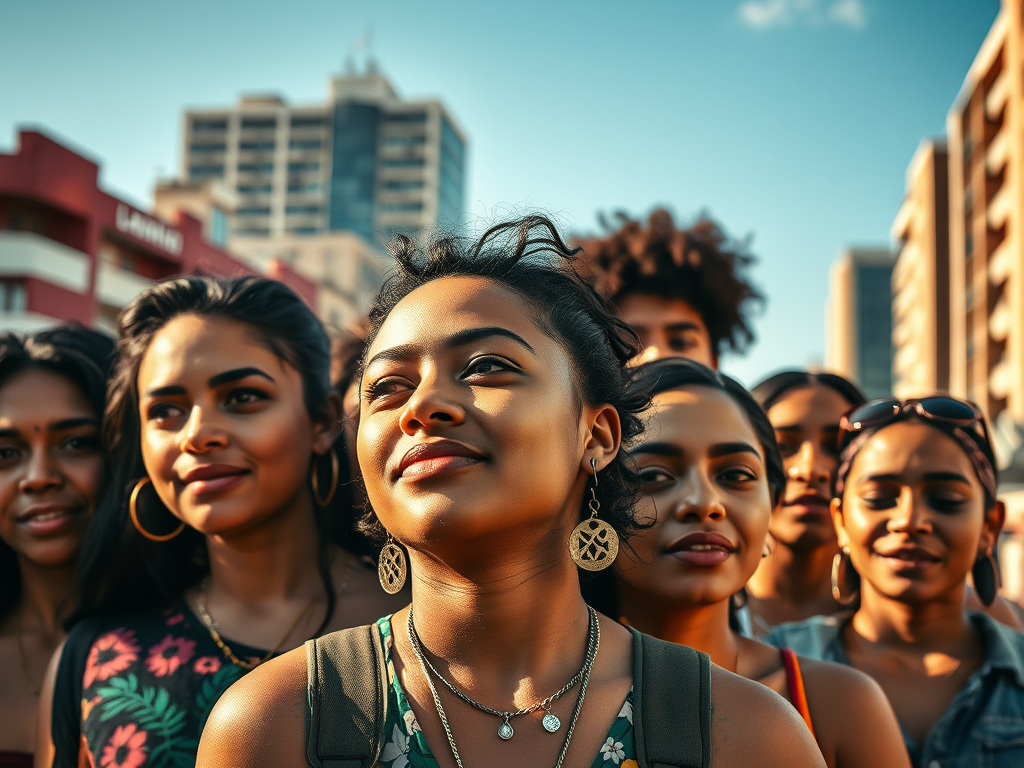

The story of Latinx people in the United States and across the diaspora has been written as one of struggle, sacrifice, and survival. And yes, we’ve survived—colonization, displacement, discrimination, and every attempt to erase us. But survival is the floor, not the ceiling. It’s time to talk about Latinx sovereignty, power, and the future we’re building on our own terms.
The Numbers Tell a Story
Latinx people are nearly 20% of the US population. We’re the largest minority group. We’re young—median age of 30 compared to 43 for white Americans. We’re growing. By 2060, we’ll be nearly 30% of the country.
But numbers don’t tell the whole story. We’re diverse—Mexican, Puerto Rican, Cuban, Dominican, Central American, South American. We’re Black, Indigenous, white, Asian, and every combination. We speak Spanish, English, Spanglish, Portuguese, Indigenous languages, or no Spanish at all and are still Latinx.
We’re third-generation Americans and recent arrivals. We’re documented and undocumented. We’re citizens and Dreamers. We’re conservative and progressive and everything between. We’re straight, queer, trans, non-binary. We’re breaking every monolithic narrative about who we’re supposed to be.
Economic Power and Entrepreneurship
Latinx purchasing power exceeds $1.9 trillion. If US Latinx were a country, our GDP would be the eighth-largest globally. We’re not just workers—we’re consumers, creators, and business owners.
Latinx entrepreneurs launch businesses at rates higher than any other demographic. We start companies out of necessity when traditional employment fails us, out of cultural traditions of self-employment, out of dreams bigger than the boxes others try to put us in.
From food trucks to tech startups, from construction companies to consulting firms, Latinx businesses are reshaping local economies. We hire from our communities. We support other Latinx businesses. We build wealth that stays in our neighborhoods.
But we still face barriers—less access to capital, higher loan denial rates, discrimination from investors who don’t see us as “founder material.” So we bootstrap, crowdfund, and create our own funding networks. We refuse to wait for permission to build our own economic sovereignty.
Cultural Production and Global Influence
Latinx culture isn’t niche—it’s mainstream. It’s been mainstream. The music you dance to, the food you eat, the art you consume—we’ve shaped it all.
Reggaeton and Latin trap dominate global charts. Bad Bunny is the most-streamed artist on Spotify—singing primarily in Spanish. Karol G, J Balvin, Rosalía—they’re not crossing over to English to succeed. The world is coming to them.
In film and TV, we’re finally seeing ourselves beyond maids and gangsters. “Coco” celebrated Día de los Muertos. “Encanto” showed a Colombian family’s magic. “Gentefied,” “One Day at a Time,” and “Party of Five” reboot told our contemporary stories.
Latinx directors like Guillermo del Toro, Alfonso Cuarón, and Alejandro González Iñárritu dominate awards. Latinx actors like Zoe Saldaña, Diego Luna, and Jenna Ortega are box office draws. We’re not asking for representation anymore—we’re creating it.
Political Power and Organizing
For too long, Latinx political power has been underestimated. We’ve been called “sleeping giants” for decades. We’re awake now.
Latinx voter turnout has steadily increased. Young Latinx voters are engaging at higher rates than previous generations. We’re organizing around immigration, climate justice, healthcare, education—issues that affect all communities but hit ours particularly hard.
Representatives like Alexandria Ocasio-Cortez, Joaquin Castro, and Veronica Escobar bring Latinx perspectives to Congress. Local officials from city councils to state legislatures are increasingly Latinx. We’re not just voting—we’re running, winning, governing.
Grassroots organizations like United We Dream, Make the Road, and the National Domestic Workers Alliance are Latinx-led movements fighting for dignity, rights, and power. They’re winning policy changes, shifting narratives, building power.
Educational Achievement and Institutional Change
Latinx students face obstacles—underfunded schools, language barriers, tracking into non-college paths. But we’re persisting and succeeding at increasing rates.
Latinx college enrollment has grown substantially. We’re earning degrees in STEM, humanities, arts, everything. Latinx scholars like Tara Yosso, Dolores Delgado Bernal, and Gloria Anzaldúa have shaped entire academic fields while challenging the academy’s exclusions.
We’re also creating alternative educational pathways. Community centers offer programming in Spanish. Mutual aid networks provide tutoring and mentorship. We pool resources because we know institutional support is lacking.
And we’re changing institutions from the inside. Latinx educators teach culturally responsive curriculum. Latinx administrators push for equitable policies. Latinx students organize for ethnic studies requirements. We’re not just accessing education—we’re transforming it.
Indigenous and Afro-Latinx Futures
The Latinx community isn’t monolithic, and conversations about our future must center those most marginalized: Indigenous and Afro-Latinx peoples.
Indigenous Latin Americans carry thousands of years of knowledge. When we talk about Latinx futures, we must acknowledge that many Latinx people are Indigenous to this continent. Their knowledge about land, language, and resistance is crucial.
Afro-Latinx people face both anti-Blackness within Latinx communities and erasure by broader society. Organizations like the Afro-Latin@ Forum and Black Latinas Know Collective are fighting for visibility and justice. Afro-Latinx artists, scholars, and activists are reshaping conversations about race, identity, and belonging.
Our evolution requires confronting anti-Blackness and anti-Indigeneity within our own communities. It requires recognizing that colorism and racism don’t stop at community borders. It requires lifting up the most marginalized among us.
Immigration Beyond the Binary
Immigration debates reduce us to “good immigrants” versus “illegals.” We reject this binary entirely. All immigrants are worthy of dignity, safety, and belonging.
DACA recipients prove they belong by their achievements. But they shouldn’t have to. Undocumented farmworkers deserve rights whether or not they have valedictorian children. Sanctuary cities and mutual aid networks protect people from deportation not because they’re “deserving” but because displacement is violence.
The future of immigration justice is abolishing ICE, ending detention centers, creating pathways to citizenship for everyone, and addressing the root causes—US interventions in Latin America—that force migration in the first place.
Dreamers and undocumented youth are organizing fearlessly. They’re coming out as undocumented, risking everything for collective liberation. They’re redefining what activism looks like.
Health and Wellness Sovereignty
Latinx communities face health disparities but are also creating wellness innovations rooted in cultural practices.
Curanderismo, traditional healing, continues alongside Western medicine. Community health workers, promotoras, provide culturally competent care. Mental health advocates fight stigma while honoring cultural ways of processing trauma.
Food sovereignty movements reclaim traditional diets. Urban gardens grow vegetables and herbs from back home. Cooking becomes resistance against gentrification and food apartheid.
Latina doulas reduce maternal mortality rates. Mental health professionals like Prisca Dorcas Mojica Rodríguez create resources specifically for Latinx communities. We’re not waiting for institutions to save us—we’re saving ourselves.
The Future Is Latinx
Latinx sovereignty isn’t about separation—it’s about self-determination. It’s about building power on our own terms, defining success by our values, creating futures that honor our pasts.
We’re journalists telling our own stories, not waiting for others to get them wrong. We’re politicians fighting for our communities. We’re artists creating culture, not consuming it. We’re entrepreneurs building wealth. We’re scholars producing knowledge. We’re organizers winning campaigns.
We’re no longer surviving—we’re thriving. We’re not asking for space at the table—we’re building our own tables. We’re not the future—we’re the now.
From survival to sovereignty. From margins to power. From invisibility to undeniability. This is Latinx evolution, and it’s just beginning. Si se puede isn’t just a slogan—it’s a promise we’re keeping every single day.