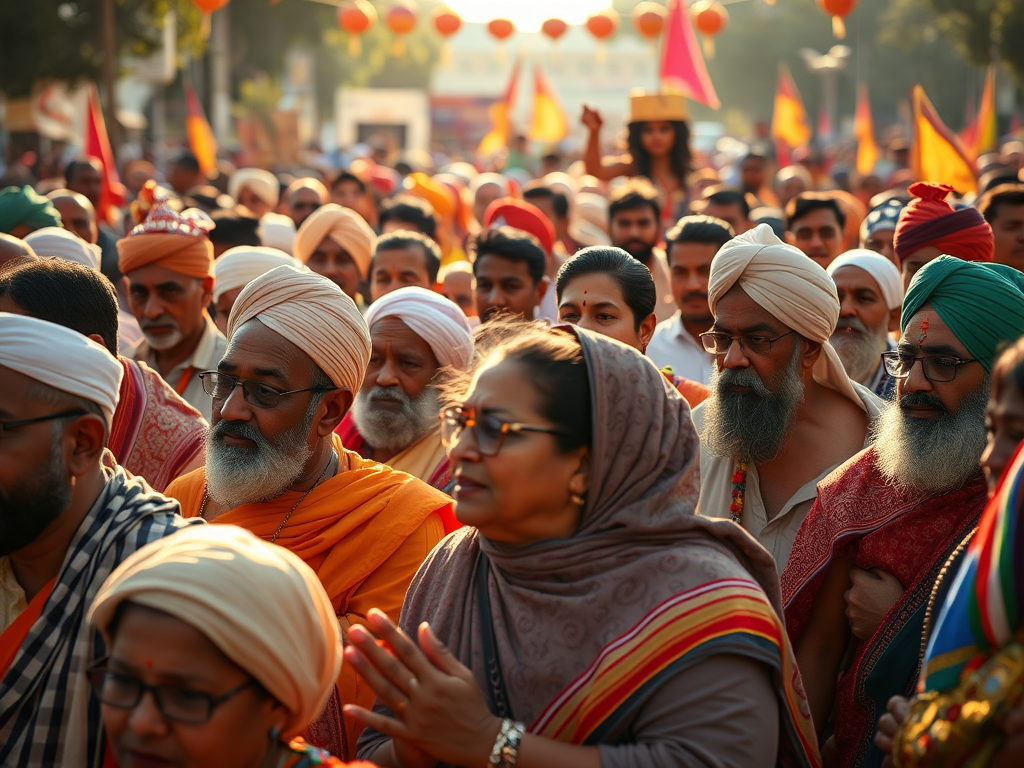

Faith in America has always been more diverse than the narrative suggests. While Christian denominations dominate the conversation, millions of Americans practice religions that get erased, misunderstood, or outright attacked. For minority communities, faith isn’t just about Sunday services or holiday celebrations—it’s about preserving culture, finding community, and resisting erasure in a country that often treats Christianity as the default setting.
The Myth of Religious Freedom
America loves to tout religious freedom, but that freedom comes with conditions. It’s easier to practice your faith when it looks like the majority’s faith. Muslims face surveillance and suspicion. Sikhs get mistaken for Muslims and face the same bigotry. Hindus watch their symbols get co-opted by yoga studios while their actual beliefs get dismissed as exotic. Buddhist temples get vandalized. Indigenous spiritual practices were literally illegal until 1978.
Religious freedom in America often means “freedom to be Christian, or Christian-adjacent, or quiet about it.”
When Faith Meets Racism
Minority faith communities navigate a double burden. They face religious discrimination and racial discrimination, and those forces multiply rather than add. A Black Muslim woman in hijab doesn’t just face Islamophobia—she faces anti-Blackness filtered through Islamophobia. A Latinx Jewish person gets told they “don’t look Jewish” because Jewishness has been racialized as white.
Faith communities that are predominantly people of color get surveilled more heavily, receive less institutional support, and have their practices viewed with more suspicion. When white people practice Buddhism, they’re “spiritual.” When Asian immigrants build Buddhist temples, they’re “not assimilating.”
Representation and Erasure
How often do you see non-Christian faith leaders on panels about “faith in America”? How many TV shows feature Muslim, Hindu, Sikh, or Jewish characters whose entire plotline doesn’t revolve around their religion? Where are the interfaith coalitions that actually center minority faith voices rather than tokenizing them?
The erasure is strategic. When Christianity is centered as the norm, everything else becomes “other.” That othering justifies discrimination, surveillance, and exclusion. It’s why Muslim Americans have to constantly prove they’re “one of the good ones.” It’s why Sikh Americans have spent two decades explaining that turbans aren’t threats.
Building Community Against the Odds
Despite everything, minority faith communities build powerful spaces of resistance and belonging. Mosques become organizing centers. Temples host cultural events that preserve language and tradition. Gurdwaras feed anyone who walks through the door, regardless of faith. Synagogues led by Jews of color challenge the whitewashing of Jewish identity.
These communities create infrastructure that the broader society won’t provide. They offer cultural education, language classes, community support, and political organizing. They’re not just houses of worship—they’re survival networks.
The Next Generation
Young people in minority faith communities navigate unique pressures. They balance cultural expectations with American secularism. They fight Islamophobia in schools while fasting for Ramadan. They explain Diwali to classmates who’ve never heard of it. They defend their grandparents’ accents and their own identities simultaneously.
Many are creating new models of faith that honor tradition while addressing contemporary issues. Muslim feminists reinterpret religious texts. LGBTQIA+ Hindus find acceptance in communities that once rejected them. Jews of color challenge white supremacy within Jewish spaces. This isn’t abandoning faith—it’s refusing to let others define what faithful looks like.
What Solidarity Actually Looks Like
Real religious freedom means protecting the rights of all faiths, not just the comfortable ones. It means calling out Islamophobia even if you’re not Muslim. It means supporting Indigenous land rights and spiritual practices. It means learning how to pronounce names and terms correctly. It means showing up when temples and mosques are vandalized.
It also means not romanticizing or appropriating minority faiths. You can’t love Buddhism while treating actual Buddhists as invisible. You can’t wear a bindi while dismissing Hinduism as superstition. You can’t adopt Indigenous spiritual practices while ignoring Indigenous people’s actual needs and demands.
Moving Forward
Faith communities have always been at the forefront of social justice movements. Black churches anchored the Civil Rights Movement. Muslim organizations lead immigrant rights efforts. Sikh activists fight for religious freedom. Jewish groups organize against white supremacy.
The future of faith in America is diverse, intersectional, and unapologetically resistant to erasure. Minority faith communities aren’t asking for tolerance—they’re demanding recognition, respect, and the same freedoms promised to everyone else.
Your faith isn’t a quirk to be tolerated. It’s part of who you are, and it deserves protection, celebration, and power.