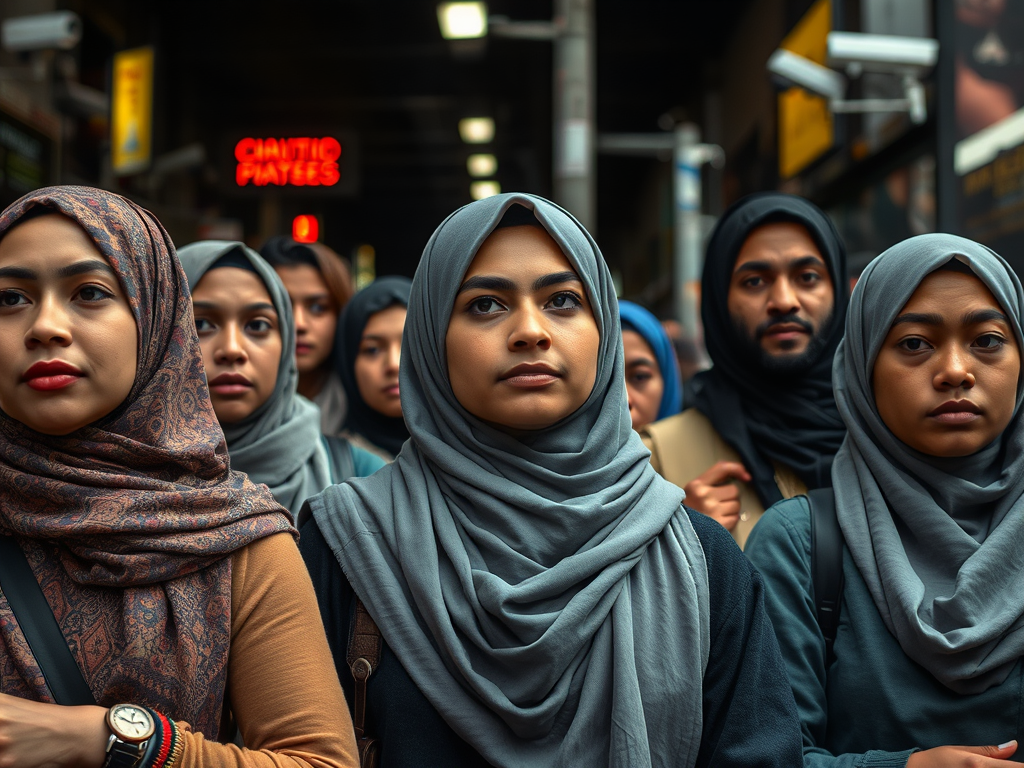

Living while Muslim in America means navigating a constant state of surveillance, suspicion, and low-key hostility that’s been normalized since 9/11. It’s been over two decades, and Muslim Americans are still being asked to apologize for terrorism they had nothing to do with, still being treated as potential threats, still watching their civil liberties erode in the name of national security.
The Islamophobia That Never Left
After 9/11, America promised to distinguish between terrorists and peaceful Muslims. That promise was hollow. What actually happened was the mainstreaming of Islamophobia—the kind that’s dressed up as “security concerns” and “legitimate questions about integration.”
Muslim Americans face discrimination in employment, housing, and education. Women in hijab are harassed on public transit. Muslim-sounding names get flagged at airports. Mosques get vandalized and surveilled. Children are bullied in schools. And when Muslim Americans speak up, they’re told they’re being too sensitive, that these are isolated incidents, that it’s not really about their faith.
Except it is. It always has been.
The Double Standard
When a white person commits violence, they’re a “lone wolf” with mental health issues. When a Muslim person commits violence, their entire religion is indicted. Muslim Americans are expected to condemn terrorism loudly and repeatedly, as if their silence equals endorsement. No other group faces this collective blame.
Politicians campaign on anti-Muslim rhetoric and win. Travel bans target Muslim-majority countries and get upheld by courts. Law enforcement infiltrates mosques and entraps vulnerable young men. And through it all, Muslim Americans are told to be patient, to educate others, to prove they’re loyal Americans.
That burden of proof never ends. No amount of patriotism, success, or assimilation makes it stop.
The Surveillance State
Muslim American communities are among the most surveilled populations in the country. The FBI has infiltrated mosques, recruited informants, and created terrorism plots to justify arrests. Muslim students are monitored by programs like Countering Violent Extremism. Social media posts are scrutinized. Charitable donations to Muslim organizations are treated as potential terrorism financing.
This surveillance shapes daily life in ways non-Muslims don’t consider. You watch what you say at Friday prayers. You think twice before donating to certain causes. You know your mosque probably has an informant. You teach your kids to be careful about what they post online.
Freedom of religion rings hollow when your religious community is treated as a national security threat.
Gendered Islamophobia
Muslim women who wear hijab face a particular brand of discrimination. They’re visible targets for harassment, job discrimination, and violence. They’re told they’re oppressed and need saving—usually by the same people who want to ban them from public life.
The hijab becomes a referendum on feminism, liberation, and Western values. Muslim women’s choices about their own bodies are debated by people who’ve never asked them what they actually want. And when Muslim women succeed—as doctors, lawyers, engineers, activists—their achievements are framed as “despite” their faith rather than informed by it.
Muslim men face different stereotypes: the threatening terrorist, the oppressive patriarch, the backward fundamentalist. These images justify discrimination and violence while erasing the reality of Muslim men’s lives—their families, careers, contributions, and humanity.
The Mental Health Toll
Living under constant suspicion takes a psychological toll that’s rarely discussed. Muslim Americans experience higher rates of anxiety, depression, and PTSD. Children grow up internalizing the message that their faith makes them dangerous. Families navigate the stress of discrimination while trying to maintain their cultural and religious practices.
And when Muslim Americans seek mental health support, they often face providers who don’t understand their experiences or who hold their own anti-Muslim biases. The isolation compounds.
Resistance and Community
Despite everything, Muslim American communities thrive. They build mosques and community centers. They organize politically and legally. They create art, music, and literature that challenges stereotypes. They raise children who are proud of their identity. They form coalitions with other marginalized communities.
Young Muslim Americans are particularly powerful in pushing back. They refuse to be defined by others’ fears. They’re vocal on social media, active in movements for racial justice, and unapologetic about their identities. They’re building a future where being Muslim in America doesn’t mean constantly proving your humanity.
What Needs to Change
Real change requires dismantling the infrastructure of Islamophobia. That means ending FBI surveillance programs that target Muslim communities. It means stopping the profiling at airports and borders. It means rejecting politicians who campaign on anti-Muslim bigotry. It means teaching accurate information about Islam in schools. It means hiring Muslim Americans in all industries and at all levels.
It also means non-Muslim Americans doing the work. Speak up when you witness Islamophobia. Support Muslim-owned businesses. Amplify Muslim voices without tokenizing them. Challenge your own biases and assumptions. Show up when mosques are threatened.
The Bottom Line
Muslim Americans aren’t asking for special treatment. They’re demanding the same rights and dignity promised to everyone else. The same freedom to practice faith without surveillance. The same presumption of innocence. The same opportunity to live, work, and worship without fear.
That’s not radical. That’s the bare minimum. And America has been failing at it for over twenty years.