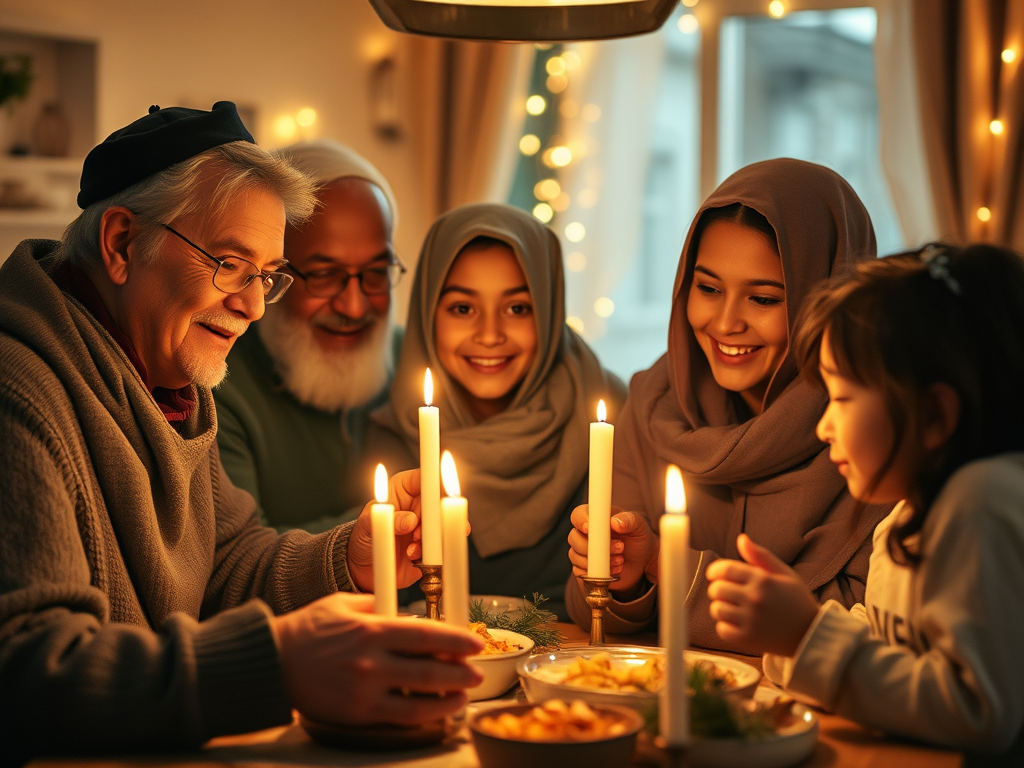

Raising kids in an interfaith family means navigating questions that single-faith families never face. Which holidays do you celebrate? What traditions matter most? How do you explain why mom and dad believe different things? And how do you create a cohesive family identity when your cultural and religious backgrounds don’t easily overlap?
Interfaith families are building something new—households that honor multiple traditions, challenge binary thinking about identity, and raise children who are comfortable with complexity and diversity.
The Reality of Interfaith Families
Interfaith marriage rates have increased dramatically over the past few decades. Jews marry non-Jews. Christians marry Muslims. Hindus marry atheists. Buddhists marry Christians. Every possible combination exists, each creating unique opportunities and challenges.
For families of color, interfaith relationships often also cross cultural lines—Mexican Catholic with Black Baptist, Pakistani Muslim with Indian Hindu, Filipino Catholic with Chinese Buddhist. These relationships navigate not just different religions but different cultures, languages, food traditions, and community expectations.
The assumption that interfaith families are unstable or confused is outdated. Many interfaith families are deeply committed to honoring both traditions and raising children who understand and respect both.
Choosing What to Practice
One of the first questions interfaith families face: What will we practice? Some families choose one religion and commit to it. Others practice both and let children choose later. Some create hybrid celebrations that incorporate elements from each tradition. Others don’t practice either religion but teach children about both.
There’s no right answer, but the decision requires honest conversation about what each partner needs, values, and can compromise on. It also requires recognizing power dynamics—if one religion is more culturally dominant (Christianity in America), is the other faith getting truly equal space?
Family Reactions and Community Judgment
Extended families don’t always support interfaith marriages. Parents worry about grandchildren’s religious identities. Communities question whether the relationship is legitimate. Religious leaders may refuse to officiate weddings or recognize children.
This rejection can be painful, especially when it comes from communities you hoped would support you. Some families eventually come around. Others never do. Interfaith couples have to decide how much they’re willing to accommodate others’ discomfort and when to set boundaries.
Communities can also be judgmental. Some religious spaces welcome interfaith families. Others make it clear that you’re not fully included unless both partners convert. These exclusions force difficult decisions about where to worship and whether to even bother trying.
Children and Identity
Children in interfaith families often describe feeling “both and” rather than “either or.” They celebrate multiple holidays, learn different prayers, hear different stories about God and the universe. This can be enriching, confusing, or both.
Some kids embrace both traditions and carry multiple religious identities into adulthood. Others feel pressure to choose and resent having to pick sides. Some grow up with strong cultural identities without religious belief. Others reject both traditions and create their own spiritual paths.
The key is giving children accurate information about both traditions, permission to ask questions, and space to develop their own relationship with faith and identity.
The Holiday Juggling Act
Interfaith families become experts at calendar management. You’re celebrating Christmas and Hanukkah, Ramadan and Easter, Diwali and Thanksgiving. Sometimes holidays overlap, creating logistical challenges and beautiful opportunities to blend traditions.
Some families celebrate everything. Others pick and choose based on personal meaning and practicality. The goal is creating family traditions that feel authentic rather than performative.
It also means dealing with school calendars that only recognize certain holidays, relatives who don’t understand why you celebrate “their” holiday “wrong,” and kids who wonder why their family is different from their friends’ families.
Teaching Children About Faith
Explaining different beliefs to children requires honesty without undermining either parent’s faith. You can say “Mom believes this and Dad believes that, and both are important” without suggesting one is right and the other wrong.
Some children find this confusing. Others appreciate exposure to multiple perspectives. The challenge is providing genuine religious education about both traditions rather than shallow celebrations of holidays.
This often means outsourcing some education—religious school, community classes, cultural events—because one parent may not know enough about the other’s tradition to teach it well.
Community and Belonging
Interfaith families often struggle to find community. Single-faith institutions may welcome you but not fully include you. Secular spaces may lack the spiritual component you want. Interfaith groups exist but aren’t always well-established or accessible.
Some families create their own communities—networks of other interfaith families who understand the challenges and celebrate the joys. Others prioritize different kinds of community—neighborhood, school, cultural organizations—over religious belonging.
The search for belonging is real. Humans crave community, and when existing religious communities don’t fully embrace you, it can feel isolating.
Power Dynamics and Privilege
In interfaith families, some religions carry more cultural power than others. Christianity in America is the default. Secularism is often coded as neutral but actually reflects Christian cultural norms. These dynamics affect interfaith families whether acknowledged or not.
A Christian-Muslim family navigates different power dynamics than a Christian-Jewish family or a Hindu-Buddhist family. The partner from the minority religion often does more work to maintain those traditions because American culture isn’t reinforcing them. This imbalance can breed resentment if not addressed openly.
Raising Antiracist Children
For interfaith families of color, religion is one part of a larger identity formation. You’re also teaching children about race, navigating discrimination, and building pride in cultural heritage.
Interfaith households can be powerful spaces for teaching children about diversity, equity, and inclusion. They learn early that people can have different beliefs and still love each other. They see complexity as normal. They practice navigating different cultural contexts.
These skills matter in an increasingly diverse world. Interfaith children often become bridges between communities, comfortable with difference and skilled at holding multiple perspectives simultaneously.
When It Gets Hard
Interfaith families face unique pressures during life transitions. Births, deaths, and coming-of-age ceremonies all carry religious significance. Families have to decide which rituals to practice, which communities to involve, and how to honor both traditions without making everything feel fragmented.
Divorce can complicate matters further, especially if custody agreements include stipulations about religious upbringing. The stakes get higher when you’re not just negotiating co-parenting but also religious identity.
Building Your Own Tradition
The beauty of interfaith families is freedom to create something new. You’re not bound by “this is how it’s always been done.” You can take the best from both traditions, adapt practices to fit your family, and build rituals that are meaningful rather than obligatory.
Some families light candles on Friday nights regardless of religious background. Others create new celebrations that blend cultural elements. Many find that food, music, and storytelling become the threads that connect different traditions.
What Solidarity Looks Like
Supporting interfaith families means respecting their choices without pressuring them to conform to single-faith models. It means religious communities creating genuinely inclusive spaces. It means not treating interfaith children as if they need to be “saved” or “claimed” for one side.
It also means interfaith families sharing resources, strategies, and support with each other. The more visible interfaith families become, the easier it gets for the next generation.
The Bottom Line
Interfaith families aren’t broken or confused—they’re building something intentional. They’re raising children who understand that diversity is normal, that different beliefs can coexist peacefully, and that identity doesn’t have to be singular.
Your family doesn’t need to fit someone else’s template. Build the traditions that work for you, honor what matters most, and trust that your children will benefit from exposure to different perspectives.
Love and respect across difference—that’s the foundation. Everything else is details.