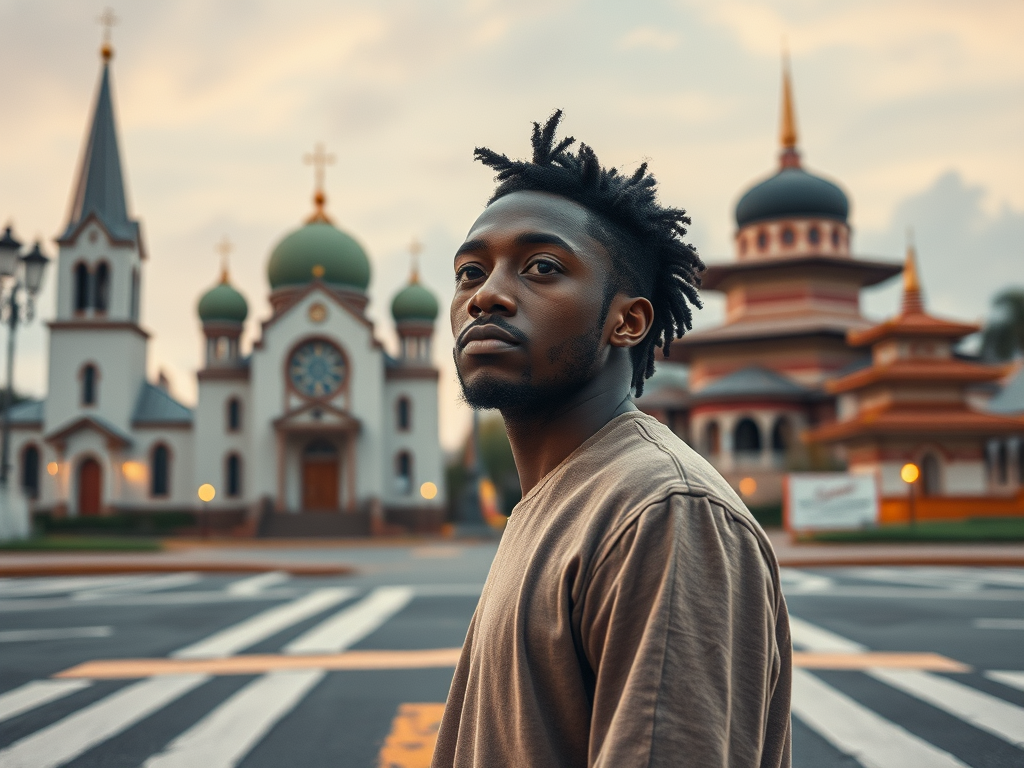

In communities where faith is often central to identity, being atheist or agnostic as a person of color means breaking with cultural expectations, disappointing family, and sometimes losing community entirely. It means questioning not just God but the institutions and traditions that shaped your upbringing. And it often means doing this alone because atheism has been predominantly framed as a white, Western phenomenon.
Faith as Cultural Expectation
For many POC communities, religion isn’t just personal belief—it’s cultural identity, community anchor, family tradition, and survival tool. The Black church sustained communities through slavery and Jim Crow. Mosques served as organizing centers for immigrant Muslims. Temples preserved language and culture for Asian Americans. Catholic churches centered Latinx communities.
Leaving religion means potentially leaving community. It means being seen as abandoning your culture, your people, your history. It means becoming the family disappointment, the one who “forgot where they came from.”
The pressure to maintain religious identity is intense. Faith isn’t just encouraged—it’s assumed. Questioning it feels like betrayal.
The Isolation of POC Atheism
Atheist and agnostic communities in America skew heavily white and often carry their own problems with racism and cultural insensitivity. When POC non-believers seek community with other atheists, they often encounter spaces that center white experiences, dismiss cultural complications around leaving religion, or worse, use atheism as an excuse to attack POC religious communities.
White atheism often treats all religion as equally problematic without acknowledging the different roles religion plays in communities with varying levels of power. Critiquing the Catholic Church’s wealth is different from attacking a Black church providing social services. White atheists don’t always grasp these distinctions.
The result is isolation. You don’t fit in religious POC spaces because you don’t believe. You don’t fit in white atheist spaces because they don’t understand your cultural context. You’re too non-religious for your community and too complicated for white atheists.
Coming Out as Non-Religious
“Coming out” as atheist or agnostic in POC families can be as fraught as coming out as LGBTQIA+. Parents worry about your soul. Grandparents pray for your return to faith. Siblings defend you but also pressure you to just go along to keep peace.
Some families react with disappointment. Others with anger. Some try to argue, convert, or fix you. A few respond with violence or cutting off contact. The risk is real, which is why many POC atheists remain closeted, attending services they don’t believe in and performing faith to maintain family relationships.
This closeting has psychological costs. It’s exhausting to pretend. It’s isolating to hide a fundamental aspect of your worldview. It breeds resentment toward both religion and family.
Different Paths to Non-Belief
POC arrive at atheism and agnosticism through various paths. Some were never really believers but went through the motions. Others deeply believed and lost faith gradually or suddenly. Some left after experiencing trauma within religious institutions. Others studied their religion deeply and found it intellectually unsatisfying.
Colonialism plays a role for many Indigenous and formerly colonized peoples. Christianity and Islam were often imposed through violence. Leaving these religions becomes an act of decolonization—reclaiming ancestral spiritual traditions or rejecting religion entirely as part of colonial legacy.
For others, it’s about hypocrisy. Watching churches support oppression while preaching love. Seeing religious communities exclude LGBTQIA+ members. Noticing how religion is weaponized against women, against progress, against science.
The reasons are as varied as the people, but the result is the same: breaking with something that was supposed to be unbreakable.
Spirituality Without Religion
Many POC who leave organized religion don’t identify as atheist—they’re spiritual but not religious. They maintain practices like meditation, ancestor veneration, or cultural rituals without believing in the religious frameworks those practices came from.
This middle ground allows for cultural connection without religious belief. You can celebrate holidays as cultural events. You can honor traditions without believing their supernatural claims. You can participate in family religious events as a sign of respect without pretending to believe.
The challenge is that this nuance often isn’t understood or accepted. You’re either in or out. Picking and choosing feels like disrespect to believers and weak commitment to atheists.
Raising Children Without Religion
POC atheists and agnostics raising children face unique challenges. How do you pass on cultural traditions when many are tied to religion? How do you teach children about their heritage without indoctrinating them? How do you help them understand why family members believe what they believe?
Some teach children about religion as cultural history and mythology. Others focus on secular ethics and cultural practices separate from faith. Many struggle with wanting kids to have choice but also not wanting them to get indoctrinated by family members.
Grandparents often see these children as their last chance to “save” the family’s faith. They take kids to services, teach prayers, give religious gifts. This creates conflict between respecting family relationships and maintaining boundaries about religious education.
Ethics Without God
One of the most frustrating assumptions POC atheists face is that morality requires religion. “If you don’t believe in God, what’s stopping you from doing terrible things?”
The implication that people only act ethically out of fear of divine punishment is both offensive and obviously false. Atheists and agnostics have ethical frameworks rooted in human wellbeing, social contract, personal values, and community impact.
In fact, many leave religion because of ethical concerns—disagreement with teachings about LGBTQIA+ people, women’s roles, other faiths, or social justice issues. Their ethics drove them away from religion, not the other way around.
Death and Meaning Without Afterlife
One of the hardest aspects of non-belief for many is confronting mortality without the comfort of afterlife belief. When loved ones die, there’s no heaven narrative to soften the loss. When facing your own death, there’s no promise of continuation.
This is genuinely difficult, and atheists who pretend otherwise aren’t being honest. But there’s also freedom and beauty in accepting finitude. Life becomes more precious when it’s all you have. Relationships matter more. Time has greater meaning.
POC atheists often create new rituals around death that honor cultural traditions without religious content. They find meaning in legacy, memory, impact, and community rather than afterlife.
Building POC Atheist Community
POC atheists and agnostics are building their own spaces—online communities, local meetups, organizations specifically for non-believers of color. These spaces address the unique challenges of being non-religious while navigating cultural expectations, racism, and family dynamics.
Groups like Black Nonbelievers, Ex-Muslims of North America, and others create community for people who couldn’t find it elsewhere. They provide support, resources, and validation that your experience is real and you’re not alone.
What Solidarity Looks Like
Supporting POC atheists and agnostics means recognizing that leaving religion is complex and culturally fraught. It means not pressuring people to come out before they’re ready. It means white atheists doing the work to make secular spaces less racist and more culturally aware.
It also means religious POC communities recognizing that people leave for many valid reasons and that leaving faith doesn’t mean abandoning culture or community. You can disagree about belief without cutting people off or treating them as enemies.
The Path Forward
Being atheist or agnostic as a person of color means navigating spaces that don’t quite fit, disappointing people you love, and building meaning without the structures you were raised with. It’s not easy, and anyone who tells you otherwise is selling something.
But it’s also authentic. You can’t force belief. You can’t pretend forever. And living honestly, even when it’s hard, has its own kind of integrity.
Your relationship with faith (or lack thereof) is yours. You don’t owe anyone belief. You don’t owe anyone performance. Your questions, doubts, and conclusions are valid.
And if you do leave religion, know that you’re not alone—even when it feels that way.