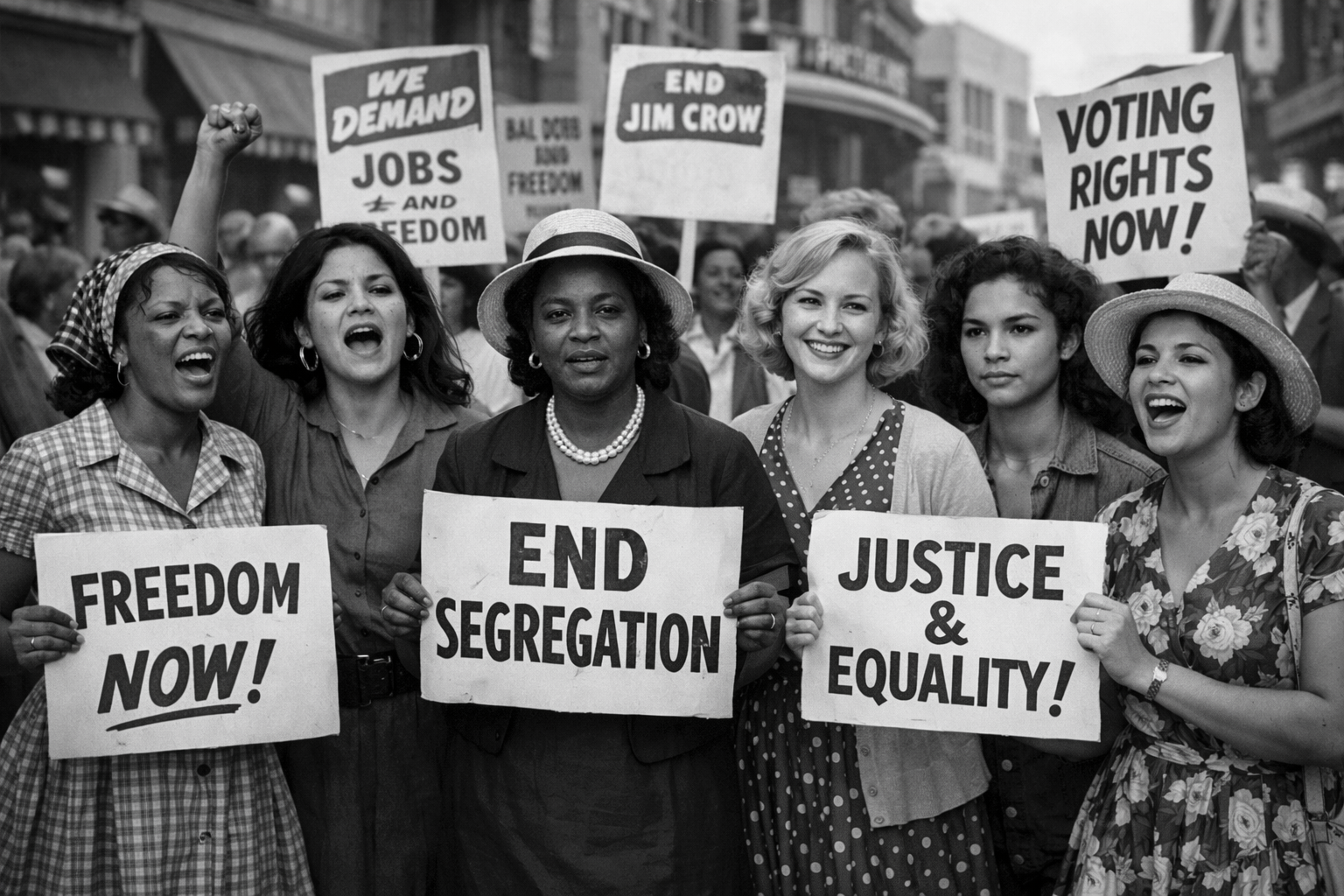

Rosa Parks sat down. Martin Luther King Jr. gave speeches. Malcolm X was radical.
That’s the civil rights story most people know. Neat. Tidy. Focused on a few famous names—most of them men.
But the Civil Rights Movement wasn’t built by a handful of charismatic leaders. It was built by thousands of organizers, most of them women, most of them never mentioned in textbooks.
Let’s fix that.
Ella Baker: The Strategist
If you don’t know Ella Baker’s name, you’re not alone, and that’s exactly the problem.
Baker was the organizational genius behind the movement. She worked with the NAACP, helped launch the Southern Christian Leadership Conference (SCLC) as its first acting executive director, and helped create the Student Nonviolent Coordinating Committee (SNCC).
Her philosophy: “Strong people don’t need strong leaders.”
She believed in grassroots organizing over charismatic leadership. She believed in empowering local people to lead their own movements rather than waiting for a savior. She believed in democracy, participation, and the power of ordinary people.
While male leaders fought over who got credit, Baker built the infrastructure that made their work possible.
She trained organizers. She developed strategy. She connected local movements into a national force. She mentored young activists who would become the next generation of leaders.
The Civil Rights Movement would not have existed without Ella Baker. But most history books barely mention her.
Fannie Lou Hamer: The Truth-Teller
Fannie Lou Hamer was a sharecropper from Mississippi. She was beaten, arrested, forcibly sterilized by a white doctor without her knowledge, and terrorized for registering to vote.
She didn’t back down.
Hamer co-founded the Mississippi Freedom Democratic Party (MFDP) to challenge the all-white Mississippi delegation to the 1964 Democratic National Convention. She gave testimony that exposed the brutal reality of Black disenfranchisement in the South.
“Is this America? The land of the free and the home of the brave, where we have to sleep with our telephones off the hooks because our lives be threatened daily?”
She was offered compromises. She refused. She wasn’t interested in token representation—she wanted real power.
Hamer organized voter registration drives, fought for economic justice for poor Black farmers, and spoke uncomfortable truths that white moderates didn’t want to hear.
She was never sanitized. Never palatable. Never safe. That’s why she’s less famous than MLK—but just as essential.
Diane Nash: The Strategist of Nonviolence
Diane Nash was a founder of SNCC and a key strategist in the sit-in movement and Freedom Rides.
At 22 years old, she was coordinating campaigns that changed America.
When Freedom Riders were beaten in Alabama and wanted to stop, Nash insisted they continue. She organized reinforcements. She risked her own life to ensure the rides continued.
She was instrumental in the Selma Voting Rights Campaign. She developed strategy. She trained activists in nonviolent resistance. She made the movement work.
Nash didn’t just participate. She led. But history books rarely give her the credit she deserves.
Dorothy Height: The Connector
Dorothy Height worked for civil rights for over 60 years. She led the National Council of Negro Women (NCNW) and was one of the organizers of the 1963 March on Washington.
Despite her leadership, she wasn’t invited to speak at the March. Apart from brief remarks by Daisy Bates, no woman gave a major speech. Women organized. Women showed up. Women built the movement. But men held the microphones.
Height didn’t let it stop her. She continued organizing. She fought for voting rights, for employment opportunities, for education. She built coalitions between civil rights and women’s rights movements.
She lived to be 98 years old and spent almost her entire life fighting for justice. She received the Presidential Medal of Freedom in 1994.
But ask most people to name civil rights leaders, and her name won’t come up.
Septima Clark: The Teacher
Septima Clark ran Citizenship Schools across the South, teaching Black adults to read so they could pass voter registration tests.
She understood that literacy was power. That education was liberation. That people needed practical skills to fight for their rights.
Her schools taught thousands of Black Southerners. They became organizing hubs for the movement. They created the infrastructure that made mass mobilization possible.
Clark was fired from her teaching job for being an NAACP member. She kept organizing. She trained activists including Rosa Parks. She built the educational foundation of the movement.
MLK called her “the Mother of the Movement.” History barely remembers her name.
Daisy Bates: The Strategist of School Integration
Daisy Bates mentored and protected the Little Rock Nine—the Black students who integrated Little Rock Central High School in 1957.
She coordinated their entry. She strategized their safety. She supported them through the harassment, the violence, the trauma of being the first.
Her home was bombed. She was arrested. She was constantly threatened. She never stopped.
The Little Rock Nine are remembered. Daisy Bates, who made their courage possible, is mostly forgotten.
The Countless Unnamed Organizers
For every famous name, there were thousands of women organizing in churches, schools, and living rooms. Women who:
- Coordinated boycotts
- Registered voters
- Hosted meetings
- Fed activists
- Hid people fleeing violence
- Raised bail money
- Taught children
- Kept records
- Made phone calls
- Walked picket lines
- Went to jail
They risked everything. They built the movement from the ground up. Most of them never got credit.
Why Women Were Erased
Patriarchy didn’t take a break for the Civil Rights Movement.
Male leaders got platforms. Women did the work.
Male leaders gave speeches. Women organized the crowds.
Male leaders appeared in photos. Women made sure the events happened.
History remembers charismatic men. It forgets strategic women.
This isn’t unique to the Civil Rights Movement. It’s a pattern across many social movements: women build them, and men get the credit.
What We Owe Them
Say their names. Ella Baker. Fannie Lou Hamer. Diane Nash. Dorothy Height. Septima Clark. Daisy Bates. And the thousands more who were never famous.
Teach their strategies. Baker’s grassroots organizing. Hamer’s uncompromising truth-telling. Nash’s strategic brilliance. Height’s coalition-building. Clark’s educational infrastructure.
Recognize the pattern. Women’s organizing work is always devalued. Always erased. Always credited to the nearest man.
Do better. When women lead today’s movements—Black Lives Matter, reproductive justice, climate justice—listen to them. Credit them. Support them. Don’t wait 50 years to acknowledge their contributions.
The Bottom Line
The Civil Rights Movement was a women’s movement.
Women strategized, organized, mobilized, and sustained it. They risked their lives, sacrificed their careers, and built the infrastructure that made change possible.
They deserve more than a footnote.
They deserve the same recognition given to male leaders. The same platforms. The same respect.
If you’re teaching civil rights history and you’re only talking about men, you’re not teaching history. You’re teaching mythology.
Learn the real story. Teach the real story. Honor the women who built the movement.
Keep reading: How to Honor MLK Through Action, Not Just Words · Black History Beyond February: Why 28 Days Isn’t Enough · Black Inventors Who Changed the World (And Got No Credit)