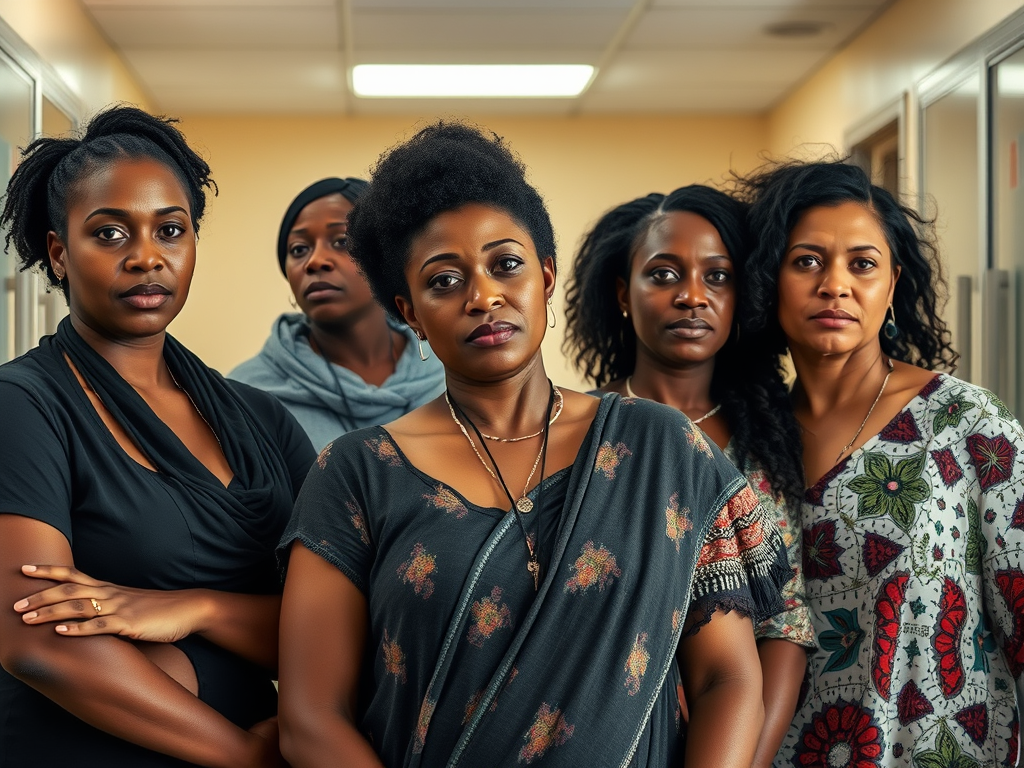

America has the highest maternal mortality rate of any developed nation, and it’s getting worse. But the crisis isn’t evenly distributed: Black women are dying at three to four times the rate of white women. Native women are dying at more than twice the rate. Latina women face significant disparities. This isn’t about individual health choices—it’s about racism in healthcare killing mothers. This Women’s History Month, let’s talk about the maternal mortality crisis nobody wants to address.
The Numbers Are Devastating
Black women die from pregnancy-related complications at 3-4 times the rate of white women. Native American women die at 2-3 times the rate of white women. These numbers hold true regardless of education level or income—Serena Williams, one of the world’s greatest athletes with access to top healthcare, nearly died after childbirth when medical staff ignored her concerns about blood clots.
If education and wealth can’t protect Black women from maternal mortality, the problem isn’t Black women. The problem is racism.
It’s Not About Poverty or Education
The maternal mortality gap persists across class and education levels. College-educated Black women are at higher risk than white women who didn’t finish high school. Wealthy Black women face worse outcomes than poor white women. This isn’t about access to information or resources—it’s about how Black women are treated in medical settings.
Black women’s pain is dismissed. Their symptoms are ignored. Their concerns are minimized. Medical professionals bring their racist assumptions into the delivery room, and Black mothers die because of it.
The Shalon Irving Story
Dr. Shalon Irving was a CDC epidemiologist, literally a scientist studying health disparities, who died three weeks after giving birth. She went to the hospital multiple times complaining of pain and swelling. She was sent home. She had high blood pressure. She was told to relax. She died of complications that should have been caught and treated.
A Black woman with a PhD, working for the CDC, died because medical staff didn’t take her seriously. If she couldn’t get adequate care, what chance do most Black mothers have?
The Implicit Bias
Medical professionals, even those who don’t consider themselves racist, hold biases that kill. Studies show that many medical students and residents believe Black people feel less pain than white people—a racist myth dating back to slavery. This leads to under-treatment of pain, dismissal of symptoms, and delayed interventions.
When a white woman says she’s in pain, she’s believed. When a Black woman says she’s in pain, she’s stereotyped as exaggerating, drug-seeking, or just complaining. These biases are deadly.
Native Women and Healthcare Deserts
Native American women face maternal mortality rates more than twice that of white women, but their crisis is often invisible in mainstream conversations. Many Native women live on reservations where healthcare is severely limited. The Indian Health Service is chronically underfunded. Women have to travel hours for prenatal care or delivery.
Add historical trauma from forced sterilization of Native women (which continued into the 1970s), and you have a community with deep distrust of the healthcare system—and good reason for it.
Latina Women’s Barriers
Latina women face maternal mortality rates 1.5 times higher than white women. Language barriers mean they can’t communicate with providers. Immigration status makes some women afraid to seek care. Cultural differences in pain expression lead to dismissed concerns. Lack of insurance keeps some from getting prenatal care.
And like Black and Native women, Latina women face providers who bring stereotypes and biases into the exam room.
The Preventable Deaths
Most maternal deaths are preventable. Hemorrhage, infection, high blood pressure, blood clots—these are all treatable if caught in time. But prevention requires providers who listen, who take symptoms seriously, who don’t dismiss concerns.
When white women report symptoms, protocols are followed. When Black, Native, and Latina women report the same symptoms, they’re told they’re overreacting. By the time providers take them seriously, it’s often too late.
The Postpartum Period
Most maternal deaths occur after birth, not during delivery. Women are sent home and told to come back if there are problems. But when they do come back reporting problems, they’re not believed. They’re told it’s normal. They’re told to rest. They die at home because the hospital sent them away.
Black women, especially, face dismissal during the postpartum period. Their pain is minimized. Their concerns are brushed off. By the time they’re taken seriously, they’re dying.
The Policy Failures
Medicaid coverage ends 60 days postpartum in many states, right when many complications arise. Some states have extended this to a year, but not all. The U.S. has no federal paid parental leave, forcing mothers back to work before they’ve healed. Many hospitals lack protocols for recognizing maternal warning signs.
Insurance companies deny coverage for preventive care. Rural hospitals are closing maternity wards, creating “maternity deserts” where women have to travel hours to deliver. The system is designed to fail mothers.
The Birth Workers Fighting Back
Black midwives, doulas, and birth workers are saving lives. Organizations like Black Mamas Matter Alliance and Black Women’s Health Imperative are advocating for policy change and providing community support. Traditional midwifery—which was criminalized in part to eliminate Black and Indigenous birth workers—is making a comeback.
Doulas provide advocacy and support during birth, helping mothers communicate with medical staff and ensuring their wishes are respected. Studies show that doula support reduces complications and improves outcomes, especially for Black mothers.
What Needs to Change
Medical schools need to address bias in their curricula and training. Hospitals need standardized protocols for recognizing maternal warning signs. States need to extend Medicaid coverage through the first postpartum year. The U.S. needs paid family leave. We need to fund community-based care and support traditional birth workers.
And medical professionals need to believe women—especially Black, Native, and Latina women—when they say something is wrong.
This Is Preventable
These deaths are preventable. This crisis is solvable. We have the knowledge and resources to save mothers’ lives. What we lack is the political will to address racism in healthcare.
Every mother who dies from preventable complications is a failure of the system. Every Black, Native, or Latina mother who dies when a white mother would have lived is proof that racism kills.
The question is: when will we treat maternal mortality like the crisis it is?
APRIL ARTICLES