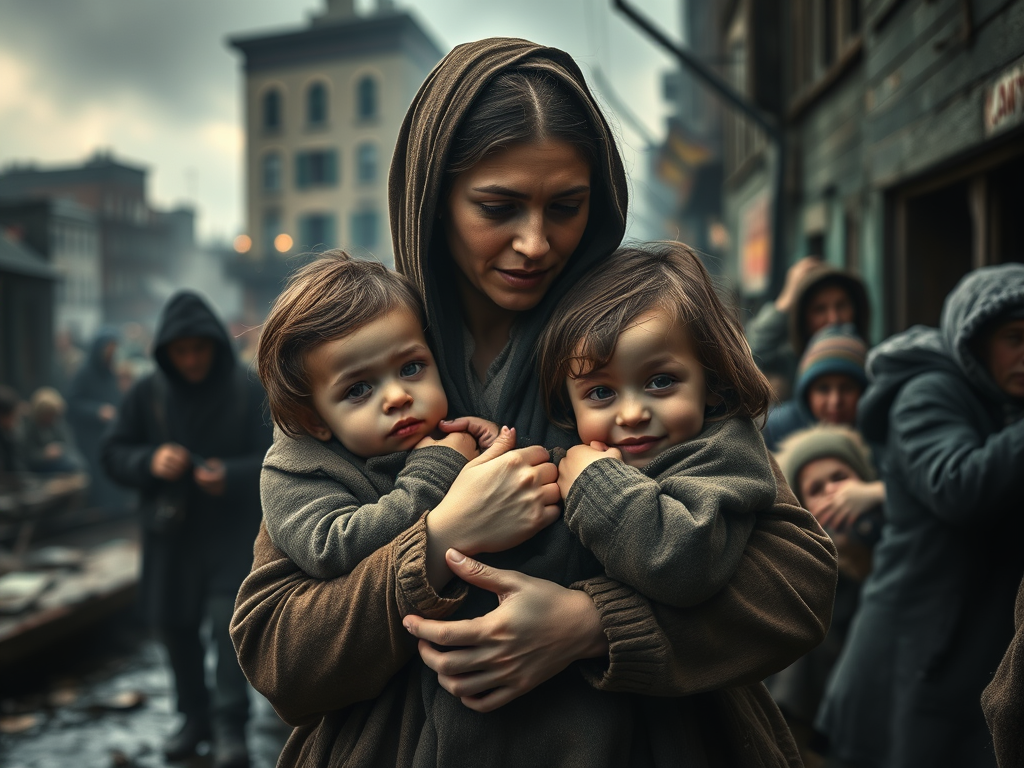

Modern debates about refugees and asylum often ignore America’s own history of desperate migration. The Irish who fled the Great Hunger between 1845 and 1852 were refugees by any meaningful definition—people forced from their homeland by conditions that made survival impossible.
Understanding this history doesn’t excuse contemporary anti-immigrant sentiment. It indicts it. Because the same arguments used against today’s refugees were deployed against Irish immigrants: they’re criminals, they bring disease, they’ll drain resources, they can’t assimilate, they’re loyal to foreign powers.
The Hunger Was Political
Calling it the “Potato Famine” sanitizes the reality. Yes, potato blight destroyed the crop that most Irish peasants depended on for survival. But Ireland continued exporting food throughout the famine years—grain, cattle, dairy products shipped to England while Irish people starved.
British colonial policies created the conditions for catastrophe. The Penal Laws had dispossessed Irish Catholics of land ownership, forcing them onto tiny plots where only potatoes produced enough calories for survival. When the blight hit, there was no safety net, no alternative crops, no relief system designed to protect Irish lives.
The British government’s response ranged from inadequate to actively harmful. They implemented workhouses where starving people performed hard labor for minimal food. They continued evictions, forcing families from land they could no longer farm. They blamed Irish laziness and backwardness rather than confronting colonial responsibility.
At least one million died. Another million fled, packed into coffin ships where disease killed thousands more during Atlantic crossings. Entire villages emptied. Family lines ended. The Irish population declined by 25 percent and never recovered.
This wasn’t natural disaster. This was social murder—the predictable result of policies that treated Irish lives as expendable.
Arriving Traumatized
The Irish who survived the crossing didn’t arrive in America ready to thrive. They came traumatized, malnourished, often sick, having watched family members die. Many had sold everything they owned for passage. They had no resources, no connections, no preparation for urban American life.
Ships docked in cities like Boston and New York, where Irish immigrants crowded into neighborhoods that became instant slums. Multiple families shared single rooms. Sanitation was nonexistent. Disease spread rapidly through overcrowded tenements. Irish children died at horrific rates from cholera, typhus, and malnutrition.
American cities had no infrastructure to handle this influx. But more accurately, they had no interest in building infrastructure for Irish Catholic immigrants they viewed as racially inferior and culturally contaminating. The Irish were left to fend for themselves in conditions that guaranteed suffering.
Women often fared slightly better than men, finding work as domestic servants. But this meant leaving children with relatives or neighbors, working sixteen-hour days in other people’s homes, subject to sexual harassment and exploitation with no legal recourse.
Irish men took the jobs American workers refused: building railroads through dangerous terrain, digging tunnels, working in mines. Death rates were staggering. The phrase “An Irishman buried under every railroad tie” wasn’t metaphor—it was close to statistical reality.
The Refugee Label Nobody Used
We don’t typically call Irish famine emigrants “refugees” in American historical memory. We call them immigrants, pioneers, ancestors who pulled themselves up through hard work. This linguistic choice obscures the desperation that drove their migration.
They didn’t choose to come to America the way people choose vacation destinations. They fled conditions that made staying impossible. Their journey wasn’t adventure—it was escape from death. Many would have preferred to stay in Ireland if staying meant survival.
Recognizing Irish famine emigrants as refugees doesn’t diminish their resilience or achievements. It contextualizes them. It acknowledges the trauma they carried, the losses they endured, the impossibility of the choices they faced.
It also creates uncomfortable parallels with contemporary refugee crises that many Irish American descendants would rather ignore.
Generational Inheritance
The famine shaped Irish American identity for generations after the last coffin ship docked. Families hoarded food, unable to shake the memory of starvation even in times of plenty. They prioritized economic security above almost everything else. They taught children to be suspicious of systems that claimed to protect them.
They also lost language, music, and cultural practices in the scramble for survival and acceptance. When your immediate concern is keeping children alive and employed, cultural preservation becomes a luxury. Irish immigrants made strategic choices about what to preserve and what to abandon, usually sacrificing distinctiveness for safety.
The trauma also manifested in alcoholism rates, domestic violence, and mental health crises that nobody had language to name or address. The “Fighting Irish” stereotype romanticizes what was often untreated PTSD and community-wide grief.
Why Irish Americans Should Remember
If you have Irish famine ancestors, their refugee status isn’t a point of shame—it’s historical fact that deserves recognition. They survived conditions designed to eliminate them. They crossed an ocean in ships that killed thousands. They built lives from nothing in cities that despised them.
But remembering them as refugees should also shape how you think about refugees today. The arguments used against Syrian refugees, Central American asylum seekers, and Afghan evacuees are identical to arguments used against your ancestors: they’re criminals, they bring disease, they can’t assimilate, they threaten American values.
Your ancestors proved those arguments wrong by surviving despite them. Today’s refugees will do the same—if we let them.
The Irish famine diaspora teaches us that refugee status isn’t permanent. The desperate immigrant becomes the established American. The outsider becomes the insider. But that transformation requires time, resources, and most importantly, the political will to allow it.
Irish Americans who oppose refugee resettlement while celebrating their famine ancestors have chosen convenient amnesia. The same country that barely tolerated your starving great-great-grandparents eventually let them thrive. Extending that same opportunity to today’s refugees isn’t charity—it’s consistency.
You don’t have to romanticize the famine or claim oppression you don’t experience to honor this history. You just have to remember that your family’s American story began with desperation, and that desperation deserves empathy regardless of who experiences it.