
For decades, Italian American identity in popular culture has been defined by a narrow set of stereotypes: mobsters, pasta, loud families, and exaggerated accents. From The Godfather to The Sopranos to countless mob movies and reality shows, the image of Italian Americans as either violent criminals or colorful caricatures has become inescapable.
These representations aren’t entirely fiction. Organized crime did exist in Italian American communities, and many of the cultural touchstones—family loyalty, food traditions, neighborhood bonds—are rooted in real experiences. But when an entire ethnic group is reduced to these images, something important is lost.
Italian American identity is more complex, more varied, and more historically significant than Hollywood would have you believe. Reclaiming that identity means looking beyond the stereotypes and asking: What else were we? What did we build? What did we sacrifice? And what do we still carry?
The Problem with Mob Narratives
The Godfather is widely considered one of the greatest films ever made. It’s beautifully shot, powerfully acted, and thematically rich. But it’s also a story about organized crime, and it has shaped how generations of Americans view Italian immigrants and their descendants.
The problem isn’t that mob stories exist—they’re part of Italian American history. The problem is that they dominate the narrative to the exclusion of almost everything else. When Italian Americans appear in movies, television, or literature, they’re overwhelmingly portrayed as gangsters, their wives, or comic relief.
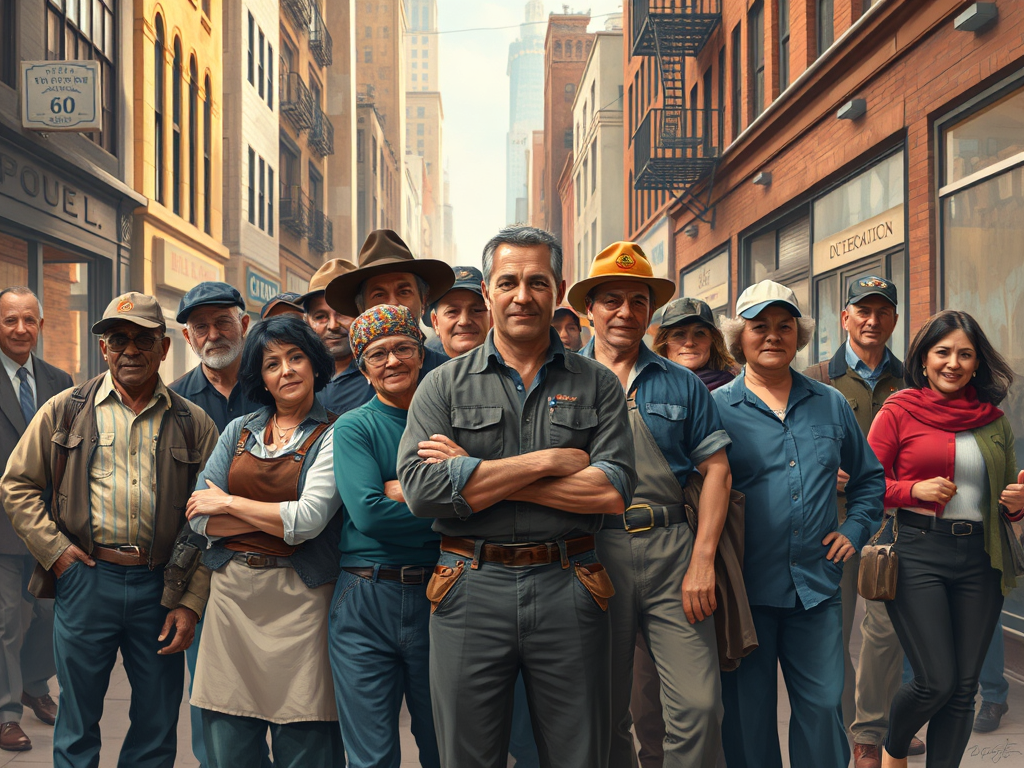
This creates a distorted picture. The vast majority of Italian immigrants were not involved in organized crime. They were laborers, farmers, seamstresses, and small business owners. They built churches, schools, and mutual aid societies. They organized unions and fought for workers’ rights. They served in the military, became teachers and nurses, and contributed to American art, science, and culture.
But those stories don’t sell tickets. Mob narratives do.
The result is a cultural feedback loop. Italian American writers and directors create mob content because that’s what audiences expect. Audiences expect it because that’s what they’ve been shown. And so the stereotype perpetuates, flattening a rich and diverse cultural history into a single, marketable image.
What Gets Erased
When Italian American identity is reduced to mob narratives, entire generations of history disappear.
The story of Italian immigrant labor—building railroads, digging tunnels, working in factories—gets forgotten. The role Italian Americans played in the labor movement, organizing strikes and fighting for fair wages, is erased. The contributions of Italian American women, who worked as seamstresses, domestic workers, and community organizers, are overlooked.
Italian American intellectuals, artists, and activists are pushed to the margins. Names like Angela Bambace, a labor organizer who fought for garment workers’ rights. Carlo Tresca, an anarchist and anti-fascist who was assassinated for his political beliefs. Arturo Giovannitti, a poet and labor leader who wrote about the struggles of immigrant workers. These figures shaped American history, but they’re largely unknown outside academic circles.
Italian American participation in the civil rights movement is rarely discussed. Activists like Vito Marcantonio, who represented Harlem in Congress and fought for racial equality, or the Italian American students who joined Freedom Rides and voter registration drives in the South, are written out of the narrative.
Even Italian American cultural contributions beyond food are minimized. Italian immigrants brought traditions of music, theater, and craftsmanship. They built opera houses and community theaters. They created newspapers and literary magazines. They preserved folk traditions and passed them down through generations.
All of this is overshadowed by the image of the mobster.
The Cost of Assimilation
Part of the reason Italian American identity feels so shallow today is because of the choices made during assimilation. To gain acceptance in mid-20th-century America, Italian Americans abandoned much of their cultural distinctiveness.
The Italian language was lost within a generation or two. Children were discouraged from speaking it at home, and schools punished students who did. Today, most Italian Americans don’t speak Italian, even if their grandparents or great-grandparents did.
Names were anglicized. Giuseppe became Joe. Maria became Mary. Family names were shortened or changed entirely to sound less foreign. This erasure was pragmatic—it helped Italian Americans avoid discrimination—but it severed linguistic and cultural ties to the past.
Religious practices also shifted. Italian Catholicism, with its saints’ festivals, processions, and folk traditions, was different from Irish Catholicism, which dominated the American church. As Italian Americans assimilated, many of these practices were abandoned or standardized to fit the American Catholic model.
Neighborhoods changed too. Italian enclaves in cities like New York, Philadelphia, and Boston were vibrant communities where people spoke the language, celebrated festivals, and supported one another. As Italian Americans moved to the suburbs, these neighborhoods emptied out. Some were demolished for urban renewal projects. Others gentrified.
What remained was a thin version of Italian American identity—St. Joseph’s Day dinners, Columbus Day parades, and Sunday gravy. These traditions are meaningful, but they’re a fraction of what was lost.
Reclaiming Complexity
Reclaiming Italian American identity means going beyond the stereotypes and beyond the nostalgia. It means asking uncomfortable questions about the past and acknowledging the contradictions.
It means recognizing that Italian immigrants were victims of discrimination and that their descendants participated in discrimination against others. It means understanding that the path to whiteness involved moral compromises—supporting racial segregation, opposing civil rights, and abandoning solidarity with other marginalized groups.
It means confronting the history of organized crime without romanticizing it. The Mafia existed, and it caused real harm to Italian American communities and beyond. But it was also a survival strategy in a society that offered limited opportunities for poor immigrants. Understanding this context doesn’t excuse the violence, but it complicates the narrative.
Reclaiming Italian American identity also means celebrating what was built—the churches, the schools, the businesses, the art, the activism. It means learning the stories that were erased and honoring the people who fought for justice, often at great personal cost.
It means learning Italian, even if it’s not the dialect your ancestors spoke. It means cooking the recipes your grandmother made, but also asking why she made them and what they meant. It means visiting the places your family came from, not as tourists, but as people searching for connection.
Who Gets to Tell the Story
One of the most frustrating aspects of Italian American representation is that much of it is created by people outside the community. Mob narratives sell, so Hollywood keeps making them. But there are Italian American writers, directors, and artists working to tell different stories.
Helen Barolini’s Umbertina tells the story of Italian immigrant women across generations. Gay Talese’s journalism explored Italian American life beyond stereotypes. Don DeLillo and Louise DeSalvo have written about the complexities of identity, memory, and assimilation.
Younger Italian American creators are pushing back against the mob narrative, exploring themes of mental health, queerness, class, and regional identity. They’re asking what it means to be Italian American in 2026, when the language is gone, the neighborhoods have changed, and the cultural practices have been commercialized.
The challenge is that these stories often don’t get the same attention as mob narratives. They don’t fit neatly into marketable categories. They require audiences to think critically about identity, power, and history.
Moving Forward
Italian American identity doesn’t have to be defined by The Godfather or The Sopranos or Jersey Shore. It can be more expansive, more honest, and more connected to the full complexity of history.
That means telling new stories. It means learning the old ones. It means recognizing that identity is not just about food and festivals, but about labor, migration, survival, and resistance.
It means acknowledging that being Italian American today comes with privilege that didn’t exist for earlier generations. And it means using that privilege to build solidarity with other communities still fighting for recognition and justice.
Reclaiming Italian American identity is not about nostalgia. It’s about memory, honesty, and the courage to be more than what popular culture has decided we should be.