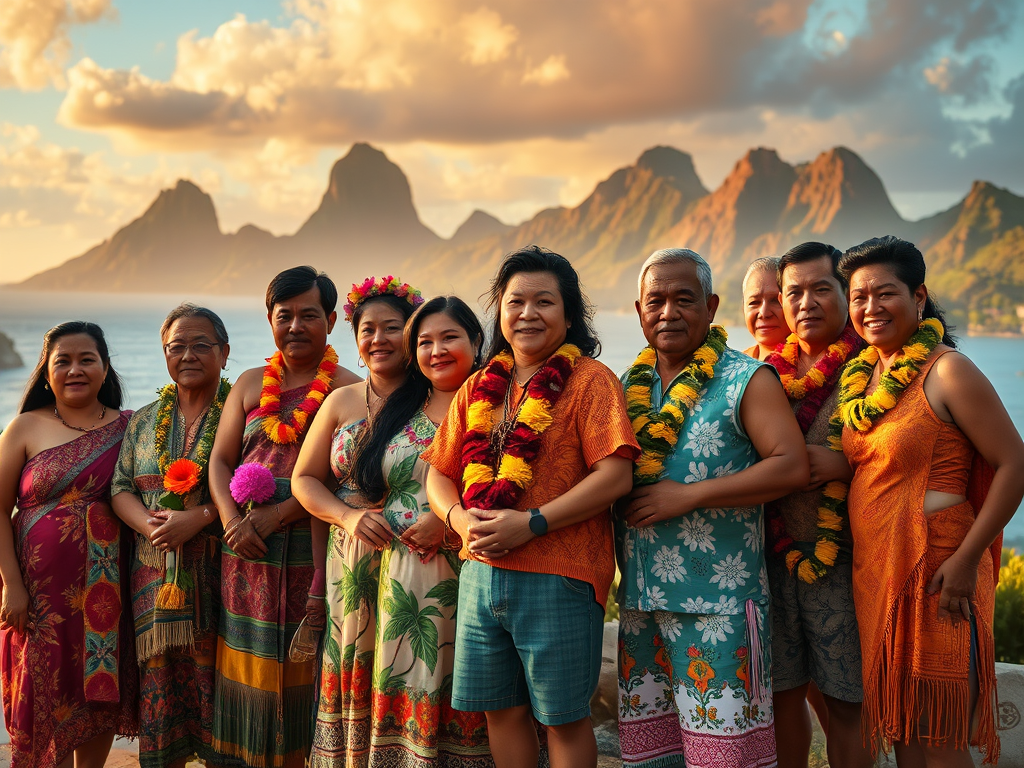

Pacific Islanders are not a footnote in the AAPI acronym. We’re not “and also.” We’re sovereign peoples with distinct cultures, languages, and histories that predate American colonization by thousands of years.
But you wouldn’t know that from the way we’re treated. We’re erased from data, excluded from conversations, and colonized all over again every time someone lumps us in with “Asian” as if we’re interchangeable.
We’re not.
Who We Are
Pacific Islanders include Native Hawaiians, Samoans, Tongans, Fijians, Marshallese, Chamorros (from Guam and the Northern Mariana Islands), and many other Indigenous peoples from Oceania. We come from islands across the Pacific—thousands of miles of ocean, hundreds of unique cultures.
Our histories are rooted in navigation, oral tradition, communal land stewardship, and deep spiritual connections to the ocean and land. We didn’t need colonizers to “discover” us. We were thriving long before they arrived.
The Legacy of Colonization
American colonization didn’t just impact Pacific Islanders—it devastated us. Hawaii was illegally annexed in 1898 after American businessmen orchestrated the overthrow of Queen Liliʻuokalani. Guam and American Samoa became U.S. territories. The Marshall Islands were used for nuclear testing, rendering entire atolls uninhabitable and causing generational health crises.
These aren’t ancient histories. They’re ongoing realities. Native Hawaiians are still fighting for sovereignty and land rights. Chamorros in Guam deal with military occupation and environmental destruction. Marshallese communities live with the health impacts of radiation exposure.
Colonization didn’t end—it just got rebranded.
Erasure in the Data
Here’s how Pacific Islanders get erased: data aggregation. When statistics lump us in with Asian Americans, our struggles become invisible. We have some of the highest rates of poverty, diabetes, heart disease, and obesity in the country. Our communities face lower educational attainment and higher incarceration rates.
But because we’re a small percentage of the overall AAPI population, those realities disappear into averages that don’t represent us.
Disaggregated data isn’t just a buzzword—it’s a matter of survival. If institutions can’t see our problems, they won’t address them.
Cultural Appropriation and Stereotypes
Hawaiian culture gets reduced to luaus, leis, and hula skirts. Samoan men are stereotyped as hypermasculine athletes or security guards. Our traditions are turned into tourist attractions, stripped of meaning and sold for profit.
Meanwhile, actual Pacific Islanders are dealing with poverty, lack of healthcare, and the erosion of our languages and traditions. The commodification of our culture doesn’t benefit us—it profits off us.
Health Disparities
Pacific Islanders have some of the worst health outcomes in the United States. We face disproportionately high rates of diabetes, obesity, and cardiovascular disease—not because of genetics, but because of systemic factors.
Colonization disrupted traditional diets and ways of life. Economic marginalization forced communities into food deserts where processed food is cheaper and more accessible than fresh produce. Lack of culturally competent healthcare means many avoid seeking treatment until it’s too late.
These aren’t personal failures. They’re the direct consequences of colonialism and systemic neglect.
Language and Cultural Loss
Many Pacific Islander languages are endangered. English dominance, combined with limited resources for language preservation, means younger generations are growing up disconnected from their heritage.
Language isn’t just communication—it’s identity. It carries stories, values, and worldviews that can’t be translated. Losing language means losing a piece of who we are as a people.
Community-led efforts to revitalize languages are happening, but they’re underfunded and undervalued. Preserving Indigenous languages should be a priority, not an afterthought.
Sovereignty and Self-Determination
Pacific Islanders don’t need to be saved or uplifted by outsiders. We need sovereignty. We need control over our lands, our resources, and our futures.
For Native Hawaiians, that means supporting movements for independence and land restoration. For Chamorros, it means resisting military expansion and environmental destruction. For Marshallese communities, it means demanding accountability for nuclear testing and access to healthcare.
Self-determination isn’t a gift to be granted—it’s a right to be respected.
What Needs to Happen
Stop erasing us from the conversation. When you say “AAPI,” remember that Pacific Islanders are part of that—and our experiences are distinct.
Disaggregate the data. Pacific Islander communities deserve visibility and resources tailored to our specific needs.
Support sovereignty movements. Decolonization isn’t theoretical—it’s active, ongoing, and necessary.
Learn the history. Understand how colonization shaped the realities we’re living in today. And understand that our resistance has always been here too.
Our Future
Pacific Islanders are not relics of the past. We’re navigators, artists, activists, educators, and leaders shaping the future. We’re reclaiming our languages, revitalizing our traditions, and fighting for justice on our own terms.
We don’t need anyone to speak for us. We need people to listen, step back, and let us lead. Because we’ve been here long before colonization, and we’ll be here long after it ends.