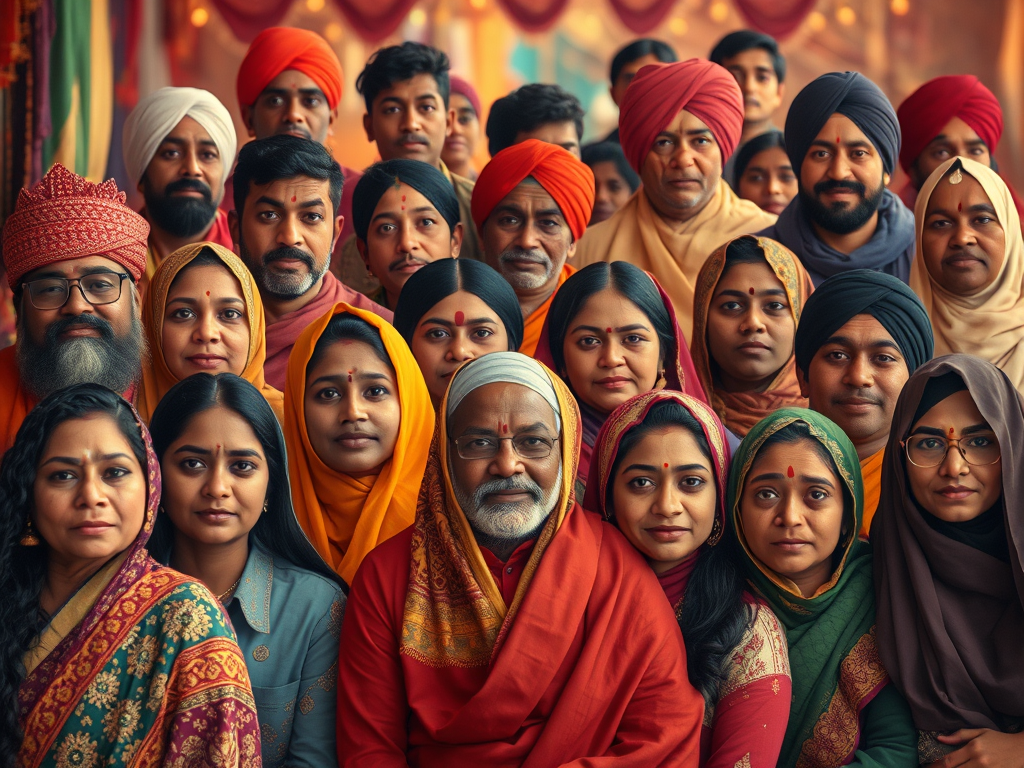

When people think “Asian American,” South Asians are often an afterthought. We’re brown, not the “right” kind of Asian, and our experiences don’t fit the East Asian-centric narratives that dominate the conversation.
But we’re here, we’re millions strong, and our stories deserve to be told.
South Asian Americans—Indian, Pakistani, Bangladeshi, Nepali, Sri Lankan, Bhutanese, and others from the Indian subcontinent—make up one of the fastest-growing demographics in the U.S. Our communities are diverse, complex, and often misunderstood, even within the broader AAPI umbrella.
Immigration Waves
South Asians have been in the U.S. for over a century, but the community has grown significantly since the Immigration and Nationality Act of 1965. Early immigrants were largely professionals—doctors, engineers, academics—seeking opportunities and upward mobility.
More recent waves include family reunifications, students, and refugees. The Desi community isn’t a monolith. We span socioeconomic classes, religions, languages, and political beliefs.
The Complexity of Identity
“Desi” is a term many of us use to describe ourselves—it comes from “desh,” meaning homeland. But even that term doesn’t capture the full picture. A third-generation Indian American in California has a vastly different experience from a recent Bangladeshi immigrant in New York or a Pakistani refugee in Texas.
We speak dozens of languages: Hindi, Urdu, Punjabi, Bengali, Tamil, Telugu, Gujarati, and many more. We practice different religions: Hinduism, Islam, Sikhism, Christianity, Jainism, Buddhism. We come from different regions with distinct cultures and histories.
Collapsing all of that into “South Asian” is useful for coalition-building, but it risks erasing the nuances that make our communities unique.
Islamophobia and Racialization
South Asians, especially those who are Muslim or Sikh, face targeted Islamophobia and racism that intensified after 9/11. Turbans became targets. Brown skin became suspicious. “Random” airport screenings became routine.
The conflation of South Asian with Muslim (even though many South Asians aren’t Muslim) led to violence and discrimination. Sikh Americans were attacked for “looking like terrorists.” Muslim Americans faced surveillance, hate crimes, and xenophobic policies.
This racialization doesn’t just affect Muslims—it affects anyone perceived as Middle Eastern or South Asian. We’re all painted with the same brush.
Colorism and Caste
Let’s talk about what we don’t always want to talk about: colorism and caste discrimination within South Asian communities. Lighter skin is prized, darker skin is devalued. Fair skin is seen as beautiful, associated with higher status and marriageability.
This isn’t just internalized racism—it’s tied to centuries of caste-based oppression in South Asia. Caste hierarchies didn’t disappear when we immigrated to the U.S. They followed us, showing up in hiring practices, marriage preferences, and social circles.
Addressing colorism and caste requires us to look inward, challenge our own biases, and dismantle the hierarchies we’ve inherited.
The Pressure to Succeed
The model minority myth hits South Asians hard. We’re expected to be doctors, engineers, or tech entrepreneurs. Anything less is seen as failure—not just personal failure, but family failure.
The pressure to succeed comes from within and without. Immigrant parents sacrificed everything to give their kids opportunities, and the expectation is that we’ll capitalize on those opportunities. When we don’t, the shame is intense.
This pressure contributes to mental health struggles that often go unaddressed. Talking about depression, anxiety, or burnout is stigmatized. Seeking therapy is seen as weakness. So people suffer in silence.
Cultural Preservation vs. Assimilation
Second- and third-generation South Asians navigate a constant push and pull between preserving cultural traditions and assimilating into American society. Do you speak your parents’ language at home or only English? Do you wear traditional clothes or blend in? Do you date within your community or outside it?
There’s no right answer, but the choices come with judgment—from parents, from community, from ourselves. Too American, and you’re losing your roots. Too Desi, and you’re not fitting in.
This balancing act is exhausting, and it’s something many immigrant communities face, but it’s rarely acknowledged or supported.
South Asians in the Workplace
South Asian Americans are well-represented in tech, medicine, and academia, but that representation doesn’t extend to leadership. We hit the bamboo ceiling too. Despite high education levels, we’re underrepresented in executive roles and boardrooms.
This isn’t about lack of qualifications. It’s about bias, lack of sponsorship, and a workplace culture that often sees us as technical experts but not leaders.
Building Solidarity
South Asian Americans need to build solidarity both within our communities and across racial lines. That means addressing our own anti-Blackness, supporting other marginalized groups, and not letting the model minority myth pit us against others.
It also means advocating for disaggregated data, so the struggles of Bangladeshi or Nepali communities don’t get buried under the success of wealthier Indian Americans.
Our Future
The Desi diaspora is redefining what it means to be South Asian American. We’re creating art, running for office, starting businesses, and telling our own stories. We’re pushing back against stereotypes and carving out space for complexity and authenticity.
We’re not trying to fit into anyone else’s idea of what we should be. We’re defining it ourselves. And that’s power.