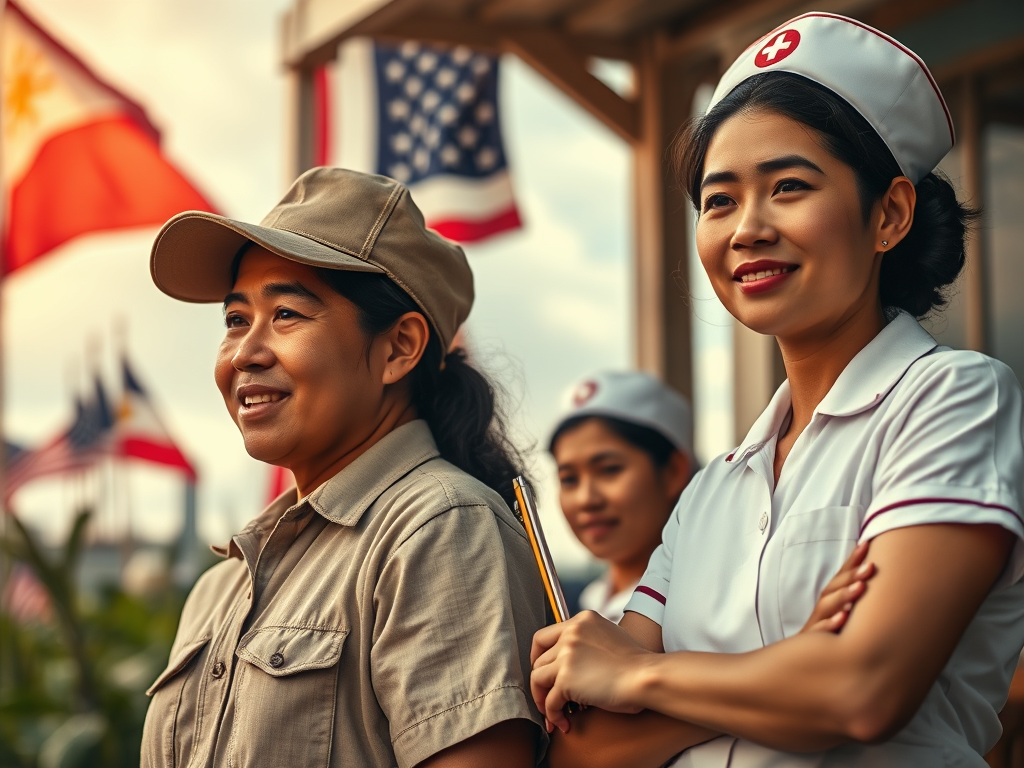

Filipino Americans are the second-largest Asian American group in the U.S., but you wouldn’t know it from representation or recognition. We’re often overlooked in AAPI conversations, erased from Asian American narratives, and treated as if our history doesn’t matter.
It does. And it’s time people learned it.
Colonization and Its Legacy
The Philippines was a Spanish colony for over 300 years, then an American colony for nearly 50. That dual colonization shaped Filipino identity in ways that still resonate today.
Spanish colonization brought Catholicism, Hispanic influence, and a language that blended indigenous Tagalog with Spanish. American colonization brought English, Western education, and a complicated relationship with the U.S. that continues to this day.
Filipinos didn’t just immigrate to America—we were made American through colonization. And yet, we’re still treated as foreigners.
Early Immigration and Labor Exploitation
The first major wave of Filipino immigration happened in the early 1900s, when young men were recruited to work on Hawaiian plantations and California farms. They were paid less than white workers, housed in poor conditions, and subjected to violence and discrimination.
Filipino farmworkers organized. They fought for better wages and conditions, joining forces with Mexican and Japanese workers to form multiracial labor unions. Leaders like Larry Itliong and Philip Vera Cruz were instrumental in the Delano Grape Strike and the formation of the United Farm Workers.
But their contributions are often overshadowed or erased from history. The farmworker movement is attributed to Cesar Chavez, while Filipino leaders are forgotten.
World War II and Broken Promises
During World War II, Filipinos fought alongside American soldiers against Japanese occupation. They were promised U.S. citizenship and veterans’ benefits. After the war, the U.S. government reneged on those promises.
The Rescission Act of 1946 stripped Filipino veterans of their benefits. Thousands of men who risked their lives for America were denied the healthcare, pensions, and recognition they deserved. It took decades of advocacy before some benefits were finally restored—and even then, many veterans had already died.
This betrayal is a defining part of Filipino American history. We fought for a country that didn’t fight for us.
Immigration Post-1965
The Immigration and Nationality Act of 1965 opened the door for a new wave of Filipino immigration. This wave was largely professionals—nurses, doctors, engineers—seeking better opportunities.
Filipino nurses, in particular, became the backbone of American healthcare. They filled critical shortages, often working long hours in understaffed hospitals. During the COVID-19 pandemic, Filipino nurses were overrepresented among healthcare worker deaths.
Their labor built the system. Their sacrifice kept it running. But they’re still underpaid, undervalued, and underappreciated.
Language and Identity
Filipinos speak over 100 languages, but Tagalog (Filipino) is the most widely spoken. English is also an official language in the Philippines, thanks to American colonization.
For Filipino Americans, language is complicated. Many grew up speaking English at home because their parents wanted them to assimilate. Others grew up bilingual, navigating Tagalog at home and English everywhere else.
The loss of native languages is a loss of connection to heritage. Younger generations often can’t speak their parents’ or grandparents’ languages, creating barriers to understanding family history and culture.
Cultural Contributions
Filipino culture has shaped American music, food, and art in ways that often go unrecognized. From DJs and turntablists in the hip-hop scene to chefs bringing Filipino cuisine to mainstream audiences, Filipinos have always been innovators.
Adobo, lumpia, and pancit are staples in Filipino households, but Filipino food is only recently getting the recognition it deserves. Meanwhile, Filipino Americans have been running restaurants, catering businesses, and feeding communities for generations.
Reclaiming Narratives
For a long time, Filipino American history wasn’t taught in schools. It wasn’t included in textbooks. If you wanted to learn it, you had to seek it out yourself.
That’s changing. Filipino American historians, educators, and activists are reclaiming the narrative, documenting our contributions, and demanding that our stories be told.
From labor organizing to healthcare work to cultural innovation, Filipinos have been here, contributing, resisting, and thriving. It’s time the rest of the country recognized that.
Pride in Being Pilipinx
Filipino Americans are reclaiming pride in our identity. We’re celebrating our culture, our history, and our resilience. We’re rejecting the erasure and demanding visibility.
Whether you spell it Filipino, Pilipino, or Pilipinx, the pride is the same. We’re here. We’ve always been here. And we’re not going anywhere.