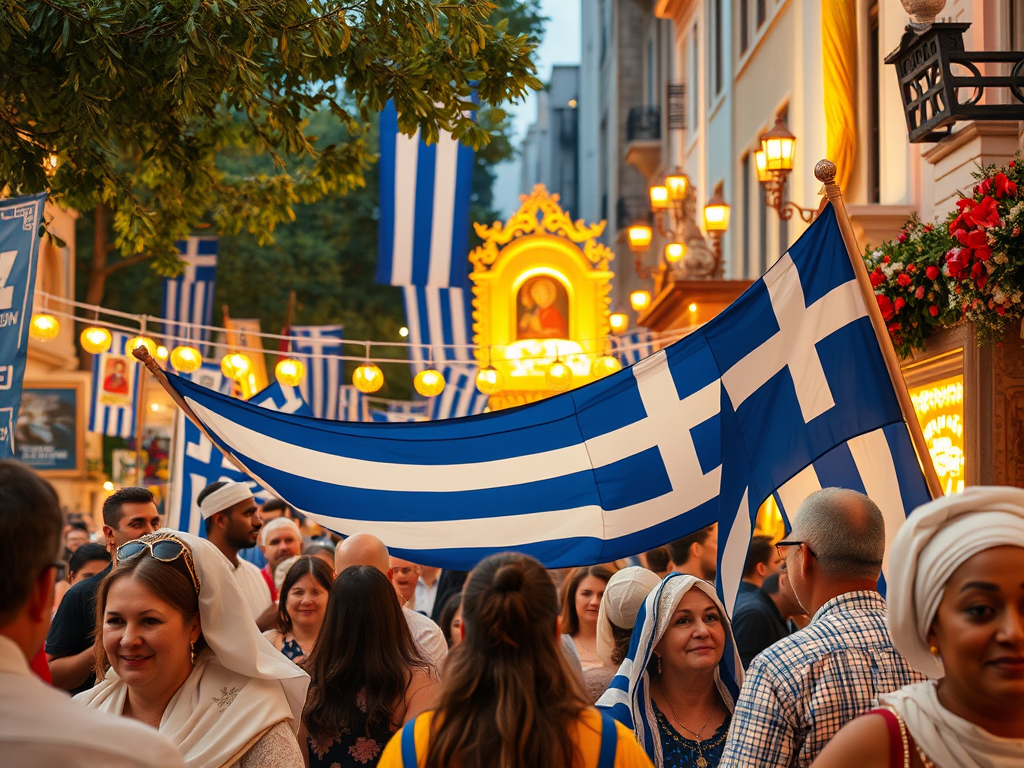

Greeks have been leaving Greece for millennia. In ancient times, they colonized the Mediterranean, establishing cities in what is now Turkey, Italy, and North Africa. In modern times, they’ve scattered across the globe—to Australia, Germany, Canada, and the United States—driven by war, poverty, and political instability.
This pattern of migration has created one of the world’s most extensive and interconnected diasporas. There are more than 5 million people of Greek descent living outside Greece today—nearly half the population of Greece itself. These diaspora communities maintain strong connections to Greece and to each other, creating a transnational network of culture, politics, and identity.
For Greek Americans, the diaspora is both a source of strength and a challenge. It provides a global community of people who share language, faith, and heritage. But it also raises questions about belonging: What does it mean to be Greek when you’ve never lived in Greece? How do you maintain cultural identity across generations and oceans? And who gets to define what “Greek” means?
The Geography of the Greek Diaspora
The Greek diaspora is geographically dispersed, with significant communities in:
Australia: Home to one of the largest Greek populations outside Greece, particularly in Melbourne. Greek Australians have built vibrant communities, preserving language and culture through schools, churches, and media.
Germany: Hundreds of thousands of Greeks migrated to Germany in the 1960s and 1970s as guest workers. Many stayed, creating permanent communities in cities like Munich and Stuttgart.
Canada: Toronto, Montreal, and other cities have substantial Greek populations, with cultural centers, newspapers, and active community organizations.
The United States: Greek Americans are concentrated in urban areas—New York, Chicago, Detroit, Boston—but also in smaller cities across the country.
United Kingdom: London has a significant Greek and Cypriot population, particularly in neighborhoods like Palmers Green.
Despite geographic separation, these communities maintain connections through travel, communication, and shared institutions like the Greek Orthodox Church.
The Role of the Orthodox Church
The Greek Orthodox Church is the institutional backbone of the diaspora. It provides religious services, yes, but also cultural continuity, social support, and community identity.
Orthodox Christianity is deeply tied to Greek culture. The liturgy is conducted in Greek (or a mix of Greek and the local language). Religious holidays follow the Greek calendar. Saints venerated in Greece are celebrated in diaspora communities.
This connection means that being Greek and being Orthodox are often intertwined. For many diaspora Greeks, attending church is an act of cultural preservation as much as religious devotion.
The church also serves as a bridge between diaspora communities and Greece. Clergy are often trained in Greece or maintain close ties to the Greek Orthodox hierarchy. Cultural programs, language classes, and youth organizations keep younger generations connected to Greek heritage.
Language as a Lifeline
Language preservation is one of the diaspora’s greatest challenges and achievements.
In first-generation immigrant families, Greek is the dominant language. But by the second and third generations, English (or German, or French, depending on the country) usually takes over. Children grow up speaking the local language, and Greek becomes something they understand but don’t speak fluently.
To counter this, diaspora communities have invested heavily in Greek language education. Greek schools operate in cities around the world, teaching children to read, write, and speak Greek. These schools often meet after regular school hours or on weekends, placing additional demands on families.
The results vary. Some diaspora Greeks maintain near-native fluency. Others speak “heritage Greek”—conversational ability but limited vocabulary and grammar. Still others lose the language entirely.
What’s remarkable is that Greek language education persists at all. Many immigrant groups abandon language teaching by the second or third generation. Greek Americans and other diaspora communities have maintained it for over a century, a testament to institutional strength and cultural commitment.
Transnational Connections
Modern technology has transformed the diaspora experience. Greek Americans can stream Greek television, read Greek newspapers online, and stay connected to relatives in Greece through video calls. Social media allows diaspora communities in different countries to communicate and share experiences.
This connectivity has created a more cohesive global Greek identity. A Greek Australian can follow events in Greece in real time, participate in political discussions, and maintain relationships with distant relatives. The diaspora is no longer isolated—it’s networked.
But technology also complicates identity. When you can access Greek culture from anywhere, what makes diaspora communities unique? Why maintain Greek language schools when you can learn online? Why build community institutions when you can connect virtually?
These questions don’t have easy answers. Technology supplements community but doesn’t replace it. Physical spaces—churches, cultural centers, neighborhoods—still matter because identity is built through shared experiences, not just information consumption.
Political Engagement
The Greek diaspora has long been politically engaged, both in their countries of residence and in Greek politics.
In the United States, Greek Americans have lobbied for policies supporting Greece and Cyprus. They’ve advocated for recognition of the Armenian Genocide, supported Greek territorial claims in disputes with Turkey, and promoted U.S.-Greece relations.
During periods of political crisis in Greece—the military junta (1967-1974), the economic crisis (2008-2018)—diaspora communities have mobilized, sending financial support, organizing protests, and pressuring their governments to intervene.
Some Greeks in the diaspora also participate directly in Greek politics. Greek citizenship law allows descendants of Greek citizens to claim citizenship, meaning diaspora Greeks can vote in Greek elections and even run for office. This creates a unique situation where people who’ve never lived in Greece can influence its political future.
This political engagement reflects a deep identification with Greece as a homeland. But it also raises questions. Should diaspora Greeks, who don’t live with the consequences of Greek political decisions, have a say in those decisions? What responsibility do they have to the country their ancestors left?
The Question of Authenticity
One of the most persistent tensions in the diaspora is the question of authenticity. Who is “really” Greek? Is it enough to have Greek ancestry, or do you need to speak the language, practice the religion, or maintain certain cultural traditions?
These questions often pit diaspora Greeks against each other. Third-generation Greek Americans who don’t speak Greek may feel judged by more recent immigrants. Mixed-heritage individuals may struggle to claim Greek identity when they don’t fit cultural expectations.
The issue becomes even more complex when diaspora Greeks visit Greece. Many describe feeling like outsiders—not quite Greek enough for Greeks in Greece, but too Greek to fully belong in their country of birth. This liminal identity—”Greek American,” “Greek Australian”—reflects a reality of living between worlds.
Greece itself sends mixed messages. On one hand, the country values its diaspora, recognizing the economic and political support they provide. On the other hand, Greeks in Greece sometimes view diaspora Greeks as naive, overly sentimental, or disconnected from contemporary Greek reality.
This tension isn’t unique to Greeks. Many diaspora communities struggle with authenticity and belonging. But for Greeks, the question is particularly acute because of the cultural weight placed on continuity with ancient Greece. The pressure to live up to a mythologized past can make it harder to embrace a hybrid, evolving identity.
Economic and Cultural Exchange
The Greek diaspora has played a significant role in Greece’s economy. Remittances—money sent back to Greece by diaspora members—have been a crucial source of income for families and communities. During economic crises, diaspora support has helped stabilize the Greek economy.
Cultural exchange flows in both directions. Diaspora Greeks bring elements of their adopted cultures back to Greece—American business practices, Australian multiculturalism, German organizational efficiency. At the same time, Greece exports culture to the diaspora through music, film, literature, and food.
This exchange enriches both sides. Greece benefits from the global perspective and economic resources of the diaspora. The diaspora benefits from ongoing access to Greek culture and identity.
The Future of the Diaspora
As generations pass, the Greek diaspora faces an uncertain future. Intermarriage rates are high. Cultural assimilation continues. Younger Greeks in the diaspora are less likely to speak Greek fluently or maintain strong connections to Orthodox Christianity.
But the diaspora has shown remarkable resilience. Institutions adapt. Cultural practices evolve. New generations find their own ways to be Greek, even if those ways don’t look like their grandparents’.
The challenge is balancing preservation with adaptation. Greek identity in the diaspora can’t remain frozen in time. It must incorporate new influences, embrace mixed-heritage individuals, and create space for people who don’t fit traditional molds.
The Greek diaspora is a testament to the persistence of cultural identity across time and space. It shows that belonging isn’t just about geography—it’s about memory, institutions, and the deliberate choices communities make to stay connected. Maintaining that connection across oceans is hard work. But for millions of diaspora Greeks, it’s work worth doing.