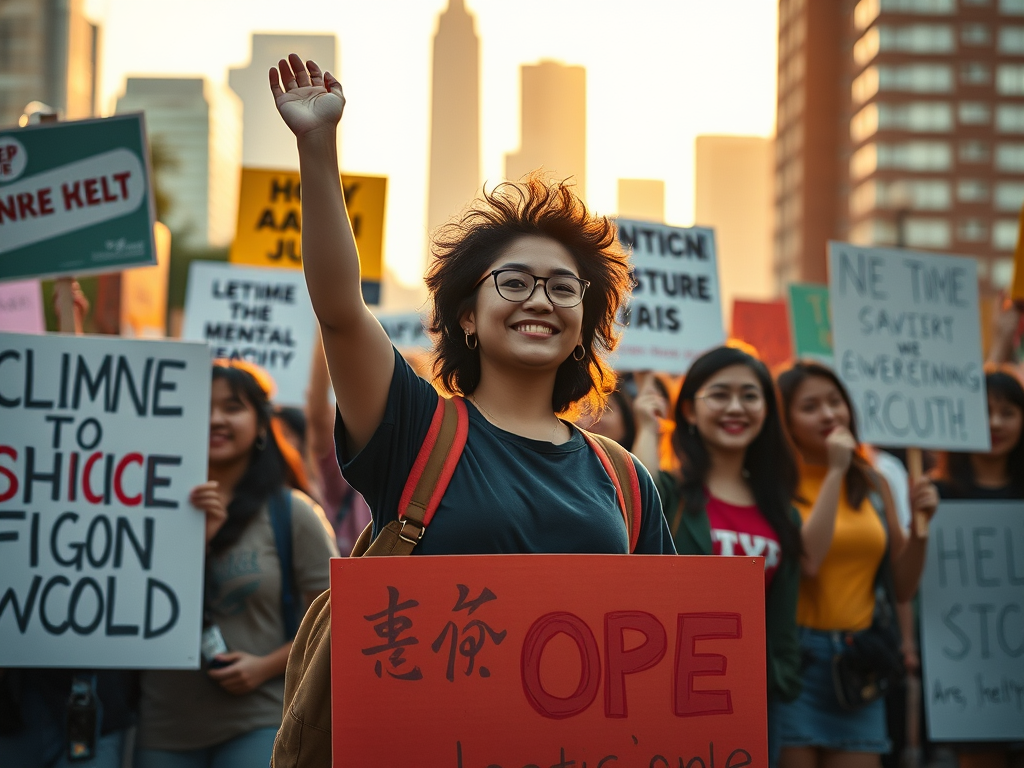

AAPI youth aren’t waiting for permission to lead. They’re organizing, advocating, and reshaping what activism looks like in 2026.
From climate justice to anti-racism, mental health to immigration reform, young Asian Americans and Pacific Islanders are at the forefront of movements demanding change. And they’re doing it on their own terms.
The Issues Driving AAPI Youth Activism
AAPI youth care about a wide range of issues, but a few themes stand out:
*Climate Justice:* Pacific Islander youth are leading the charge on climate activism, as their homelands face existential threats from rising sea levels. Southeast Asian and South Asian communities are organizing around environmental racism and pollution in their neighborhoods.
*Anti-Racism and Hate Crimes:* The surge in anti-Asian violence during COVID-19 mobilized a generation of young AAPI activists. They’re not just reacting—they’re building long-term strategies to combat hate and racial supremacy.
*Mental Health:* AAPI youth are breaking the stigma around mental health, advocating for culturally competent care, and creating peer support networks.
*Immigration and Refugee Rights:* Many AAPI youth are immigrants or children of immigrants. They’re fighting for DACA protections, against family separations, and for humane immigration policies.
*Educational Equity:* From affirmative action debates to the lack of Asian American studies programs, AAPI youth are demanding educational systems that reflect and support them.
Digital Organizing
AAPI youth are digital natives, and they’re using social media to organize, educate, and mobilize. TikTok, Instagram, and Twitter are platforms for activism, where campaigns can go viral and reach millions.
Hashtags like #StopAsianHate, #DisaggregateTheData, and #DecolonizeEducation have amplified AAPI voices and created spaces for community and solidarity.
Digital organizing isn’t just performative—it’s translating into real-world action, from protests to policy changes.
Intersectionality in Action
AAPI youth activists understand that their liberation is tied to the liberation of all marginalized communities. They’re building coalitions with Black, Latinx, Indigenous, and LGBTQIA+ movements.
They’re addressing anti-Blackness within Asian communities, supporting Palestinian solidarity, and fighting for disability justice. Their activism isn’t single-issue—it’s intersectional and holistic.
Challenging the Model Minority Myth
AAPI youth are rejecting the model minority myth and calling out how it’s used to divide communities and erase struggles. They’re demanding disaggregated data, visibility for Southeast Asian and Pacific Islander communities, and recognition of economic and educational disparities.
They’re also pushing back against being used as a wedge against other communities of color. Solidarity, not division, is the goal.
Mental Health Advocacy
AAPI youth are normalizing conversations about mental health, sharing their own struggles, and demanding better resources. They’re creating support groups, hosting workshops, and using platforms to educate others.
This advocacy is personal and political—it’s about individual healing and systemic change.
The Role of Art and Culture
AAPI youth are using art, music, poetry, and film to tell their stories and challenge stereotypes. Creative expression is a form of resistance, a way to reclaim narratives and envision new futures.
From spoken word to visual art to TikTok videos, young AAPI creators are shaping culture and driving conversations.
Challenges They Face
AAPI youth activists face pushback from multiple directions. Older generations may see them as too radical or disrespectful. Mainstream movements may tokenize or ignore them. Institutions may resist their demands.
They also deal with burnout. Activism is exhausting, especially when you’re fighting for your own humanity. Balancing school, work, and activism takes a toll.
What’s Next
AAPI youth aren’t just focused on the present—they’re building for the future. They’re running for office, starting nonprofits, pursuing careers in law and policy, and laying the groundwork for long-term change.
They’re not waiting for older generations to hand them the reins. They’re taking them.
Support Them
If you’re an elder, parent, or ally, support AAPI youth activists. Listen to them. Amplify their voices. Provide resources. Step back when needed.
Don’t dismiss their urgency or tell them to “wait their turn.” Change doesn’t wait. And neither should they.