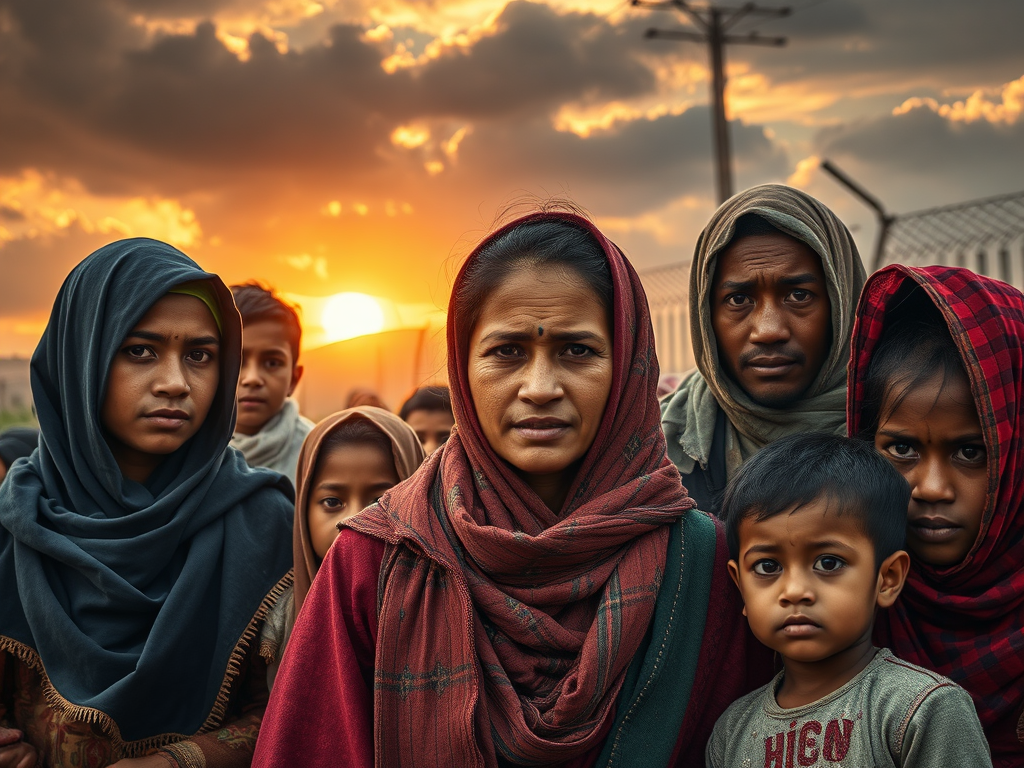

Surviving war, displacement, and violence leaves scars that don’t heal when you cross a border. Post-Traumatic Stress Disorder (PTSD) is a reality for many refugees and war-affected communities, but it’s rarely talked about and often under-treated.
Healing from trauma requires more than safety and stability—it requires acknowledgment, support, and culturally appropriate care.
What Refugees Experience
Refugees flee unimaginable circumstances—war, genocide, persecution, violence. They witness death, lose loved ones, and live in constant fear.
The journey to safety is often just as traumatic. Dangerous border crossings, overcrowded refugee camps, uncertainty about the future—all of it compounds the original trauma.
And when they finally arrive in a new country, the challenges don’t end. Resettlement brings language barriers, economic hardship, discrimination, and the loss of community and culture.
PTSD Symptoms
PTSD manifests in many ways:
– *Flashbacks and nightmares:* Reliving traumatic events as if > they’re happening again
– *Hypervigilance:* Constantly scanning for danger, unable to relax
– *Avoidance:* Avoiding people, places, or topics that trigger > memories
– *Emotional numbing:* Feeling disconnected, unable to feel joy or > connection
– *Irritability and anger:* Quick to anger, difficulty controlling > emotions
– *Sleep disturbances:* Insomnia, night terrors, trouble staying > asleep
These symptoms interfere with daily life, relationships, and the ability to move forward.
Generational Trauma
PTSD doesn’t just affect those who directly experienced trauma—it’s passed down to children and grandchildren. Parents who’ve survived war may struggle to express affection, set consistent boundaries, or feel safe.
Children grow up in households shaped by trauma they didn’t directly experience. They inherit hypervigilance, anxiety, and a sense that the world is fundamentally unsafe.
Cultural Stigma
In many refugee communities, mental health is stigmatized. PTSD is seen as weakness, madness, or a lack of faith. Seeking help is shameful.
This stigma prevents people from getting treatment. They suffer in silence, convinced they should be able to “get over it” or that it’s normal to live with constant fear and pain.
Barriers to Treatment
Even when refugees want help, barriers make it difficult:
*Language:* Mental health services are rarely available in refugees’ native languages.
*Lack of Culturally Competent Care:* Many therapists don’t understand the specific traumas refugees face or the cultural contexts they come from.
*Cost:* Therapy is expensive, and many refugees can’t afford it.
*Fear of Institutions:* Refugees may distrust institutions, especially government-affiliated ones, based on past experiences.
*Lack of Awareness:* Many don’t know PTSD is treatable or that help exists.
What Treatment Looks Like
Effective PTSD treatment for refugees requires cultural sensitivity and trauma-informed care.
*Trauma-Focused Therapy:* Therapies like Cognitive Processing Therapy (CPT) and Eye Movement Desensitization and Reprocessing (EMDR) are effective for PTSD.
*Community-Based Support:* Group therapy and peer support within refugee communities can provide connection and validation.
*Mind-Body Approaches:* Yoga, meditation, and other body-based therapies help manage hyperarousal and stress.
*Medication:* In some cases, medication can help manage symptoms, though it’s not a cure.
The Role of Community
Community is healing. Connecting with others who share your experiences, your culture, and your language provides validation and support that individual therapy can’t always offer.
Refugee-led organizations and cultural groups create spaces where people can process trauma collectively and rebuild a sense of belonging.
Resettlement and Retraumatization
Resettlement itself can be retraumatizing. The stress of navigating a new country, the loss of identity and status, the discrimination and isolation—all of it can trigger PTSD symptoms.
Refugees are expected to be grateful for safety, but safety alone doesn’t undo trauma. Healing requires more.
What Needs to Change
We need mental health services in multiple languages, provided by therapists trained in refugee trauma.
We need community-based programs that meet refugees where they are—culturally, linguistically, and geographically.
We need to reduce stigma by normalizing mental health conversations within refugee communities.
We need policies that support refugee integration and reduce the additional stressors of resettlement.
Healing Is Possible
PTSD is real, and it’s debilitating. But it’s also treatable. With the right support, people can heal, process their trauma, and rebuild their lives.
Healing doesn’t mean forgetting. It doesn’t mean the trauma didn’t happen. It means learning to live with it in a way that doesn’t consume you.
Refugees deserve more than survival. They deserve healing, dignity, and the chance to thrive.
JUNE ARTICLES