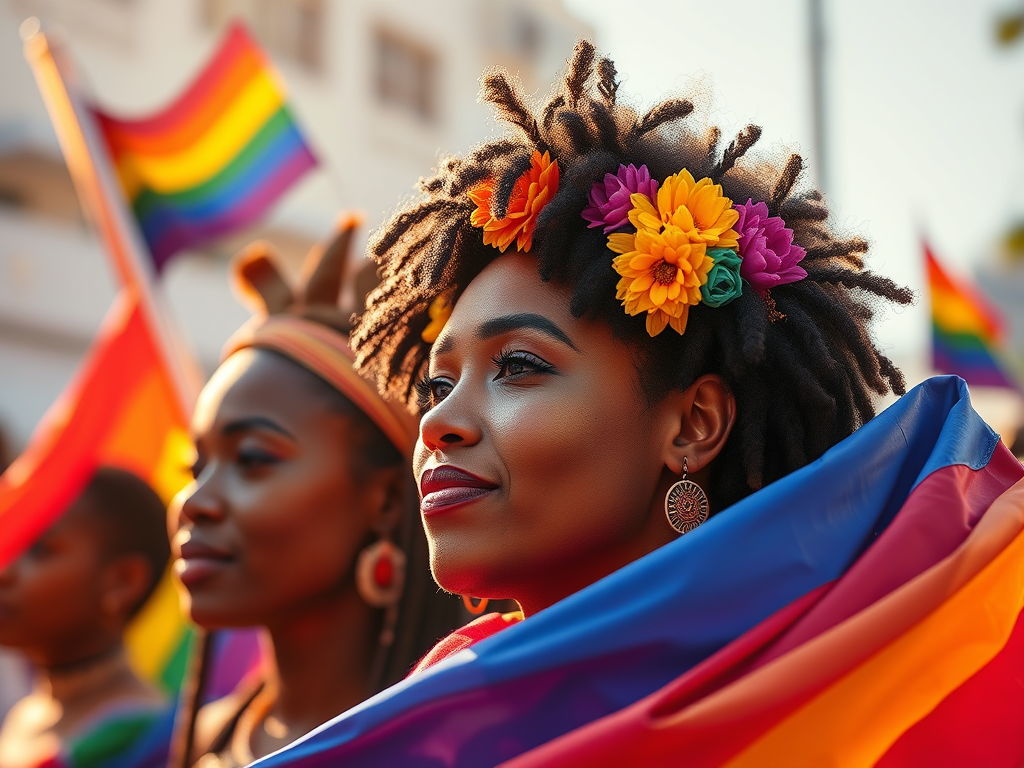

Pride Month arrives every June with rainbow flags, corporate sponsorships, and Instagram stories celebrating love. But somewhere between the parade floats and the branded merchandise, the movement forgets who threw the first brick. Queer people of color exist at intersections that mainstream LGBTQIA+ spaces consistently erase—and it’s time to talk about what that erasure costs.
The Whitewashing of Pride
The modern Pride movement owes its existence to Black and Brown trans women who fought back at Stonewall. Marsha P. Johnson, Sylvia Rivera, Miss Major Griffin-Gracy—these weren’t just participants in the movement. They were the movement. Yet walk into most LGBTQIA+ spaces today and you’ll see their contributions reduced to footnotes while white, cisgender gay men dominate the narrative.
This isn’t accidental. It’s strategic erasure that allows mainstream gay rights organizations to distance themselves from the radical, anti-racist roots of queer liberation. When you strip away the racial justice component of Pride, you get exactly what we have now: marriage equality for those who can afford weddings, adoption rights for those who pass home studies, and employment protections for those who can code-switch their way through interviews.
Double Discrimination, Half the Resources
Being queer and a person of color means navigating discrimination from multiple directions simultaneously. You face homophobia in your racial community and racism in LGBTQIA+ spaces. You’re told you’re “too gay” for family gatherings and “not gay enough” for the club. You’re fetishized on dating apps while being excluded from queer leadership positions.
The statistics tell the brutal truth. Queer youth of color experience homelessness at rates nearly double their white LGBTQIA+ peers. Trans women of color face epidemic levels of violence that rarely make national news. LGBTQIA+ people of color report higher rates of poverty, unemployment, and healthcare discrimination than white queer people—yet funding for organizations serving queer POC remains a fraction of what mainstream LGBTQIA+ nonprofits receive.
Cultural Context Matters
Coming out isn’t just about personal identity—it’s about navigating cultural expectations that white-dominated LGBTQIA+ spaces rarely understand. For many queer people of color, family isn’t just your parents and siblings. It’s your extended community, your cultural touchstone, your survival network in a hostile society.
Telling a queer person of color to “just cut off” unsupportive family ignores the reality that family represents more than blood relations. It’s your connection to language, tradition, and cultural identity. It’s your safety net in a racist society. Choosing between queerness and culture shouldn’t be necessary, but white LGBTQIA+ spaces force that choice by refusing to create room for cultural complexity.
Building Our Own Spaces
Because mainstream LGBTQIA+ organizations consistently fail queer people of color, we’ve built our own infrastructure. From the House Ballroom scene to queer POC collectives, from LGBTQIA+ people of color support groups to cultural organizations that celebrate both queerness and heritage—these spaces exist because we created them out of necessity.
These aren’t secondary spaces or “niche communities.” These are the spaces where queer liberation actually happens. Where trans Latinas can gather without explaining their gender to white activists. Where Black queer men can date without being fetishized. Where Indigenous Two-Spirit people can claim identities that predate colonial gender binaries.
What Real Allyship Looks Like
If mainstream LGBTQIA+ organizations actually cared about queer people of color, they’d put money and power where their Pride Month statements go. That means:
Funding organizations led by and for queer POC at the same levels as predominantly white LGBTQIA+ nonprofits. Centering racial justice in every LGBTQIA+ policy conversation. Challenging racism within LGBTQIA+ spaces immediately and consistently. Stepping back to amplify queer POC voices instead of speaking over them. Recognizing that liberation for some isn’t liberation at all.
Pride as Protest, Not Party
The first Pride was a riot against police violence. The gay liberation movement was intertwined with Black Power, Brown Power, and anti-war movements. Pride wasn’t corporate sponsorships and respectability politics—it was radical, intersectional resistance.
Reclaiming that legacy means remembering that queer liberation can’t exist without racial justice. It means rejecting the narrative that legal marriage equality means the work is done. It means understanding that a world safe for white cisgender gay men isn’t safe for trans women of color, queer immigrants, or disabled LGBTQIA+ people.
Your Queerness Is Valid
To every queer person of color reading this: your identity isn’t too complicated. You’re not “playing identity politics.” You’re not dividing the movement by demanding that it actually serve you.
Your queerness is inherently political because you exist in a world that wants to erase both your racial identity and your sexuality. Your survival is resistance. Your joy is revolutionary. And your demand for spaces that honor all of who you are isn’t asking too much—it’s asking for the bare minimum.
Pride Month should celebrate the full spectrum of queer identity, not just the parts that make straight people and corporations comfortable. Until mainstream LGBTQIA+ spaces can do that, we’ll keep building our own. And we’ll keep remembering who actually started this movement—even when everyone else forgets.