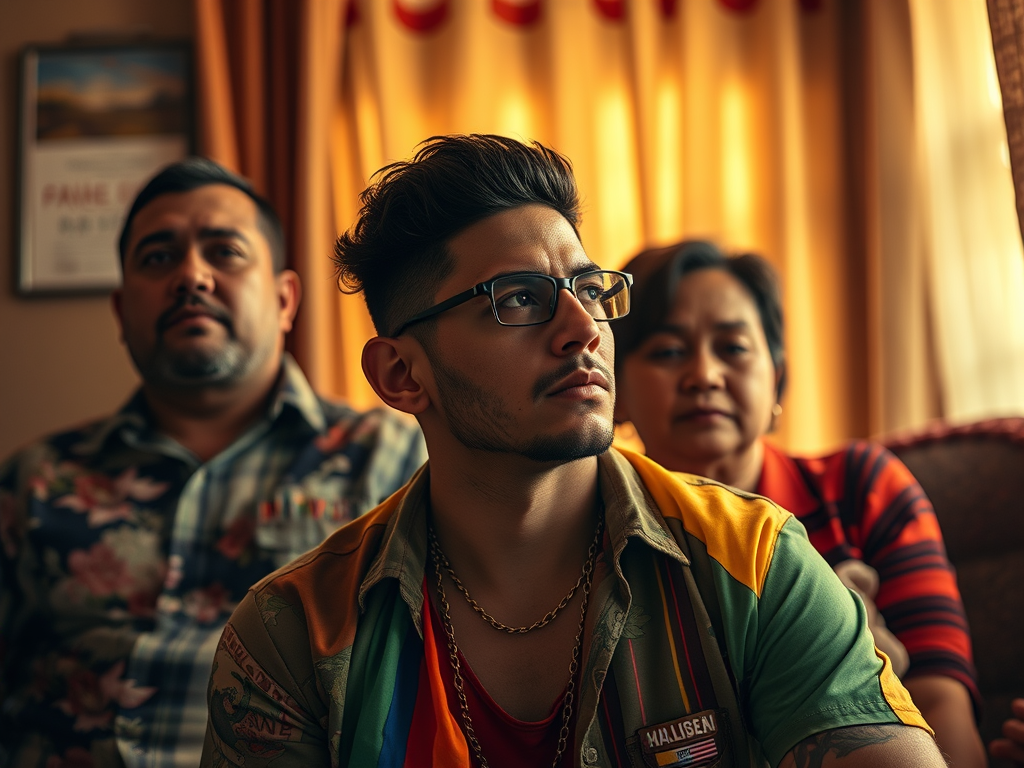

Growing up queer in Latinx families means navigating machismo, marianismo, and families that often treat heterosexuality as the only acceptable option. It means hearing “no hay gays en nuestra familia” while cousins make homophobic jokes at every gathering. It means choosing between your queerness and your culture, or fighting to prove you can be both. Here’s the truth about what that navigation looks like—and why Latinx LGBTQIA+ people are redefining family, culture, and belonging on our own terms.
Machismo’s Grip on Gender and Sexuality
Machismo—the cultural emphasis on male dominance, strength, and heterosexuality—shapes Latinx family dynamics in ways that punish anyone who doesn’t fit rigid gender and sexual norms. Men must be providers, protectors, and paragons of heterosexual masculinity. Women must be modest, maternal, and marriageable. Anything outside these roles threatens the family’s honor and respectability.
For queer Latinx people, this means your existence is framed as betrayal. Gay Latinx men are seen as failing at masculinity. Lesbian Latinx women are viewed as rejecting their destiny as mothers and wives. Trans Latinx people are erased entirely or treated as sources of family shame.
This isn’t just about individual prejudice—it’s about how machismo culture enforces conformity through family pressure, religious doctrine, and community surveillance. Your tías gossip about you. Your abuelos pray for you to change. Your parents worry what the neighbors will think. Family, church, and community pressure can all be mobilized to push you back into the closet.
The Catholic Church’s Shadow
Catholicism’s influence on Latinx culture can’t be overstated. For many families, being a good Latinx person means being a good Catholic. And Church teaching holds that same-sex relationships are sinful, and family means one man, one woman, and children.
This religious framework gives theological justification to homophobia and transphobia that might otherwise face pushback. Parents cite the Bible when rejecting queer children. Priests reinforce these messages from the pulpit. Religious guilt becomes another weapon against queer Latinx people trying to accept themselves.
Even Latinx people who aren’t particularly devout often absorb these messages. Catholicism shapes cultural attitudes even for non-practitioners. The result is a moral framework that positions queerness as not just different but wrong, sinful, and shameful.
Marianismo and Queer Latinas
While machismo polices Latinx men, marianismo—the expectation that women embody the Virgin Mary’s virtues—shapes how Latinx women experience queerness. Marianismo demands that women be pure, self-sacrificing, and devoted to family above all else. Women are expected to find fulfillment through motherhood and service to men.
For queer Latinas, this creates impossible contradictions. Lesbians reject male partnership entirely, violating the core expectation that women exist in relation to men. Bisexual Latinas are accused of being confused or promiscuous. Trans Latinas are seen as either failed men or fake women.
Queer Latinas often face unique pressure to marry men and have children regardless of their orientation. Families may accept a gay son while completely rejecting a lesbian daughter because her queerness threatens family continuation more directly. The expectation that women will be mothers supersedes everything else.
Family as Everything (and Nothing)
Latinx culture emphasizes “la familia” above individual desires. Family isn’t just your nuclear household—it’s your extended relatives, your compadres, your community. Family provides identity, support, and belonging. Threats to family cohesion are taken seriously because family is survival.
This makes coming out exponentially more difficult for queer Latinx people. You’re not just risking your parents’ rejection—you’re potentially losing your entire family network. Cousins might stop talking to you. Grandparents might refuse to see you. Family events that once provided belonging become sites of exclusion and judgment.
The phrase “but family is everything” gets weaponized against queer Latinx people. We’re told to stay closeted to preserve family peace. We’re expected to tolerate homophobia because family comes first. We’re asked to sacrifice our authenticity to maintain everyone else’s comfort.
The Double Bind of Immigration
For immigrant Latinx families, queerness becomes even more complicated. Parents who sacrificed everything to provide opportunities in America feel betrayed when children come out. “We gave you everything and this is how you repay us?” becomes a refrain that leverages guilt and obligation against authenticity.
Immigrant parents may believe American culture corrupted their children into queerness. They see LGBTQIA+ identities as white, foreign, and incompatible with Latinx culture. This framing positions queerness as abandoning your heritage rather than being part of who you are.
Undocumented queer Latinx people face additional vulnerabilities. Coming out might mean losing family housing support while being unable to access employment due to immigration status. The threat of deportation adds another layer of precarity to already marginalized identities.
Code-Switching Between Worlds
Many queer Latinx people live double lives—out in LGBTQIA+ spaces, closeted in Latinx communities. This constant code-switching takes an enormous toll. You monitor your behavior, clothing, and language to avoid giving yourself away. You bring “friends” to family gatherings and invent reasons why you’re still single. You carry the weight of living inauthentically to maintain belonging.
Even queer Latinx people who are out to family often code-switch to minimize conflict. You tone down your queerness at family events. You don’t bring partners or discuss your dating life. You accept homophobic comments without pushback because confrontation means bigger fights.
This exhausting navigation means queer Latinx people rarely feel fully themselves anywhere. You’re too gay for family gatherings and too Latinx for white LGBTQIA+ spaces. You exist in the margins of both communities, never quite fitting anywhere.
Chosen Family and Queer Latinx Community
Because biological families so often reject queer Latinx people, chosen families become essential. These are the friends who become hermanas and hermanos, who show up when blood relatives disappear, who celebrate your queerness alongside your cultura.
Queer Latinx spaces—whether bars, community centers, or informal friend groups—provide belonging that bridges queerness and Latinx identity. Here you don’t have to code-switch. You can speak Spanish and Spanglish. You can be as gay as you want while still being as Latinx as you are. These spaces prove that queerness and Latinx culture aren’t incompatible—your family was just wrong.
Organizations like Familia: Trans Queer Liberation Movement, National Latinx & Queer Collective, and local LGBTQIA+ Latinx groups create community infrastructure where none existed. They provide support, advocacy, and the revolutionary act of making space for queer Latinx existence.
The New Generation Is Changing Things
Younger Latinx LGBTQIA+ people are increasingly refusing to choose between culture and queerness. They’re coming out earlier, demanding acceptance more forcefully, and building lives that honor all of who they are. They’re challenging older generations’ homophobia instead of quietly accepting it.
This generation is also redefining what Latinx identity means. They’re reclaiming Indigenous understandings of gender diversity that existed before Spanish colonization. They’re connecting machismo to colonialism and rejecting it as part of decolonization. They’re creating new cultural expressions that center queer Latinx experiences.
Social media has enabled queer Latinx people to find community and solidarity beyond geographic limitations. TikTok videos, Instagram posts, and Twitter threads create visibility and validation that previous generations lacked. This digital community building is changing what’s possible for queer Latinx youth.
What Solidarity Looks Like
Supporting queer Latinx people means challenging homophobia in Latinx spaces explicitly and consistently. It means recognizing that machismo harms everyone, not just queer people. It means understanding that fighting for immigrant rights includes fighting for queer immigrant rights.
For non-Latinx LGBTQIA+ people, solidarity means addressing racism in queer spaces, recognizing that queer liberation includes cultural belonging, and supporting organizations led by and for queer Latinx people. It means not treating Latinx culture as inherently more homophobic than white American culture—homophobia is everywhere, it just manifests differently.
For straight Latinx people, solidarity means confronting your own prejudices, standing up to homophobic family members, and making space for queer relatives to be full participants in family life. It means recognizing that queer Latinx people aren’t betraying their culture—they’re expanding it.
You can be queer and Latinx. You can be trans and speak Spanish. You can love women and make your abuela’s recipes. Your queerness doesn’t make you less Latinx, and your cultura doesn’t mean you have to hide who you are. Anyone who tries to force you to choose is wrong—you’re proof that both identities can coexist beautifully.
Keep reading: Undocumented and Unafraid: DACA and Dreamer Stories · Latinx Women in STEM Fields · Quinceañera: Tradition, Evolution, and Meaning