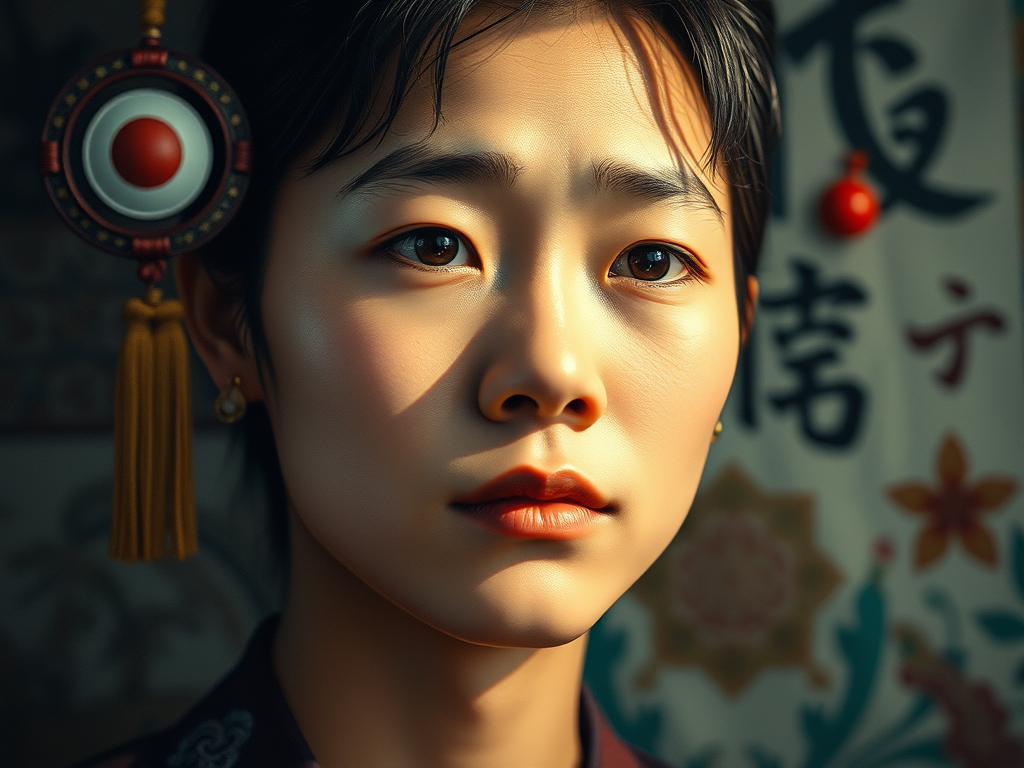

Asian LGBTQIA+ people navigate coming out in cultures that often treat queerness as Western corruption, family shame, and betrayal of tradition. From South Asian families threatening arranged marriages to East Asian parents responding with silence that lasts years, from Southeast Asian communities equating queerness with moral failure to Pacific Islander families struggling between cultural values and changing social norms—coming out as Asian and queer means confronting specific cultural dynamics that white-dominated LGBTQIA+ narratives ignore. These are the stories mainstream Pride Month celebrations don’t tell.
The Silence Is Louder Than Words
Many Asian families respond to coming out with silence—not because they accept their queer children but because open acknowledgment would make the situation real. In cultures that value “saving face” and maintaining family reputation, ignoring queerness becomes a coping mechanism.
Your parents stop asking about your dating life. Relatives avoid eye contact at gatherings. Your existence becomes an open secret everyone agrees not to discuss. This silence creates a different kind of closet—one where you’re technically out but your identity is treated as something shameful that polite people don’t mention.
This response leaves Asian LGBTQIA+ people in limbo. You’re not openly rejected, so you can’t cut ties and move on. But you’re not accepted either, so you can’t fully be yourself. You exist in perpetual uncertainty, never knowing if the next family event will force the confrontation everyone’s been avoiding.
Family Obligation Versus Personal Truth
Asian cultures emphasize filial piety, family honor, and collective well-being over individual desires. Your choices reflect on your entire family, not just yourself. This cultural framework makes coming out feel selfish—you’re prioritizing your happiness over family reputation and parental expectations.
Parents who sacrificed for their children’s success feel betrayed when those children come out. “We gave up everything so you could have a better life, and this is how you repay us?” positions queerness as ingratitude rather than identity. The expectation that children will honor their parents through marriage and grandchildren makes queerness incompatible with being a good child.
This guilt is particularly heavy for eldest children, only children, or sons carrying family name expectations. Coming out means failing at fundamental cultural obligations. It means being the family member who disrupts harmony and brings shame.
The “Western Influence” Accusation
Many Asian parents blame Western culture for their children’s queerness. Living in America, watching American media, attending American schools—these “corrupted” their children away from traditional values. This framework treats queerness as something that can be unlearned if you just reconnect with your heritage.
Parents send queer children to their home countries for extended stays, hoping cultural immersion will “fix” them. They limit contact with American friends who might be “bad influences.” They double down on cultural expectations, as if forcing you to attend temple, speak your heritage language, or participate in cultural events will somehow make you straight.
This narrative erases queer people who exist throughout Asia and have throughout history. It positions queerness as inherently Western and incompatible with Asian identity, forcing Asian LGBTQIA+ people to choose between their sexuality and their culture.
Model Minority Myth Meets Queer Identity
The model minority stereotype pressures Asian Americans toward specific forms of success: academic achievement, professional careers, heterosexual marriage, and biological children. Queerness disrupts this narrative at multiple points.
Gay Asian men who don’t want marriage and kids fail at being successful Asian sons. Lesbian Asian women who reject traditional gender roles violate expectations for daughters. Trans Asian people who transition challenge family honor and reputation in ways parents can’t ignore.
Being queer removes you from the model minority pedestal—but only partially. Your family still expects you to be professionally successful, financially stable, and respectful of elders, even while rejecting your sexual orientation or gender identity. You’re supposed to embody success while remaining fundamentally shameful.
Arranged Marriage as “Solution”
For South Asian and some Southeast Asian LGBTQIA+ people, coming out often triggers arranged marriage pressure. Parents view marriage as the solution to queerness—marry the right person and you’ll become straight. Or at least you’ll perform straightness well enough that family reputation remains intact.
This pressure intensifies with age. Each birthday past 25 brings increased urgency. Relatives start suggesting potential matches. Parents express concern about being unable to find partners for children who are “difficult.” The implied threat is clear: accept marriage or accept permanent family disappointment.
Some queer South Asians enter marriages of convenience—both partners are queer but marry to appease families. Others face forced marriages where family pressure becomes coercion. Still others escape arranged marriages only to face complete family rupture.
Religious and Cultural Complexity
Asian religions and cultural traditions have varied relationships with gender and sexual diversity. Some Hindu texts reference third genders. Buddhism doesn’t explicitly condemn homosexuality. Indigenous Asian cultures recognized gender diversity before colonization imposed Western binaries.
But contemporary Asian religious communities often espouse conservative views shaped by colonialism and modernization. Muslim Asian families cite Islamic teachings against homosexuality. Christian Asian communities embrace evangelical perspectives. Hindu families invoke tradition while ignoring historical gender diversity.
For Asian LGBTQIA+ people trying to maintain religious or spiritual practices, this creates painful conflicts. You want to honor your ancestors, participate in cultural traditions, and maintain spiritual connections—but religious communities and family members position these as incompatible with queerness.
The Geography of Acceptance
Where Asian LGBTQIA+ people come out matters enormously. Major coastal cities with large Asian populations often have vibrant queer Asian communities. Smaller cities and suburban areas offer less community infrastructure. Rural areas can mean complete isolation.
Asian LGBTQIA+ people in places like San Francisco, New York, or Los Angeles can access organizations, events, and community specifically for queer Asians. They can find chosen family who understand cultural nuance without explanation. They can date other queer Asians who get it.
But for queer Asians in places without those resources, isolation compounds discrimination. You might be the only out queer Asian person you know. Dating means explaining cultural dynamics to non-Asian partners or settling for whoever’s available. You lack models for what queer Asian life can look like beyond your parents’ worst fears.
Chosen Family and Queer Asian Community
Because biological families so often reject or conditionally accept queer Asian identities, chosen families become essential. Organizations like National Queer Asian Pacific Islander Alliance (NQAPIA), Gay Asian Pacific Alliance (GAPA), and local queer Asian groups create spaces where you don’t have to choose between Asian identity and queerness.
These communities understand code-switching, family pressure, and cultural specific discrimination without requiring explanation. They celebrate Lunar New Year and Pride Month. They create space for queer Asians to be fully themselves without translation.
Chosen families provide the belonging biological families withhold. They show up for coming out anniversaries, celebrate first Pride attendance, and support each other through family conflicts. They prove that you can be Asian and queer simultaneously—that these identities enhance rather than contradict each other.
What Second-Generation Queer Asians Are Building
Younger queer Asian Americans increasingly refuse to hide. They’re coming out earlier, demanding full acceptance rather than tolerance, and building lives that honor both their heritage and their queerness. They’re less willing to wait decades for family acceptance that may never come.
This generation is also challenging older assumptions about what Asian identity means. They’re connecting with queer Asian history that colonialism erased. They’re creating new cultural expressions that center queer Asian experiences. They’re building community infrastructure that didn’t exist for previous generations.
Social media has enabled queer Asians to find each other across geographic boundaries. TikTok videos about coming out to Asian parents, Instagram accounts celebrating queer Asian joy, and YouTube channels documenting queer Asian lives create visibility and validation that earlier generations lacked.
Different Asian Experiences
There’s no universal Asian LGBTQIA+ coming out experience. South Asians face different cultural dynamics than East Asians. Southeast Asian families respond differently than Pacific Islander communities. Religious variation matters—Muslim, Hindu, Buddhist, Christian, or secular families create different contexts.
Immigration generation matters too. First-generation immigrants often hold more conservative views, while American-born Asians may navigate different expectations. Refugee communities facing trauma have distinct dynamics. Multiracial Asian families introduce additional complexity.
But across this diversity, common threads emerge: family obligation versus personal authenticity, cultural preservation versus individual truth, being caught between communities that each want you to choose.
To Every Queer Asian Still Figuring It Out
Your queerness doesn’t make you less Asian. Your family’s rejection doesn’t make their love conditional—it makes their love conditional on you hiding who you are. That’s not actually love, even when it comes from people who genuinely believe they want what’s best for you.
You don’t owe your family a closet. You don’t owe them marriage and grandchildren. You don’t owe them the life they envisioned instead of the life you’re living. Honoring your parents doesn’t require sacrificing yourself.
Coming out might cost you family relationships—but staying closeted costs you yourself. Neither choice is easy. Neither choice is fair. But only one choice lets you live authentically.
And for what it’s worth: there are Asian families who celebrate their queer children. There are Asian parents who educate themselves, challenge their prejudices, and show up for their LGBTQIA+ kids. Your family’s current rejection doesn’t have to be permanent. But even if it is, you deserve to exist as your full self.
The queer Asian community has space for you. Chosen family is waiting. And there’s a whole life possible where you don’t have to translate yourself or apologize for existing. You just have to be brave enough to reach for it.