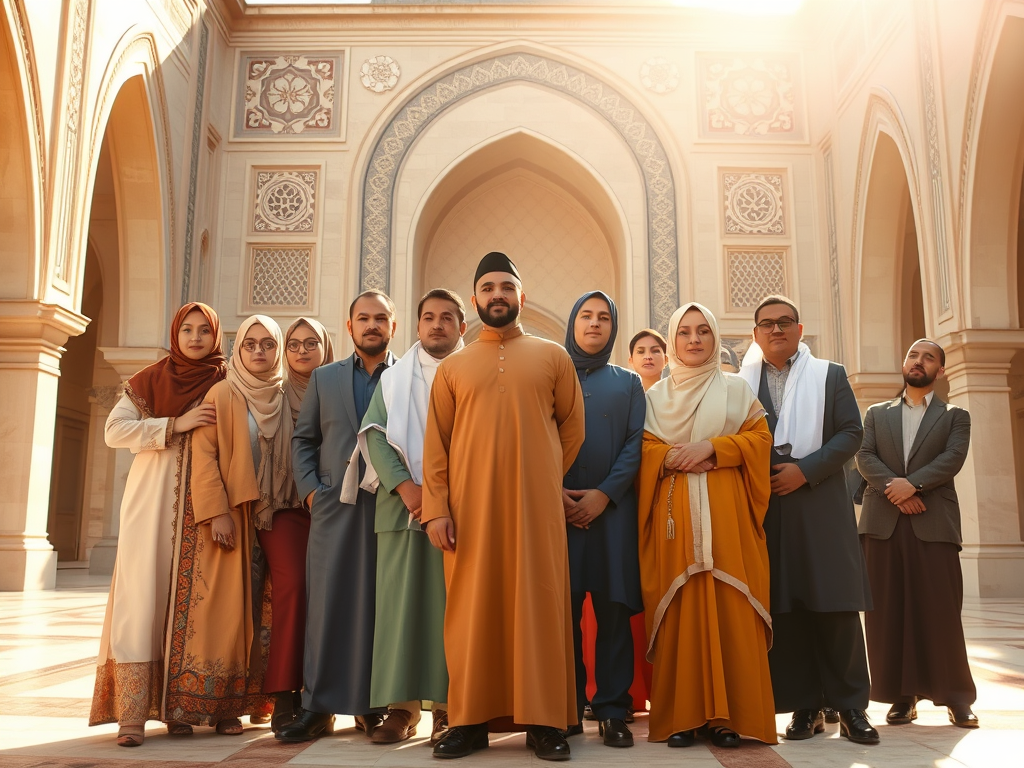

Being queer and Muslim means existing at an intersection most people assume is impossible. Western narratives position Islam as inherently homophobic while treating queerness as fundamentally Western. LGBTQIA+ spaces expect you to reject religion entirely. Muslim communities expect you to reject your queerness entirely. Meanwhile, you’re trying to honor both your faith and your identity—and finding that the conflict isn’t inherent to Islam but to how both Muslims and non-Muslims interpret it. This is what navigating queer Muslim identity actually looks like.
The False Binary
Western discourse frames Islam and queerness as opposites. Media portrays Muslim-majority countries as universally homophobic while positioning the West as the beacon of LGBTQIA+ rights. This narrative erases queer Muslims entirely—we supposedly can’t exist because Islam and queerness are incompatible.
But this binary is false. Queer Muslims have always existed. Islamic history includes same-gender love poetry, gender-variant scholars, and interpretations of religious texts that didn’t condemn same-gender relationships the way modern conservatives do. Progressive scholars argue that the Quran never addresses sexual orientation as it’s understood today, and that many contemporary anti-LGBTQIA+ interpretations were shaped by colonialism as much as theology.
Western colonization imposed Victorian sexual morality onto Muslim-majority regions. European powers criminalized same-gender relationships in colonies that had previously tolerated them. This colonial legacy shapes how contemporary Muslim communities understand sexuality and gender—yet the West frames its own history as liberation while treating Muslim homophobia as essential to Islam.
Navigating Muslim Community
Most queer Muslims grow up hearing that homosexuality is haram (forbidden). Imams preach against it. Family members express disgust. Community members gossip about anyone whose gender or sexuality seems non-conforming. The message is clear: your queerness excludes you from Muslim community and identity.
Coming out as queer in Muslim families can mean complete rejection. Parents may disown children, families may force marriages, communities may ostracize members who come out. The consequences go beyond individual families—you risk losing your entire cultural and religious community.
For queer Muslims who prioritize faith, this rejection is devastating. You’re not just losing family relationships—you’re losing access to spiritual community, religious practice, and cultural belonging. Mosques that were spiritual homes become spaces where you can’t show up authentically. Prayers you’ve recited since childhood become tainted by the knowledge that your community sees you as sinful.
Some queer Muslims compromise by staying closeted in Muslim spaces while being out in secular contexts. This constant code-switching takes enormous toll. Others leave Islam entirely, deciding that maintaining faith isn’t worth the erasure and condemnation. Still others seek out progressive Muslim communities where queer identity and faith can coexist—but these spaces are rare.
Reinterpreting Religious Texts
Progressive Muslim scholars and activists are reclaiming Islamic texts and traditions through queer-affirming lenses. They argue that the Quran’s story of Lot (Lut), typically interpreted as condemning homosexuality, is actually about rape and lack of consent—not loving same-gender relationships.
They point to Islamic traditions of gender diversity, from the khwaja sara of South Asia to historical examples of gender-variant people in Islamic societies. They argue that contemporary homophobia in Muslim communities reflects colonialism and cultural conservatism more than Islamic theology.
Organizations like Muslims for Progressive Values, The Inner Circle, and al-Fatiha Foundation (which operated until 2011 but inspired ongoing work) create spaces for LGBTQIA+ Muslims to explore faith without choosing between queerness and religion. These communities prove that Islam and queerness aren’t inherently opposed—rigid interpretations of Islam and queerness are opposed.
The Hijab and Queer Identity
For queer Muslim women, particularly those who wear hijab, visibility becomes complicated. Hijab marks you as Muslim in Western spaces where people assume Muslims are conservative and anti-LGBTQIA+. Coming out as queer while visibly Muslim challenges stereotypes in both Muslim and LGBTQIA+ spaces.
Some queer Muslim women remove hijab when coming out, finding it impossible to navigate both identities simultaneously. Others maintain hijab as an essential part of religious practice and identity, refusing to let queerness dictate their relationship with faith. Still others use hijab strategically—wearing it in Muslim spaces and removing it elsewhere.
Queer Muslim women who wear hijab and present as feminine also navigate assumptions about sexual availability. Western spaces fetishize them as repressed and available for “liberation.” Muslim spaces police their femininity as potential temptation. Meanwhile, they’re trying to simply exist as queer Muslim women who wear hijab because they want to.
Islamophobia Compounds Homophobia
Queer Muslims face Islamophobia in LGBTQIA+ spaces that’s often coded as concern about homophobia. White LGBTQIA+ people use Muslim homophobia to justify anti-Muslim bias, positioning Islam as the primary threat to LGBTQIA+ rights while ignoring Christian homophobia and Western heteronormativity.
When queer Muslims speak about our experiences, we’re expected to denounce Islam to be acceptable to LGBTQIA+ spaces. We’re asked to “choose” between Muslim identity and queer identity as if both can’t coexist. We’re treated as traitors if we maintain Muslim practice or defend Muslim communities while critiquing their homophobia.
This Islamophobia manifests in dating discrimination, exclusion from LGBTQIA+ organizations, and microaggressions about religion. Queer Muslims report being rejected on dating apps when potential partners learn they’re Muslim. LGBTQIA+ events serve alcohol without considering Muslims who don’t drink. Pride organizations ignore Muslim holidays when scheduling events.
Queer Muslims in Muslim-Majority Countries
While Western discourse focuses on Islam as inherently homophobic, realities in Muslim-majority countries vary enormously. Some countries criminalize same-gender relationships harshly. Others have more nuanced cultural practices that create space for queer expression even when officially condemned.
Colonialism’s legacy shapes all of this. Some anti-LGBTQIA+ laws in Muslim-majority countries, like Section 377 in former British colonies, were imposed by European colonizers. Contemporary movements to decriminalize same-gender relationships in these countries face accusations of Western interference—ironic since criminalization was the Western interference.
Queer Muslims living in Muslim-majority countries navigate distinct challenges from queer Muslims in Western countries. They face state persecution and social stigma without access to LGBTQIA+ organizations or resources. Their queer identities may be invisible because Western LGBTQIA+ frameworks don’t translate directly to their cultural contexts.
Building Queer Muslim Community
Because both Muslim and LGBTQIA+ communities so often exclude queer Muslims, we’ve built our own spaces. These might be informal friend groups, online communities, or formal organizations. They’re spaces where you can pray and discuss queer relationships, celebrate Ramadan and Pride Month, be fully Muslim and fully queer without apology.
These communities prove that queer Muslim identity isn’t contradiction—it’s reality. They create models for how Islam and queerness can coexist. They provide religious education from progressive perspectives, support for coming out, and community for those rejected by families.
Social media has been particularly important for queer Muslim community building. Hashtags like #QueerMuslim, #LGBTQIslam, and #ProgressiveIslam connect people across countries and continents. Young queer Muslims find each other, share resources, and build solidarity online when geographic communities exclude them.
Intersectional Identities Matter
Queer Muslim identity intersects with race, ethnicity, immigration status, and class in ways that shape experience profoundly. Black queer Muslims face both anti-Blackness in Muslim communities and Islamophobia in Black LGBTQIA+ spaces. South Asian queer Muslims navigate colorism and caste discrimination alongside homophobia. Arab queer Muslims deal with stereotypes about terrorism alongside being queer.
Immigrant queer Muslims face particular vulnerabilities. Being out might threaten immigration status or family relationships that provide housing and financial support. Undocumented queer Muslims navigate even more precarity—coming out could trigger family rejection that leads to homelessness without the safety net documented people have.
Class matters too. Wealthy queer Muslims can access therapy, legal support, and resources for independence that working-class queer Muslims lack. They can afford to be estranged from family. They can live in LGBTQIA+-friendly neighborhoods. Working-class and poor queer Muslims have fewer options for safety and autonomy.
What Queer Muslims Need
Queer Muslims need Muslim communities that actually practice Islam’s teachings about compassion, mercy, and justice. We need mosques where we can pray without fear. We need imams who support us instead of condemning us. We need families who choose love over rigid interpretations of religion.
We need LGBTQIA+ spaces that don’t require us to renounce Islam to belong. We need Pride events that aren’t Islamophobic. We need dating communities where being Muslim isn’t automatic rejection. We need recognition that our identities are coherent, not contradictory.
We need mental health support from providers who understand both Muslim and LGBTQIA+ experience. We need legal resources for navigating family rejection, immigration issues, and discrimination. We need economic support when coming out means losing family financial networks.
To Every Queer Muslim
Your faith is valid. Your queerness is valid. The people who tell you that you must choose are wrong—about Islam, about queerness, and about you.
Islam teaches mercy, compassion, and justice. The God you worship is the same God who created you as queer. Your identity isn’t a test or a punishment—it’s part of who you are. And interpretations of Islam that condemn you reflect humans’ prejudices more than divine will.
You don’t have to leave Islam to be queer. You don’t have to hide your queerness to be Muslim. Both identities are yours. Both belong to you. And communities that can’t hold both are inadequate communities—not proof that you’re inadequate.
There are queer Muslims living fully as both identities. There are progressive Muslim communities where you’d be welcome. There are chosen families of other queer Muslims who understand without explanation. You’re not alone in this intersection even when it feels that way.
Your prayers are heard. Your identity is whole. And you deserve to exist as all of who you are—Muslim, queer, and everything else—without apology, without hiding, and without choosing. The liberation you seek is possible. And the faith you hold can coexist with the queerness you are.
Keep reading: Disability and Queerness: Intersectional Pride · Caribbean LGBTQIA+ Experiences · Indigenous Two-Spirit and LGBTQIA+ Traditions: Honoring Sacred Identities