
Corporate America loves to talk about diversity. They love it so much they’ve turned it into a buzzword, a marketing campaign, and a shield against accountability. But here’s the thing: when diversity becomes a performance instead of a practice, it stops serving the people it was meant to uplift and starts serving the institutions trying to protect their image.
Let’s talk about what happens when diversity gets weaponized.
The Diversity Theater Production
You’ve seen it before. The company-wide email celebrating Black History Month. The rainbow logo during Pride. The carefully curated stock photos of multiracial hands stacked together. The panel discussion where one person of color fields questions about “the minority experience” while five white executives nod sympathetically.
This is diversity theater, and it’s exhausting.
Real diversity work is uncomfortable. It requires examining power structures, redistributing resources, and making space for voices that challenge the status quo. Performative diversity, on the other hand, is designed to make everyone except minorities feel good about themselves.
When Inclusion Means Assimilation
Here’s how the weaponization works: Companies hire diverse talent, then expect them to code-switch, stay quiet about systemic issues, and be grateful for the opportunity. They create “diversity initiatives” that put the burden of change on the people experiencing discrimination rather than on the systems perpetuating it.
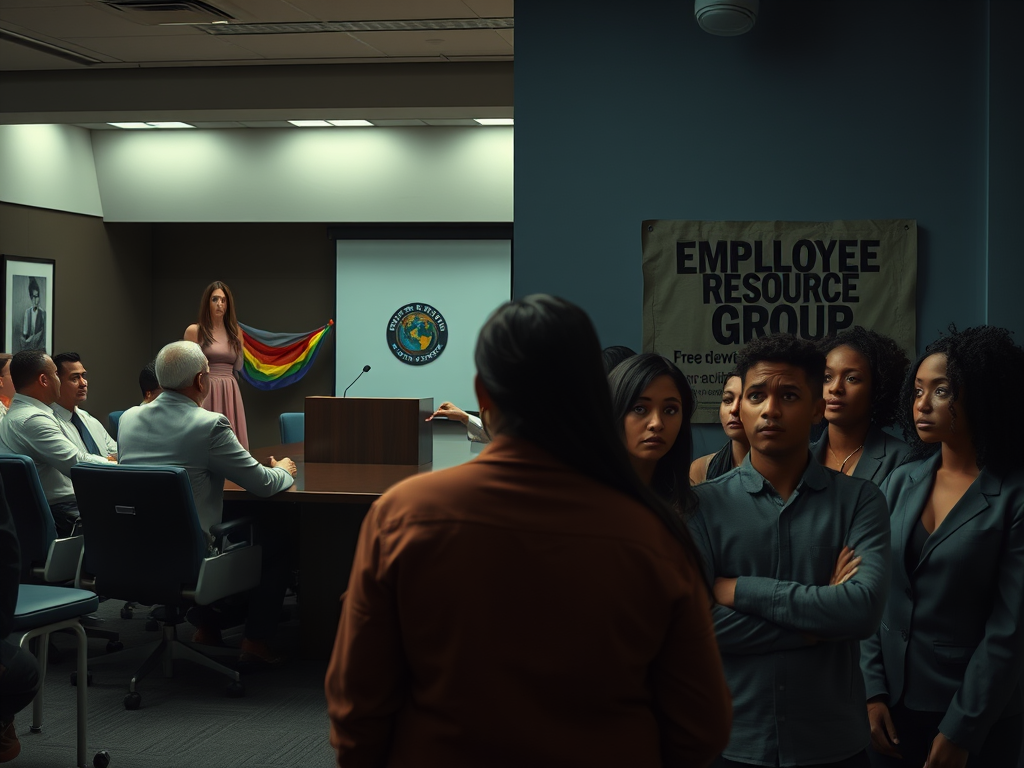
“We have an ERG (Employee Resource Group) for that,” they say, as if a monthly lunch meeting can substitute for equitable pay, promotional opportunities, or psychological safety.
The message is clear: You can be here, but only if you play by our rules. Only if you make us comfortable. Only if you don’t ask us to change anything fundamental about how we operate.
The Numbers Game
Let’s talk about metrics. Companies love to brag about their diversity numbers without examining what those numbers actually mean. Did you hire five Black employees this year? Great. How many left? How many were promoted? How many felt safe enough to voice concerns without fear of retaliation?
A diverse workforce isn’t the same as an inclusive culture. You can have every demographic represented and still maintain a hostile environment where people from marginalized backgrounds are consistently undervalued, overlooked, and overworked.
The Diversity Tax
Here’s what they don’t tell you about being “diverse talent”: you’ll be expected to do your job and serve as the spokesperson, educator, and emotional laborer for your entire demographic. You’ll be asked to join the diversity committee, review marketing materials for cultural sensitivity, mentor other minorities, and explain why something is problematic—all while your white colleagues focus solely on advancing their careers.
This is the diversity tax, and it’s rarely compensated, recognized, or factored into performance reviews. It’s just expected. After all, isn’t this why they hired you?
Calling It Out
So what do we do about performative diversity? We call it out. Every time.
When a company posts about social justice but has no minorities in leadership: call it out.
When they celebrate heritage months but don’t address pay gaps: call it out.
When they pride themselves on “diversity of thought” but punish people who actually think differently: call it out.
We don’t owe these institutions our silence or our complicity. We don’t have to perform gratitude for scraps of inclusion. We can demand better—and we should.
What Real Progress Looks Like
Actual diversity work isn’t glamorous. It doesn’t make for good Instagram posts. It looks like:
Transparent pay equity audits and corrective action. Leadership pipelines that actually lead somewhere for people of color. Mentorship programs with teeth, not just networking happy hours. Accountability when someone reports discrimination, not HR investigations designed to protect the company. Promotions based on performance, not on who’s most comfortable conforming.
It looks like white people in positions of power taking on the emotional labor of change instead of outsourcing it to the employees of color they hired.
It looks like understanding that diversity isn’t a problem to solve—it’s the reality of the world, and refusing to embrace it is what creates the problem.
The Bottom Line
Diversity initiatives can be powerful tools for systemic change, but only when they’re designed to redistribute power, not just redistribute guilt. When companies use diversity as a shield against criticism or a marketing tool to capture new demographics, they’re not interested in liberation—they’re interested in liability management.
We deserve more than lip service. We deserve more than being tokens in someone else’s story of enlightenment. We deserve workplaces, schools, and institutions that recognize our full humanity and value our contributions not despite our identities, but without reducing us to them.
Until then, we’ll keep calling it what it is: weaponized diversity. And we’re not falling for it anymore.
Keep reading: Allyship vs. Co-Conspiracy: Who’s Really Riding With Us? · Coding While Black: Breaking Barriers in Tech · The Minority Hustle: Navigating Success Without Losing Your Soul