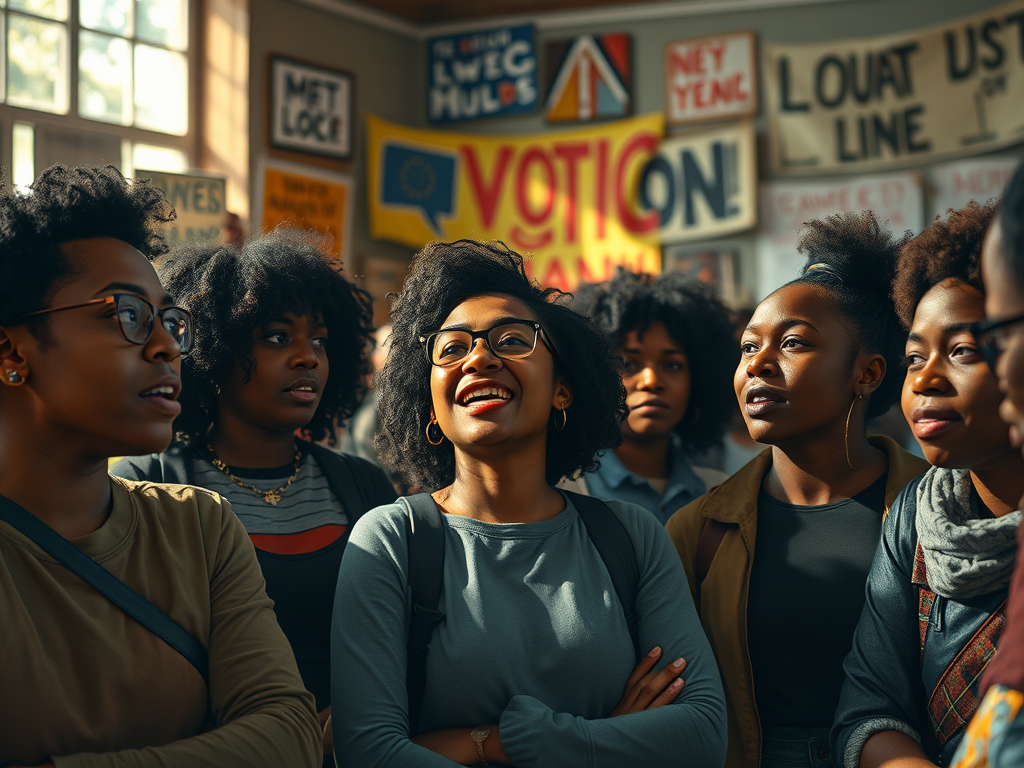

Every election cycle, politicians suddenly remember marginalized communities exist. They show up in our neighborhoods, eat at our restaurants, deliver speeches at our churches, and promise they understand our struggles.
Then they win or lose, and we don’t see them again for another two or four years.
Here’s what they don’t want us to know: Our political power isn’t limited to casting a ballot every November. In fact, voting is just the beginning of what we can do to shape the systems that govern our lives.
The Limits of Electoral Politics
Don’t get me wrong—voting matters. People died for our right to vote. States are still actively working to suppress that right through voter ID laws, gerrymandering, limited polling locations, and voter roll purges. We should absolutely vote, and we should fight for everyone’s access to the ballot.
But voting alone won’t save us.
Here’s why: The politicians we get to vote for are pre-selected by systems designed to exclude certain perspectives and maintain existing power structures. Campaign finance laws favor wealthy candidates and corporate interests. Party leadership suppresses insurgent candidates who threaten the status quo. Ballot access laws make it nearly impossible for third parties to compete.
By the time we get to vote, the menu of options has been carefully curated by people who often don’t share our interests or values.
Where the Real Power Lies
Political power isn’t just about elections—it’s about organizing, pressure, coalition-building, and direct action. It’s about the work that happens between elections, the decisions made at local levels, and the grassroots movements that shift what’s politically possible.
*Local Politics*: Most decisions that directly impact your daily life—schools, policing, housing, public transit, parks, zoning—are made at local levels. City council meetings, school board elections, county commissioners—these are where policy gets made and budgets get allocated. And these are the spaces where marginalized communities can have the most impact because voter turnout is low and organizing a relatively small number of people can swing outcomes.
*Direct Action*: Sometimes change requires more than voting. Civil rights weren’t won through elections—they were won through boycotts, sit-ins, marches, and organized resistance that made the status quo unsustainable. When systems ignore our needs, sometimes we have to make them uncomfortable enough to listen.
*Mutual Aid*: Political power also means building alternative structures that meet our communities’ needs when the government won’t. Community fridges, bail funds, childcare cooperatives, defense networks—these aren’t just charity, they’re political acts that demonstrate we can take care of each other without waiting for permission or assistance.
*Coalition Building*: No marginalized community has enough power alone to fundamentally reshape systems. But when we build coalitions across race, class, gender, immigration status, ability, and other identities, we become formidable. Our struggles are interconnected—linking them strengthens all of us.
The Myth of the “Perfect Candidate”
Every election, marginalized voters are told we need to be “pragmatic.” We’re pressured to support candidates who don’t actually represent our interests because the alternative is worse.
And yes, sometimes that calculation makes sense. Harm reduction is real.
But we also need to push back against the idea that we should be grateful for crumbs. We can vote strategically and organize to expand what’s politically possible. We can support imperfect candidates and hold them accountable. We can participate in elections and build power outside electoral politics.
The “perfect candidate” myth keeps us passive, waiting for a savior instead of building movements.
Accountability Beyond Elections
Here’s where our power really lies: We can make politicians’ lives hell when they fail us.
Call their offices. Show up to town halls. Organize primary challenges. Build coalitions that threaten their electoral chances. Make it politically costly to ignore or harm our communities.
Politicians respond to pressure, not to politeness. They respond to organized constituencies who make demands and follow through with consequences when those demands aren’t met.
That means tracking their votes, publicizing their failures, and showing up—loudly, persistently, and in numbers—to demand better.
Economic and Cultural Power
Political power isn’t just governmental—it’s also economic and cultural.
Where we spend money matters. Boycotts work. Supporting businesses owned by people from our communities builds wealth and power. Divesting from corporations that fund oppression weakens them.
Cultural production is political. The stories we tell, the art we create, the narratives we center or challenge—these shape what people think is possible, desirable, or acceptable. This is why representation in media matters. This is why our voices in journalism, literature, film, and music are political acts.
The Long Game
Real political change is generational. It requires patience, persistence, and a commitment to building infrastructure that outlasts any single election or campaign.
It means investing in leadership development so our communities produce candidates, organizers, and decision-makers.
It means building institutions—nonprofits, media outlets, think tanks, legal organizations—that can sustain long-term fights.
It means teaching our children about power, organizing, and resistance so they inherit movements, not just memories.
What This Looks Like in Practice
Vote in every election—federal, state, local, special elections, primaries, runoffs. Show up.
But also:
Attend city council meetings. Join local coalitions. Support organizing work financially if you can’t participate directly. Learn your representatives’ names and positions. Call them. A lot. Organize voter registration drives and turnout operations. Build relationships with people in your community who might not vote but could. Challenge voter suppression through legal action and on-the-ground organizing. Run for office yourself or support people from marginalized communities who do. Document injustices and share them. Hold institutions accountable through public pressure. Build alternative structures that demonstrate what’s possible.
The Bottom Line
Voting is the floor, not the ceiling, of our political power.
Yes, we should vote. We should defend and expand voting rights. We should take elections seriously.
But we should also recognize that the most powerful political work happens between elections—in communities, organizations, coalitions, and movements that shift what’s possible before anyone ever casts a ballot.
Politicians want us to believe our power begins and ends at the ballot box because that’s easiest for them to manage and control.
The truth? Our power is limitless when we organize it. Our power is unstoppable when we build it collectively. Our power is transformative when we wield it strategically across electoral, economic, cultural, and community spaces.
They gave us the vote to quiet us. Let’s use it—and everything else at our disposal—to roar.