
The Power They Won’t Credit
Afro-Caribbean culture has shaped global music, fashion, language, food, and resistance movements for centuries, but you wouldn’t know it from most history books or cultural narratives. The world consumes our creativity while erasing our contributions, profits from our innovations while marginalizing our communities.
Let’s set the record straight: Afro-Caribbean culture isn’t just influential—it’s foundational to modern global culture. From hip-hop to carnival, from literary movements to revolutionary politics, the fingerprints of the Caribbean African diaspora are everywhere.
Music That Moved Mountains
Reggae didn’t just give the world a genre—it gave the world a language of resistance. Bob Marley became a global icon, but reggae’s roots run deeper than one man. The music emerged from Jamaica’s African-descended communities, blending African rhythms, American R&B, and Caribbean mento into something entirely new.
But reggae is just the beginning. Dancehall, soca, calypso, zouk, kompa—each genre tells the story of African-descended people in the Caribbean creating beauty from struggle, resistance from rhythm, and community from music. Hip-hop itself owes a debt to Caribbean sound system culture that Jamaican immigrants brought to the Bronx in the 1970s.
DJ Kool Herc, the founding father of hip-hop, was born in Jamaica. The entire foundation of hip-hop—the breaks, the MCs, the sound systems—came from Caribbean party culture transplanted to New York. That’s not a footnote; that’s the origin story.
Carnival as Resistance
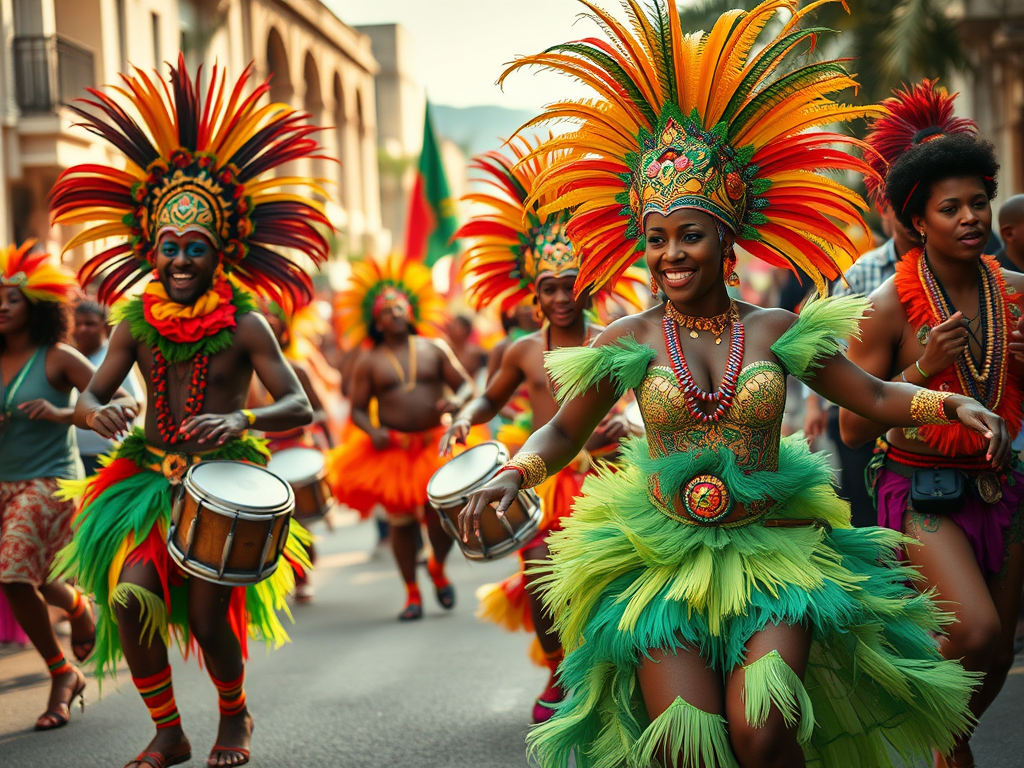
Carnival isn’t just a party. Before it became a tourist attraction and Instagram opportunity, carnival was resistance. During slavery and colonialism, African-descended people in the Caribbean used carnival to maintain African traditions, mock colonial authorities, and create spaces of freedom in systems designed to deny them humanity.
Trinidad Carnival, Crop Over in Barbados, Junkanoo in the Bahamas—these celebrations carry the memory of resistance. The elaborate costumes, the music, the dancing in the streets—all of it descends from enslaved Africans preserving their culture under systems trying to erase it.
Today, carnival culture has spread globally. Notting Hill Carnival in London, Labor Day Carnival in Brooklyn, Toronto Caribana—these events bring Caribbean culture to diaspora communities while generating millions in economic activity. Yet Caribbean people rarely see the profits or the credit.
Literary Giants
The Caribbean has produced some of the most important writers in the English language, though their contributions often get minimized or regionalized instead of recognized as universal.
C.L.R. James wrote The Black Jacobins, still the definitive text on the Haitian Revolution and one of the most important works on revolution, period. Derek Walcott won the Nobel Prize in Literature. Édouard Glissant theorized creolization and gave us frameworks for understanding identity that academics still use today. Claudia Rankine, Roxane Gay, Junot Díaz—all Caribbean diaspora, all reshaping literature.
The tradition of Caribbean storytelling, oral history, and written word has given global culture frameworks for understanding colonialism, identity, migration, and resistance that extend far beyond the islands.
Food That Feeds the World
Jerk seasoning is in grocery stores worldwide. Rum is a global industry. Hot sauce culture owes everything to Caribbean pepper traditions. The food of the Afro-Caribbean diaspora—built from African ingredients, Indigenous techniques, and the creativity of people making brilliance from limitation—has become staple flavors in global cuisine.
But here’s what gets lost: these aren’t just recipes. They’re survival strategies. According to tradition, jerk cooking developed among the Maroons, escaped enslaved people who cooked in covered pits to avoid detection by smoke. Salt fish became a staple because enslaved people received the cheapest, most preserved proteins. Caribbean food is resistance you can taste.
Fashion and Style
From the bold prints and colors of Caribbean fashion to the influence of dancehall style on streetwear, Afro-Caribbean aesthetics have shaped global fashion. The headwraps, the gold jewelry, the bold patterns—these aren’t trends; they’re cultural expressions with deep roots.
Caribbean style challenges respectability politics. It’s loud, it’s proud, it’s unapologetic. And the world keeps trying to adopt it while excluding the people who created it.
Revolutionary Politics
The Haitian Revolution, the only slave revolt that led to the founding of an independent nation,sent shockwaves through the colonial world and inspired resistance movements globally. Marcus Garvey’s Pan-Africanism influenced civil rights movements worldwide. C.L.R. James’s political theory shaped socialist movements. Frantz Fanon’s writings on colonialism and liberation remain foundational texts.
Afro-Caribbean political thought has consistently been at the forefront of anti-colonial, anti-racist, and liberation movements. These aren’t regional concerns—they’re global frameworks that continue to shape resistance today.
Claiming What’s Ours
The work is recognizing that global culture has been shaped by Afro-Caribbean creativity, resistance, and brilliance—and demanding that credit, compensation, and respect follow. You don’t get to profit from our culture while marginalizing our communities. You don’t get to consume our creativity while erasing our contributions.
Afro-Caribbean culture isn’t just influential—it’s essential to understanding modern global culture, period.
Keep reading: Caribbean Immigration Waves and Community Building · Caribbean Carnival: Culture, Resistance, and Joy · Indo-Caribbean Identity and Visibility