
More Than a Party
If you’ve only experienced Caribbean carnival as a tourist attraction or Instagram moment, you’ve missed the whole point. Carnival isn’t just celebration—it’s resistance, cultural preservation, and collective joy wrapped in feathers, sequins, and soca beats. It’s African-descended people declaring that no matter what this world throws at us, we’ll find reasons to dance.
The Roots: Emancipation and Mockery
Caribbean carnival’s origins are deeply tied to emancipation and resistance. During slavery, enslaved Africans were forbidden from most traditional celebrations, but European colonizers held elaborate masquerade balls. The enslaved watched, remembered, and created something new.
After emancipation in Trinidad and Tobago in 1834, formerly enslaved people took to the streets in celebration. They wore elaborate costumes mocking the European elite, practiced stick fighting, and played music that blended African rhythms with European instruments they’d been forced to learn. This was carnival as commentary—a whole festival dedicated to making fun of the people who’d enslaved them.
The colonial authorities tried to ban it, of course. They called it “barbaric” and “uncivilized”—code words for “these freed Black people are enjoying themselves too much and we don’t like it.” But carnival survived, evolved, and spread across the Caribbean, each island adding its own flavor while maintaining the spirit of defiance and joy.
The Music: Soundtrack of Resistance
Carnival music tells the story of carnival itself. Calypso emerged as political commentary disguised as entertainment—singers could critique colonial authorities through lyrics, maintaining West African griot traditions of storytelling through song. Mighty Sparrow, Lord Kitchener, Calypso Rose—these weren’t just entertainers; they were political commentators, historians, and activists using music as weapon and shield.
Soca evolved from calypso, bringing faster tempos and party energy, but the tradition of social commentary remained. Steelpan, often called the only major acoustic instrument invented in the 20th century, came from Trinidad when colonial authorities banned drums (too African, too threatening). So people created music from discarded oil barrels, turning industrial waste into instruments that would become national symbols.
Every carnival innovation—from calypso to soca to steelpan—represents African-descended people saying “you can take our drums, you can ban our gatherings, but you can’t stop us from making music.”
The Costume: Wearable Resistance
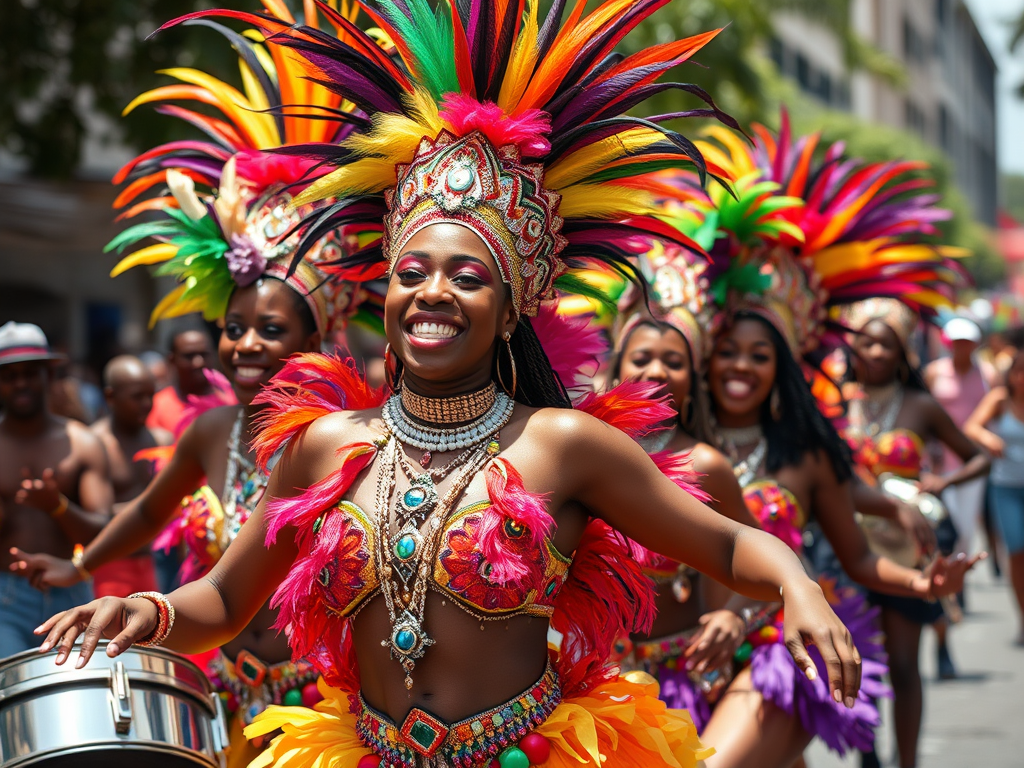
Carnival costumes are art, but they’re also armor. The elaborate designs, the bright colors, the barely-there bikinis and beads—all of it challenges respectability politics and European beauty standards. Carnival says Black and Brown bodies are beautiful exactly as they are, that joy and sensuality aren’t sins, that we define what’s appropriate for ourselves.
Modern carnival costumes can cost thousands of dollars, with designers creating elaborate pieces that take months to construct. This is high art, wearable sculpture, fashion as political statement. When critics call carnival “vulgar” or “inappropriate,” what they’re really saying is they can’t control how Caribbean people express themselves.
The Mas: Playing Character
“Playing mas” (short for masquerade) means embodying characters during carnival. Traditional characters like Moko Jumbie (stilt walkers), Jab Jab (devils), and Dame Lorraine (mocking European ladies) all have historical significance. These characters allowed people to comment on society, mock authority, and maintain African traditions of mask-wearing and spiritual representation.
Modern mas bands create themes that range from ancient Egypt to futurism, but the tradition remains—carnival is about transformation, about becoming something more than your everyday self, about collective performance as cultural expression.
Carnival Economics
Here’s what often gets left out: carnival is big business. Trinidad Carnival alone generates hundreds of millions in economic activity. Costume designers, musicians, vendors, hotels, airlines—entire industries depend on carnival season. Yet Caribbean people rarely see proportionate profits.
When cities like Miami or Toronto host carnival celebrations, corporate sponsors and city governments profit while Caribbean vendors and artists struggle for permits, space, and fair compensation. This is cultural exploitation with a smile—taking carnival’s economic value while marginalizing the people who created and maintain it.
Diaspora Carnivals: Keeping Culture Alive
Caribbean diaspora communities have established carnival celebrations worldwide. West Indian Day Parade in Brooklyn draws millions. Notting Hill Carnival in London is Europe’s largest street festival. Toronto Caribana brings Caribbean culture to Canada. These celebrations serve as cultural anchor points for diaspora communities, places where Caribbean identity can be fully expressed and celebrated.
For second and third-generation Caribbean Americans, carnival becomes a way to connect with heritage, learn traditions, and feel part of something larger than individual identity. It’s community building disguised as party, cultural transmission dressed up in feathers and sequins.
The Joy Is the Point
In a world that constantly tells Black and Brown people to be smaller, quieter, more respectable, carnival says the opposite. It says take up space, make noise, be bold, be beautiful, be joyful without apology. That’s revolutionary.
Carnival teaches that joy isn’t frivolous—it’s survival. That celebration isn’t distraction from struggle—it’s fuel for continuing the fight. That cultural expression isn’t optional—it’s essential.
Protecting Carnival’s Future
The challenge now is protecting carnival from cultural appropriation, corporate exploitation, and gentrification. Caribbean people must control carnival’s economics, its cultural direction, and its political meaning. When brands want to sponsor carnival, Caribbean communities should set terms. When cities want to host carnival celebrations, Caribbean organizers should lead.
Carnival belongs to the people who created it, maintained it, and fought for it. That ownership must be protected, respected, and passed to future generations who’ll add their own innovations while honoring traditions.
You don’t just attend carnival—you inherit it, protect it, and pass it forward. That’s responsibility and privilege wrapped together in soca beats and sequins.
Keep reading: Indo-Caribbean Identity and Visibility · Caribbean Cuisine as Cultural Preservation · Music from the Islands: Reggae, Soca, and Beyond