
Food Is Memory
Caribbean food isn’t just sustenance—it’s history you can taste, culture you can share, and resistance you can cook. Every dish tells a story about survival, fusion, and creativity born from limitation. When Caribbean people cook, we’re not just making meals; we’re maintaining traditions that colonizers tried to erase, enslaved people fought to preserve, and immigrants carried across oceans.
Food is how we remember who we are.
The Ingredients of Survival
Caribbean cuisine emerged from tragedy and created something beautiful anyway. During slavery, enslaved Africans received the worst cuts of meat, the cheapest ingredients, the leftovers colonizers didn’t want. They made magic anyway.
Salt fish (bacalao, saltfish) became a Caribbean staple because it was cheap, preserved protein given to enslaved people. They combined it with African cooking techniques and Indigenous Caribbean ingredients like ackee, creating Jamaica’s national dish—ackee and saltfish. That’s resistance you can eat: taking what was meant to degrade you and turning it into culture.
According to tradition, jerk cooking developed when escaped enslaved people (Maroons) needed to cook without creating visible smoke that would reveal their hiding places. They created a seasoning and cooking method that’s now globally recognized, turning survival strategy into cultural treasure.
African Roots, Caribbean Branches
Caribbean food carries clear African lineage. The use of okra, yams, and leafy greens; the techniques of one-pot cooking and slow stewing; the preference for bold spices and heat—all trace back to West African foodways.
But Caribbean cuisine also absorbed Indigenous Taíno ingredients (cassava, peppers, tropical fruits), Indian influences from indentured laborers (curry, roti, doubles), Chinese additions from later immigration (Chinese-Caribbean fusion), and European elements from colonizers. The result is cuisine that’s distinctively Caribbean—fusion born from forced migration and making the most of it anyway.
Rice and Peas: The Staple That Tells Stories
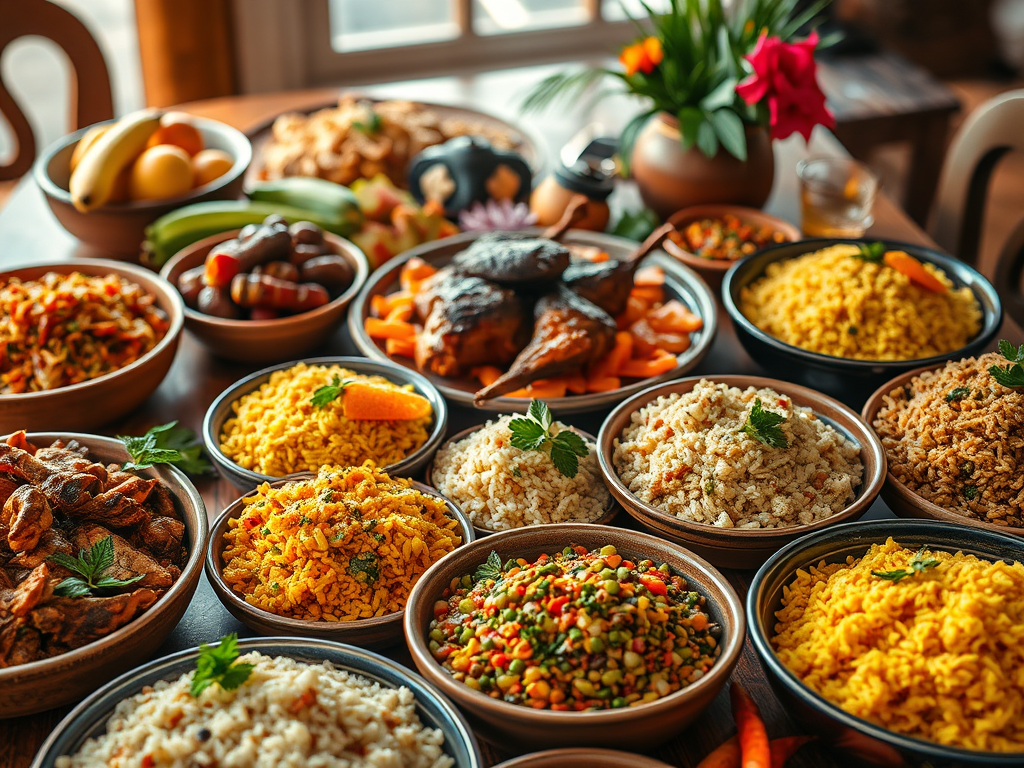
Every Caribbean island has its version of rice and beans—Jamaica’s rice and peas, Trinidad’s pelau, Cuba’s Moros y Cristianos, Dominican arroz con habichuelas, Puerto Rico’s arroz con gandules. Same concept, different islands, distinct flavors.
This dish shows how Caribbean people took limited ingredients—rice and legumes—and made them delicious and culturally significant. Rice and peas isn’t just food; it’s Sunday dinner, it’s family gathering, it’s the taste of home for Caribbean diaspora worldwide.
Roti: The Indian-Caribbean Gift
Roti came to the Caribbean with Indian indentured laborers and became Caribbean staple, particularly in Trinidad, Guyana, and Suriname. But Caribbean roti isn’t identical to Indian roti—it evolved. Dhalpuri (roti stuffed with ground split peas), buss-up-shut (torn roti resembling a “busted-up shirt”), roti wrapped around curried chicken or goat with mango and tamarind chutney—this is Indo-Caribbean innovation.
Roti represents cultural fusion at its best—Indian technique meeting Caribbean ingredients and African cooking influences, creating something new that honors all its roots while being distinctly Caribbean.
Pepper Sauce: The Heat of Home
Caribbean people don’t play about hot sauce. Scotch bonnet peppers, habaneros, homemade pepper sauces—heat is central to Caribbean cuisine. But it’s not just about burning your mouth; it’s about flavor complexity, about forcing cheap ingredients to carry taste, about making food interesting when you couldn’t afford expensive seasonings.
Every Caribbean household has its pepper sauce recipe, passed down through generations, adjusted to personal taste, guarded as cultural secret. That bottle of homemade pepper sauce on your family table? That’s tradition in liquid form.
Street Food Culture
Caribbean street food tells its own stories. Doubles in Trinidad, patties in Jamaica, pholourie in Guyana, tostones in Puerto Rico, accra in Haiti—each island’s street food reflects its cultural mix and working-class creativity.
These weren’t restaurant foods originally; they were working-class meals, quick energy for laborers, affordable food for people who couldn’t waste time or money. Now they’re cultural icons, representing Caribbean cuisine globally while maintaining their working-class roots.
Food as Language
For Caribbean diaspora, food becomes language when words fail. Caribbean parents show love through cooking—making your favorite dishes when you visit, sending you home with containers of food, cooking familiar flavors in unfamiliar places. “You eat yet?” isn’t really a question; it’s “I love you, let me take care of you” translated through concern about empty stomachs.
Caribbean grandmothers in America keeping gardens of Caribbean vegetables nobody else in the neighborhood grows. Caribbean parents teaching children to cook traditional dishes. Caribbean restaurants in diaspora communities charging high prices for simple food because they’re selling homesickness relief alongside meals.
The Appropriation Problem
Caribbean cuisine faces the same cultural appropriation issues as other minority food traditions. Celebrity chefs from outside the culture “discover” jerk chicken or curry roti and get praised as innovators, while Caribbean cooks who’ve been making these dishes for generations remain invisible and underpaid.
Food media treats Caribbean cuisine as exotic or primitive, worth experiencing as adventure but not worth compensating fairly. Caribbean restaurants get described as “authentic” (code for cheap and casual) while fusion restaurants run by non-Caribbean people get called innovative and charge triple.
Caribbean people deserve economic benefits from our cuisine, credit for our culinary innovations, and control over how our food is represented and commodified.
Teaching the Next Generation
Food preservation means teaching younger generations not just recipes but context. Why do we cook this way? Where did these techniques come from? What do these dishes mean beyond taste?
It means maintaining family recipes even when Instagram-worthy food trends pull in other directions. It means shopping at Caribbean grocery stores even when it’s less convenient. It means cooking Sunday dinners that take all day because that’s how tradition continues.
The Resistance in Your Kitchen
When you cook Caribbean food, you’re practicing resistance. You’re maintaining culture that slavery tried to erase. You’re honoring ancestors who created beauty under oppression. You’re preserving traditions that colonizers dismissed as primitive. You’re proving that Caribbean cuisine is as sophisticated, complex, and worthy of respect as any food tradition in the world.
Your kitchen is a site of cultural preservation. Every time you cook traditional dishes, you’re saying our culture matters, our history matters, our contributions to global cuisine matter. That’s powerful work disguised as dinner.
Keep reading: Music from the Islands: Reggae, Soca, and Beyond · Caribbean LGBTQIA+ Experiences · Caribbean Languages and Creole Pride