
Between Two Closets
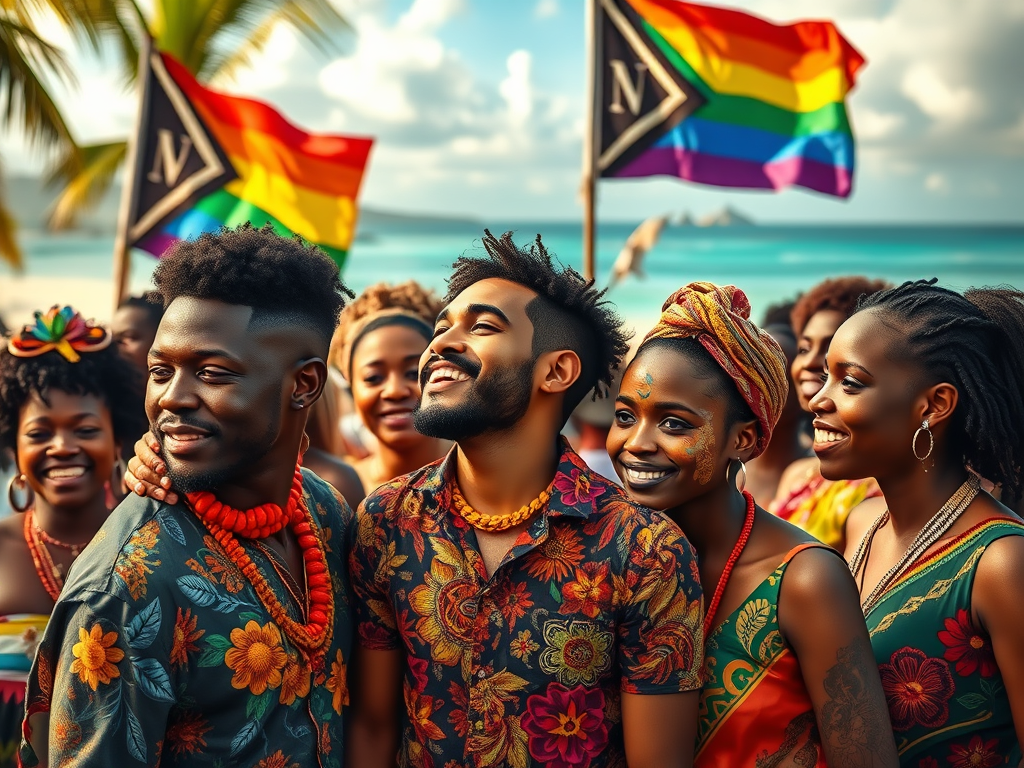
Being LGBTQIA+ and Caribbean means navigating dual rejection—too queer for Caribbean spaces, too Caribbean for white-dominated LGBTQIA+ spaces. It means carrying cultural pride while knowing your culture doesn’t always accept you, loving community while community doesn’t always love you back.
It means building identity in the margins of multiple worlds that claim you can’t exist.
The Cultural Reality: Homophobia’s Deep Roots
Let’s be honest about Caribbean homophobia—it’s real, it’s pervasive, and it’s dangerous. Many Caribbean nations retain colonial-era anti-sodomy laws, though courts in Belize, Trinidad and Tobago, Antigua, St. Kitts, Barbados, and Dominica have struck theirs down since 2016. Church influence dominates public discourse around sexuality. Families disown LGBTQIA+ children. Violence against LGBTQIA+ people goes unpunished. Homophobia isn’t peripheral to Caribbean culture—it’s embedded in institutions, families, and daily life.
Time magazine once called Jamaica “the most homophobic place on Earth.” Buju Banton’s “Boom Bye Bye” openly called for violence against gay men and became a dancehall anthem. This isn’t ancient history; this is recent, ongoing reality that Caribbean LGBTQIA+ people navigate constantly.
But here’s the complication: much of this homophobia has colonial roots. Pre-colonial African and Indigenous Caribbean societies had more fluid understandings of gender and sexuality. European colonizers brought rigid gender binaries and Christian sexual morality. British colonial law criminalized same-sex activity. Homophobia in the Caribbean is colonialism we haven’t decolonized.
The Diaspora Reality: White LGBTQIA+ Spaces
Caribbean LGBTQIA+ people in America face different challenges. White-dominated LGBTQIA+ spaces often center white experiences, ignore racism, and exoticize or fetishize people of color. Pride becomes a party instead of protest, activism gets co-opted by corporations, and LGBTQIA+ organizations prioritize issues affecting white queer people while marginalizing queer people of color.
Caribbean LGBTQIA+ folks navigate this by building our own spaces—Caribbean LGBTQIA+ groups, House Ball culture (with deep Caribbean participation), and community networks that center both queerness and Caribbean identity.
Family Dynamics: Love and Rejection
Caribbean family culture is simultaneously source of harm and potential healing for LGBTQIA+ people. The emphasis on family loyalty means many Caribbean LGBTQIA+ people stay closeted longer, protecting family reputation and avoiding family rejection. “What will people say?” governs behavior in ways white American culture doesn’t fully understand.
But Caribbean family culture also means extended networks—that auntie who knows but doesn’t judge, that cousin who gets it, that grandmother who loves you regardless. Some Caribbean LGBTQIA+ people find acceptance in unexpected family corners, proving that culture isn’t monolithic and people are more complex than stereotypes.
Religion’s Role: Church Harm and Spiritual Survival
Religion is central to many Caribbean cultures, and most Caribbean religious traditions are explicitly homophobic. Churches preach that homosexuality is sin, that LGBTQIA+ people are abominations, that queer identity is choice and sickness.
Caribbean LGBTQIA+ people often face the painful choice between spiritual identity and sexual/gender identity. Many leave religion entirely. Others find affirming churches. Some maintain complicated relationships with faith, loving God while knowing church doesn’t love them back.
The work of Caribbean LGBTQIA+ Christians is reimagining faith that affirms queerness—reading scripture differently, building affirming congregations, insisting that God’s love includes them regardless of church’s rejection.
Gender Diversity Beyond Western Frameworks
While “LGBTQIA+” is Western terminology, Caribbean and pre-colonial African cultures had their own understandings of gender diversity.
Caribbean trans experiences don’t always map onto American trans narratives. Understanding Caribbean gender diversity requires recognizing that Western LGBTQIA+ frameworks don’t capture all experiences and that Caribbean LGBTQIA+ people have our own histories, language, and traditions that predate Western queer theory.
House Ball Culture: Caribbean Queer Innovation
House Ball culture—voguing, ballroom competitions, chosen families organized into “Houses”—has deep Caribbean (particularly Puerto Rican and Dominican) participation. The documentary Paris Is Burning showed this culture but didn’t fully explore its Caribbean roots.
House Ball culture created space for LGBTQIA+ people of color, particularly trans women of color, to build community, express creativity, and survive hostile worlds. This is Caribbean queer innovation—creating infrastructure for survival and celebration when mainstream society offers neither.
Mental Health and Survival
Caribbean LGBTQIA+ people face disproportionate mental health challenges—higher rates of depression, anxiety, and suicidal ideation resulting from family rejection, cultural stigma, and navigating multiple marginalized identities.
Finding culturally competent mental health support that understands both Caribbean culture and LGBTQIA+ issues is nearly impossible. Many Caribbean LGBTQIA+ people suffer in silence rather than accessing services that don’t understand their reality.
The work is building mental health infrastructure that centers Caribbean LGBTQIA+ experiences—therapists who understand intersectionality, support groups that honor cultural context, and community spaces that offer belonging.
Activism and Visibility
Caribbean LGBTQIA+ activists are fighting for rights, representation, and safety despite serious risks. In the Caribbean, LGBTQIA+ activism can result in violence, legal persecution, and community ostracism. In diaspora, Caribbean LGBTQIA+ activists navigate multiple movements while insisting their full identities matter.
Organizations like J-FLAG in Jamaica, Guyana Trans United, and various Caribbean LGBTQIA+ groups in diaspora are doing critical work, often with minimal resources and maximum risk. They deserve support, funding, and recognition.
Building Queer Caribbean Futures
The future requires multiple approaches: fighting to change Caribbean laws and attitudes, building diaspora communities that affirm Caribbean LGBTQIA+ identity, creating art and culture that represents Caribbean queerness, and supporting Caribbean LGBTQIA+ youth navigating hostile environments.
It also requires honest conversations about homophobia’s colonial roots and building decolonial Caribbean cultures that affirm gender and sexual diversity as consistent with pre-colonial traditions rather than Western impositions.
You Exist, You Matter
To Caribbean LGBTQIA+ people: you exist. Your identity is valid. Your experience is real. You’re not confused, corrupted, or cursed. You’re not betraying Caribbean culture by being queer—you’re expanding it, representing truth it tried to hide, living authentically despite pressure to disappear.
Your queerness and your Caribbean identity aren’t contradictions—they’re both parts of who you are, and both deserve honoring. You’re building bridges between communities that don’t always connect, and that work is valuable even when it’s exhausting.
Caribbean LGBTQIA+ people aren’t exceptions to Caribbean culture—we’re part of it, always have been, always will be. The work is making that truth undeniable.
Keep reading: Caribbean Languages and Creole Pride · Navigating American and Caribbean Identity · Caribbean Identity in the American Diaspora
If you’re struggling, you don’t have to carry it alone. In the U.S., call or text 988 to reach the Suicide & Crisis Lifeline any time (press 2 for Spanish), text HOME to 741741 for the Crisis Text Line, or, for LGBTQ+ young people, contact The Trevor Project. If you’re in immediate danger, call 911.