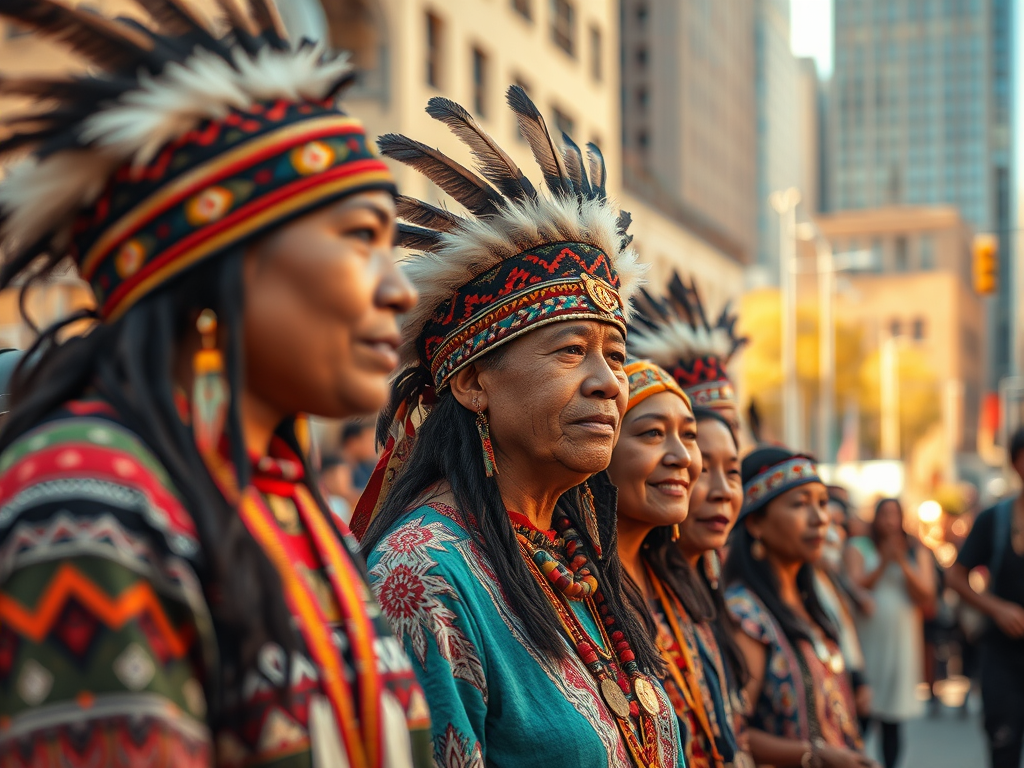

More than 70% of Native Americans live in urban areas, not reservations. Read that again. The majority of Indigenous people in America live in cities.
Yet the dominant narrative still pictures Native Americans as rural, reservation-bound, and locked in the past. Urban Natives remain largely invisible in public consciousness, policy discussions, and media representation. This invisibility has real consequences—from inadequate healthcare and social services to cultural isolation and discrimination.
Let’s talk about the urban Indigenous experience that nobody discusses.
How We Got Here
Urban Native populations exploded during the federal Relocation Era of the 1950s and 60s. The Bureau of Indian Affairs actively encouraged—and sometimes coerced—Native Americans to leave reservations for cities, promising jobs and housing. The goal was assimilation and the eventual dissolution of tribes.
Many were dumped in cities with one-way bus tickets and minimal support. They faced discrimination in housing and employment. They struggled with cultural dislocation and racism. Many experienced severe poverty in unfamiliar urban environments.
But Native people didn’t disappear into the urban landscape as the government intended. Instead, they built communities. They created intertribal organizations. They established urban Indian centers that persist today. They maintained connections to their tribal nations while adapting to city life.
The Unique Challenges
Urban Native Americans often face a particular form of erasure. They don’t fit mainstream stereotypes of what Native people “should” look like or how they “should” live. They navigate constant questioning of their identity, demands to prove their heritage, and accusations of not being “Indian enough.”
Many live far from their tribal lands, making it difficult to participate in ceremonies, maintain family connections, or engage in traditional practices. They may be the only Native person in their workplace, school, or neighborhood. Cultural isolation is real and painful.
Access to services designed for Native populations gets complicated in cities. Indian Health Service facilities are often underfunded and overwhelmed in urban areas. Some tribes don’t recognize urban Indians’ needs in their service delivery models. Cities often don’t track Native American demographics accurately, rendering urban Natives invisible in data that drives funding and policy.
Intertribal Community
Urban areas created something unique in Native American history: large-scale intertribal communities. Cities like Los Angeles, Minneapolis, Seattle, and Oakland became home to people from dozens of different tribes. This mixing created new forms of Indigenous identity and solidarity.
Powwows, originally specific to Plains tribes, became pan-Indian events where urban Natives from various tribal backgrounds could gather, celebrate, and connect. Urban Indian centers became cultural hubs offering everything from language classes to job training to addiction services.
These intertribal connections don’t replace tribal-specific identities. Instead, they complement them. Urban Natives maintain strong ties to their specific tribes while also participating in broader Indigenous communities.
The Next Generation
Urban-raised Native youth face particular challenges around identity. They may grow up without daily exposure to their traditional languages or ceremonies. They navigate racism and stereotypes at school. They struggle to find their place in both Native and non-Native worlds.
But they’re also creating new forms of Indigenous expression. They’re making hip-hop in Lakota, creating street art with traditional designs, and using social media to connect with other urban Natives worldwide. They’re proving that Native culture isn’t static or confined to reservations.
Organizations like Native American Youth and Family Center (NAYA) in Portland and American Indian Center in Chicago provide crucial support, offering everything from homework help to cultural programs to mentorship.
Political Power and Recognition
Urban Native populations represent potential political power that’s often untapped. They can influence municipal elections, advocate for Native-specific programs in cities, and push for better data collection and representation.
But realizing this power requires visibility. Urban Natives need accurate census counts, inclusion in diversity initiatives, and recognition in policy conversations. They need city governments to acknowledge their presence and address their specific needs.
Some cities are beginning to do this work. Seattle established a Commission for Indigenous Communities. Oakland has invested in urban Indian health programs. But most cities still ignore their Native residents entirely.
Healthcare and Services
Urban Indian health programs serve as crucial safety nets, but they’re chronically underfunded. Unlike tribes, urban Indian organizations receive discretionary funding rather than mandatory appropriations. This means their budgets are always vulnerable to cuts.
These organizations provide culturally competent care that understands the specific health challenges facing Native communities: historical trauma, high rates of diabetes and heart disease, mental health issues, and the ongoing impacts of colonization on health outcomes.
Without adequate funding, urban Indians fall through gaps in the healthcare system. They’re not always recognized by the Indian Health Service, yet they face discrimination and cultural incompetence in mainstream healthcare settings.
Cultural Preservation
Maintaining cultural connections while living in cities requires creativity and determination. Urban Natives create language learning groups. They organize drum circles in city parks. They establish Native-specific spaces within larger urban environments.
Some return regularly to their tribal lands for ceremonies and family events, maintaining those crucial connections despite geographic distance. Others work to bring traditional practices into urban settings, adapting them when necessary while maintaining their core meaning.
The challenge is real, but so is the resilience.
Visibility Matters
The invisibility of urban Natives isn’t accidental. It serves the broader project of Native erasure that treats Indigenous people as historical artifacts rather than contemporary communities.
Acknowledging urban Native populations means recognizing that Native identity isn’t tied to location. It means understanding that modernity and Indigenous identity aren’t contradictory. It means accepting that Native people don’t exist to fulfill settler fantasies about what “authentic” Native life should look like.
Urban Natives are architects, teachers, artists, activists, and everything in between. They’re raising families, building businesses, and contributing to their cities while maintaining their Indigenous identities and connections.
They’re not less Native for living in cities. They’re just less visible—and that needs to change.
Keep reading: Indigenous Youth and Climate Activism: Leading the Fight for Our Planet · Tribal Sovereignty and Modern Challenges: Navigating Limited Autonomy · Native American Art, Craft, and Cultural Appropriation: Drawing the Line