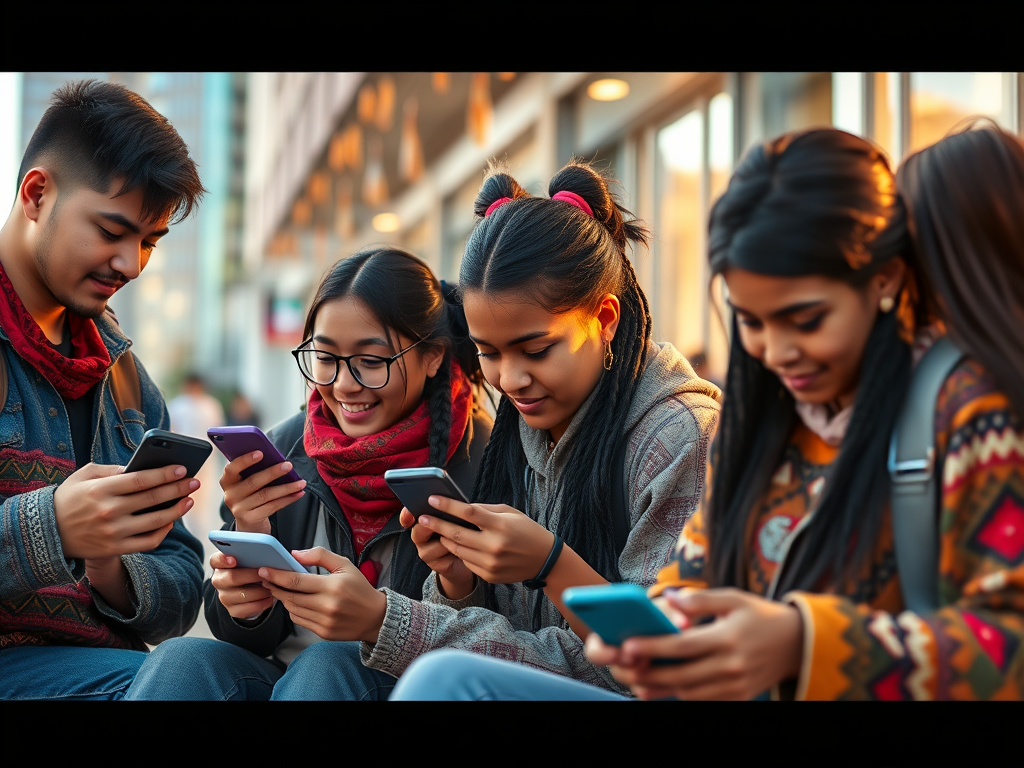

There’s a persistent myth that Indigenous identity and modern technology don’t mix—that “real” Indians live on reservations practicing traditional ways while anyone with a smartphone or internet connection must be somehow less authentically Indigenous.
That’s complete nonsense. Indigenous people exist in 2026. They use technology. They create technology. They’re not frozen in some imagined historical moment waiting to be discovered by anthropologists.
Let’s talk about how Indigenous people are using technology to revitalize languages, build communities, assert sovereignty, and create futures that honor their past without being trapped by others’ expectations.
Social Media and Indigenous Communities
Social Media has become crucial for Indigenous community building, especially for urban Indians and people separated from their tribal communities. Platforms like Instagram, TikTok, and Twitter allow Indigenous people to find each other, share cultural knowledge, and build intertribal connections.
Young Indigenous creators are using social media to teach languages, share traditional stories, discuss contemporary issues, and create content that celebrates Indigenous identity. They’re reaching audiences their communities could never have reached before.
TikTok, in particular, has become a space where Indigenous youth share everything from language lessons to cultural education to humor that other Indigenous people instantly recognize. It’s creating new forms of Indigenous expression and new communities built around shared identity.
But social media also exposes Indigenous people to harassment, appropriation, and demands to prove their identity. The same platforms that enable connection also amplify racism and cultural theft.
Gaming and Virtual Worlds
Indigenous people are creating and playing video games that represent Indigenous perspectives, stories, and characters. Games like “Never Alone” (Kisima Inŋitchuŋa) and “When Rivers Were Trails” center Indigenous knowledge and experiences.
Indigenous developers are also creating games independently, using gaming as a medium for cultural education and storytelling. They’re proving that Indigenous stories work in any format, including ones that didn’t exist when their ancestors walked the earth.
Gaming communities can also provide connection for isolated Indigenous youth. Online multiplayer games allow them to find other Indigenous gamers, build friendships, and create spaces where their identity is celebrated rather than marginalized.
Language Apps and Digital Revitalization
Language revitalization increasingly depends on technology. Apps teaching Indigenous languages make learning accessible to people who don’t have local speakers or classes available. They allow diaspora community members to reconnect with languages they weren’t raised speaking.
Platforms like FirstVoices provide tools for communities to create digital dictionaries, language learning resources, and archives of elder speakers. These resources ensure knowledge isn’t lost when speakers die.
Some communities are creating immersive language learning experiences using virtual reality. Others use gamification to make language learning engaging for youth who might not respond to traditional teaching methods.
Technology can’t replace fluent speakers and immersion environments, but it’s a crucial tool for communities working to revitalize languages that were nearly destroyed by colonization.
Digital Sovereignty
Data sovereignty is emerging as a critical issue for Indigenous nations. Who owns data about tribal citizens? How is genetic information used? Who controls digital resources created by or about Indigenous peoples?
Tribes are asserting that data sovereignty is part of tribal sovereignty. They’re creating data governance policies, demanding control over research in their communities, and pushing back against extraction of Indigenous information without consent or compensation.
Some tribes are building their own tech infrastructure—data centers on tribal land, tribally-owned ISPs, Indigenous-specific social platforms. They’re refusing to accept that all digital infrastructure must run through non-Indigenous corporations and governments.
Indigenous Tech Innovators
Indigenous people work in tech at all levels. They’re software developers, AI researchers, cybersecurity specialists, and tech entrepreneurs. They’re bringing Indigenous perspectives to fields that desperately need them.
Some are creating tech specifically for Indigenous communities—platforms for language learning, apps for cultural education, tools for tribal government. Others work in mainstream tech while advocating for better Indigenous representation and addressing algorithmic bias against Indigenous peoples.
Indigenous women in tech face particular challenges, navigating both gender bias and racial discrimination in an industry that’s overwhelmingly white and male. But they’re persisting, succeeding, and opening doors for those who come after.
Artificial Intelligence and Indigenous Knowledge
AI raises complex questions for Indigenous communities. How do you protect traditional knowledge in an era when AI can scrape and reproduce information from anywhere? How do you ensure AI systems don’t perpetuate bias against Indigenous peoples?
Some Indigenous communities are exploring how AI might support language revitalization, historical research, or cultural education. Others are wary of technologies developed without Indigenous input that might be used to further exploit or misrepresent their communities.
The question isn’t whether Indigenous people should use AI, but how to ensure AI development respects Indigenous sovereignty, knowledge, and rights.
Surveillance and Digital Privacy
Indigenous activists, particularly environmental defenders, face intense digital surveillance. Governments and corporations monitor their communications, track their movements, and use digital information to target them.
This surveillance is part of ongoing colonization—watching, controlling, and criminalizing Indigenous people for defending their lands and rights. It requires Indigenous activists to become knowledgeable about digital security while also conducting their work.
The same technology that enables connection and organizing also exposes Indigenous people to risks that disproportionately impact them because they’re fighting powerful interests that don’t want them to win.
Bridging Generations
Technology creates interesting dynamics between Indigenous generations. Youth may be tech-native in ways elders aren’t, but elders hold cultural knowledge youth are learning. Working together, they can create resources that honor tradition while using modern tools.
Some communities involve youth in digitizing elder knowledge—recording stories, creating archives, building websites. This creates intergenerational collaboration while ensuring cultural knowledge is preserved in formats that future generations can access.
But there are also concerns about technology replacing face-to-face transmission of knowledge. Some things can’t be fully captured digitally. The embodied experience of learning from elders in person, in community, in traditional contexts, remains irreplaceable.
Creating Rather Than Consuming
Indigenous people aren’t just using existing technology—they’re creating it. They’re building platforms, developing apps, producing content, and shaping digital spaces to serve Indigenous needs and values.
This creation is essential because technology built without Indigenous input often fails Indigenous people or actively harms them. Facial recognition doesn’t work as well on Indigenous faces. Algorithms perpetuate stereotypes. Platforms enable harassment of Indigenous users.
When Indigenous people create technology, they build solutions that actually serve their communities while respecting cultural protocols and knowledge systems.
The False Dichotomy
The idea that Indigenous people must choose between tradition and technology is a colonial construct. It assumes Indigenous cultures are static, that “authentic” Indians must live according to outsiders’ expectations, and that modernity and Indigenous identity are incompatible.
Indigenous people reject this dichotomy. They can speak their ancestral language and code in Python. They can participate in ceremony and post on social media. They can honor their ancestors while creating futures those ancestors never imagined.
Technology is a tool. Like any tool, it can be used in ways that honor Indigenous values or in ways that harm Indigenous peoples. The question isn’t whether Indigenous people should use technology, but how they can use it in ways that support their communities and sovereignty.
Looking Forward
As technology evolves, Indigenous people will continue adapting it for their purposes. They’ll create new platforms, develop new tools, and find new ways to maintain culture and community through digital means.
They’ll also continue fighting against technologies used to harm them—surveillance systems, biased algorithms, and platforms that enable appropriation and harassment. They’ll demand seats at tables where technology is designed and regulated.
The future of Indigenous peoples includes technology. Anyone who suggests otherwise is stuck in a romanticized past that never actually existed, imagining Indigenous people as historical exhibits rather than contemporary communities navigating modern worlds while maintaining their identities.
Indigenous identity isn’t threatened by technology. It’s threatened by colonization, poverty, and cultural destruction. Technology, in Indigenous hands, can be a tool for fighting back.
Keep reading: Native American Veterans and Military Service: Honor and Sacrifice Often Forgotten · Indigenous Food Sovereignty Movements: Reclaiming Traditional Foodways · Decolonizing Education Through Indigenous Perspectives: Rewriting the Narrative