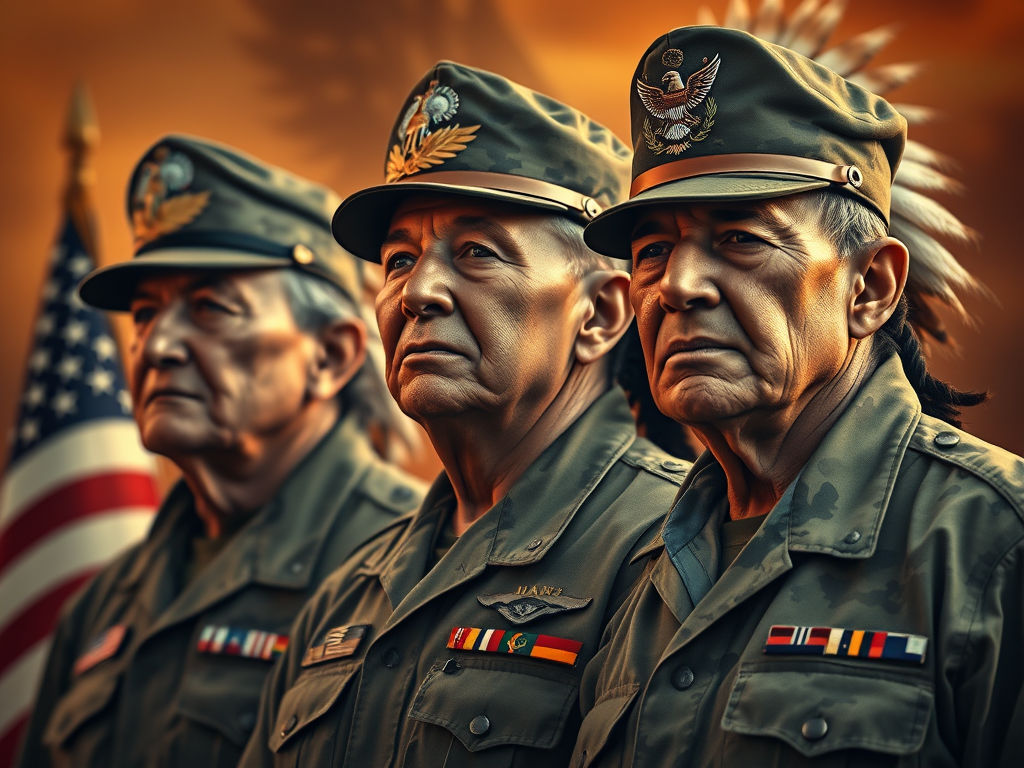

Native Americans serve in the U.S. military at higher rates per capita than any other ethnic group. They’ve fought in every American war since the Revolutionary War. They’ve earned some of the nation’s highest military honors.
Yet their service is often forgotten. Their benefits are frequently denied. Their sacrifices go unrecognized. When they return home, they face the same discrimination and poverty they left.
Let’s talk about Native American military service—the pride, the complications, and the nation’s ongoing failure to honor its Indigenous veterans.
The Numbers
Native Americans comprise about 1.3% of the U.S. population but represent approximately 1.7% of active duty military personnel. In some tribes, military service rates are even higher—in some communities, nearly everyone has family members who served or are currently serving.
Native Americans have served with distinction in every branch of the military. They’ve received Medals of Honor, Purple Hearts, and countless other decorations. During World War II, the Navajo Code Talkers created an unbreakable code that helped win the Pacific theater.
But these numbers don’t tell the full story of why Native Americans serve or what happens when they come home.
Why Native Americans Serve
The reasons Native Americans join the military are complex. Warrior traditions exist in many Indigenous cultures, honoring those who protect their people. Military service can be seen as a contemporary expression of these traditions.
Economic factors matter too. Reservations often have limited job opportunities. The military offers steady income, education benefits, and a path out of poverty. For some, it’s one of few options available.
There’s also a complicated relationship with American patriotism. Despite historical and ongoing injustices, many Native Americans feel strong connections to this land (which was theirs first) and to the ideal of protecting it, even when the nation hasn’t protected them.
Some serve hoping to earn respect and recognition for their communities. Others serve because it’s family tradition. The motivations are as diverse as Indigenous peoples themselves.
The Code Talkers
The Navajo Code Talkers are the most famous Native American military unit, but they weren’t the only ones. Cherokee, Choctaw, Comanche, and other tribes also provided Code Talkers in both World Wars.
The Code Talkers used their languages—languages the U.S. government had tried to destroy through boarding schools—to create unbreakable codes. Japanese code breakers never cracked the Navajo code.
The irony wasn’t lost on anyone: the same government that punished Native children for speaking their languages suddenly needed those languages to win a war.
Code Talkers’ service remained classified for decades. By the time they could finally talk about their service, many had died without recognition. Those who survived often struggled with trauma from both their military service and the suppression of their crucial contributions.
Vietnam and Beyond
Native Americans served in Vietnam at even higher rates than in previous wars. They faced the same dangers as other soldiers, plus additional discrimination within the military. Yet they served with distinction.
The wars in Iraq and Afghanistan saw continued high rates of Native American service. Native women increasingly serve in the military, facing both the challenges common to all women in service and additional issues related to their Indigenous identity.
Native American service members often report feeling caught between their Indigenous identity and their role in the U.S. military—an institution historically used to oppress Indigenous peoples. This creates unique psychological challenges.
Coming Home
Native American veterans face significant challenges when they return from service. PTSD rates are high, compounded by historical trauma already present in many Indigenous communities. Substance abuse, homelessness, and suicide rates among Native veterans exceed those of the general veteran population.
Access to Veterans Affairs services is difficult on remote reservations. VA facilities may be hours away. Mental health services often lack cultural competence. Native veterans may not trust government systems that have historically failed Indigenous peoples.
Some tribes have created their own veterans programs, incorporating traditional healing practices with VA services. These programs often produce better outcomes than VA services alone, but they’re chronically underfunded and not available in all communities.
Benefits Denied
Native veterans frequently struggle to access the benefits they earned. Bureaucratic obstacles, lack of outreach to tribal communities, and the remote locations of many reservations create barriers. Some Native veterans don’t know they’re eligible for benefits. Others give up fighting the VA system.
Home loan benefits that helped many white veterans build wealth after World War II often weren’t accessible to Native veterans due to discrimination and the trust status of reservation land. This contributed to ongoing wealth gaps between white and Native families.
The GI Bill’s education benefits helped create America’s middle class after World War II—but discrimination in education and housing prevented many Native veterans from benefiting fully. The wealth-building opportunities these benefits provided to white veterans weren’t equally available to Native veterans.
Recognition and Memorials
National efforts to recognize Native American veterans have been limited and delayed. The National Native American Veterans Memorial opened in Washington, D.C. in 2020—finally acknowledging Indigenous service after centuries of military contributions.
But tribal communities don’t need federal memorials to honor their veterans. They conduct their own ceremonies, create their own memorials, and maintain their own traditions of recognizing warriors. Federal recognition matters, but community honor is what veterans often value most.
Many tribes hold annual veterans’ powwows and other events honoring those who served. These events maintain the connection between contemporary military service and traditional warrior traditions while providing community support for veterans.
Women Warriors
Native American women have served since at least World War I, when some served as Army nurses. They’ve served as nurses, pilots, and in combat roles. They’ve faced both gender discrimination and racial discrimination.
Native women veterans face particular challenges. They have higher rates of military sexual trauma than other women veterans. They often lack access to women’s health services through the VA. Their service is even less recognized than that of Native men.
But Native women continue serving, carrying on warrior traditions that existed in many Indigenous cultures long before the U.S. military. They’re proving what Indigenous peoples have always known: women warriors have always been part of their communities.
Tribal Veterans Programs
Some tribes have developed innovative programs to support veterans. They combine VA benefits with traditional healing practices, cultural support, and community integration. They understand that healing from military trauma requires addressing both individual psychology and cultural disconnection.
These programs often produce better outcomes than VA services alone because they treat veterans as whole people within cultural contexts. They recognize that Native veterans need more than standard medical and psychological services—they need cultural healing and community connection.
But these programs operate on shoestring budgets without adequate federal support. They depend on tribal resources that are already stretched thin and on VA partnerships that aren’t always reliable.
The Contradictions
Native American military service embodies painful contradictions. Indigenous peoples serve the same nation that committed genocide against their ancestors, broke countless treaties, and continues to marginalize their communities.
They defend a democracy that denied their ancestors citizenship until 1924 and still doesn’t provide meaningful representation for Indigenous peoples. They fight for freedoms that haven’t always been extended to their own communities.
These contradictions don’t diminish Native veterans’ service. But they complicate it in ways non-Native people often don’t understand or acknowledge. Native veterans deserve recognition that includes honoring these complexities, not ignoring them.
Supporting Native Veterans
Supporting Native American veterans means pushing for adequate VA funding for Indian Country. It means ensuring tribal veterans programs receive resources they need. It means advocating for culturally competent services that respect Indigenous healing practices.
It means recognizing Native veterans in communities and national narratives about military service. It means understanding that patriotism looks different when your people have been colonized by the nation you serve.
It means acknowledging that when Native Americans serve in the military, they’re often protecting the very land stolen from their ancestors—and that this sacrifice deserves more than the nation has given in return.
Native American veterans served. They sacrificed. They earned every benefit and honor that comes with military service. The nation’s failure to fully recognize and support them is yet another broken promise in a long history of broken promises.
But Native communities haven’t waited for federal recognition to honor their veterans. They’ve created their own traditions, their own memorials, their own ways of ensuring that those who served are remembered and supported.
Because that’s what warriors do. They serve their communities, in military uniform or out, and their communities honor that service—whether the nation does or not.
Keep reading: Indigenous Food Sovereignty Movements: Reclaiming Traditional Foodways · Decolonizing Education Through Indigenous Perspectives: Rewriting the Narrative · Native American Adoption and the Indian Child Welfare Act: Protecting Cultural Connections
If you’re struggling, you don’t have to carry it alone. In the U.S., call or text 988 to reach the Suicide & Crisis Lifeline any time (press 2 for Spanish), text HOME to 741741 for the Crisis Text Line, or, for LGBTQ+ young people, contact The Trevor Project. If you’re in immediate danger, call 911.