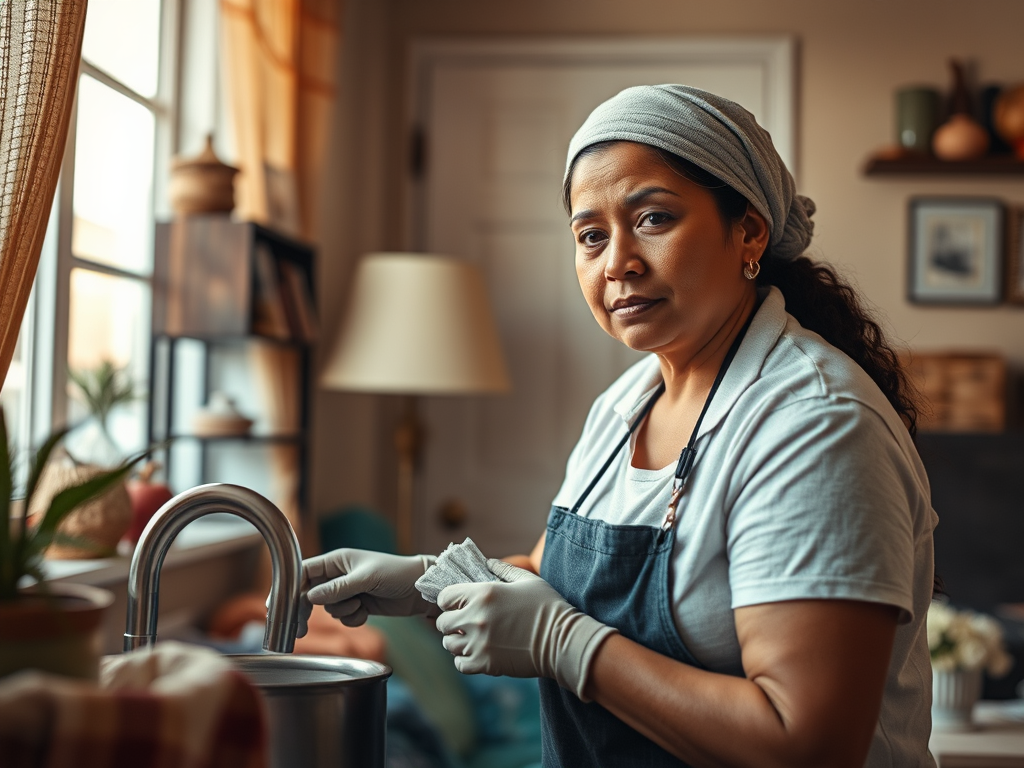

Domestic work—cleaning houses, caring for children, tending to elderly family members—is labor that makes everything else possible. Yet the workers who perform this essential work, disproportionately Latinx women, are among the most exploited and underprotected in America. Their struggles aren’t just about fair wages and benefits; they’re about dignity, visibility, and the fundamental question of whose labor matters.
The Invisible Workforce
Domestic workers have always been invisible by design. They work in private homes, behind closed doors, often paid under the table without contracts or legal protections. This isolation makes organizing difficult and abuse easy. When your workplace is someone’s home and your boss can fire you without consequence, speaking up about mistreatment becomes dangerous.
Latinx women make up a significant portion of domestic workers in the U.S.—roughly a third of U.S. domestic workers are Hispanic, according to the Economic Policy Institute. Many are immigrants, some undocumented, which adds another layer of vulnerability. The threat of deportation, whether explicit or implied, keeps workers silent about wage theft, sexual harassment, and dangerous working conditions.
Domestic work is also racialized and gendered labor. It’s work historically performed by women of color—first enslaved Black women, then successive waves of immigrant women. The devaluation of domestic work is tied to who performs it and the assumption that caregiving and cleaning are “natural” female skills rather than learned labor deserving fair compensation.
Exclusion from Labor Protections
Here’s the thing that shocks people: domestic workers were explicitly excluded from landmark labor laws in the 1930s. The Fair Labor Standards Act, which established minimum wage, overtime pay, and child labor protections, didn’t cover domestic workers or agricultural workers—two categories where Black and Brown workers were concentrated.
This wasn’t an oversight. It was a compromise to get Southern legislators’ support, and those Southern legislators wanted to preserve the economic exploitation of Black workers. The racist logic of that exclusion still shapes domestic workers’ rights today.
As a result, domestic workers in many states still lack basic protections: no guaranteed minimum wage, no overtime pay, no right to meal breaks, no protection from discrimination or harassment. In some states, even if workers want to organize and unionize, they legally can’t.
This creates a two-tier labor system where some workers have rights and others don’t, based largely on race, immigration status, and the type of work they perform.
The Reality of Domestic Work
Let’s talk about what domestic work actually involves. It’s not just light cleaning or playing with children. It’s physically demanding labor: scrubbing floors, lifting heavy objects, standing for hours, caring for elderly or disabled individuals who require assistance with bathing, eating, and mobility.
It’s emotionally taxing work too. Childcare workers develop attachments to children they care for, then watch those children grow up and often move on without acknowledgment of the worker’s role in their development. Elder care workers form relationships with clients, only to experience repeated losses when clients pass away.
The hours are often unpredictable. Live-in workers might be “on call” 24/7 with no clear boundaries between work time and personal time. Workers with multiple clients juggle complicated schedules, transportation challenges, and the stress of having no consistent paycheck if clients cancel or don’t need services.
Pay is often abysmal. The median wage for house cleaners is around $14-15 per hour, with many workers earning less. Childcare providers might earn minimum wage or below if they’re paid off the books. Live-in care workers sometimes receive only room and board plus nominal cash, working out to mere dollars an hour.
Wage Theft and Exploitation
Wage theft in domestic work is rampant. Employers “forget” to pay promised wages, deduct money for invented infractions, require workers to purchase their own supplies, refuse to pay for overtime, or simply fire workers who ask to be paid properly.
Because many domestic workers are paid in cash without contracts, there’s no paper trail proving what was agreed upon. When disputes arise, it’s the worker’s word against the employer’s—and guess who has more power and credibility?
Some employers confiscate workers’ passports or immigration documents, essentially trapping them. Live-in workers might be locked in homes, denied the ability to leave freely, or threatened with deportation if they complain. This isn’t rare; it’s a recognized pattern of abuse that amounts to modern-day slavery.
Sexual harassment and assault are also widespread. Domestic workers are alone with male employers or other household members who might view them as sexually available because of their race, class, and immigration status. Reporting assault is difficult when you risk losing your job, being deported, or being blamed for the abuse.
The Organizing Movement
Despite these challenges, domestic workers are organizing and fighting for their rights. The National Domestic Workers Alliance, founded in 2007, has been at the forefront of this movement, pushing for Domestic Workers Bill of Rights legislation at the state level.
New York passed the first Domestic Workers Bill of Rights in 2010, establishing overtime pay, paid time off, and protection from discrimination. Since then, several other states—including California, Oregon, Nevada, and Illinois—have passed similar legislation. These laws aren’t perfect, but they’re significant victories won through years of organizing by workers themselves.
Organizations like CHIRLA (Coalition for Humane Immigrant Rights), Mujeres Unidas y Activas, and local worker centers provide support, education, and advocacy for domestic workers. They help workers understand their rights, file complaints about wage theft, and organize for better conditions.
Worker cooperatives are another model gaining traction. Worker-owned cleaning services or childcare collectives allow domestic workers to set their own wages, control working conditions, and keep profits rather than enriching temp agencies or platforms that extract value from their labor.
The Role of Employers
Here’s an uncomfortable truth: most people who employ domestic workers are progressive, well-meaning individuals who would never consider themselves exploitative. But paying someone below market rate, not providing sick days, expecting work outside agreed-upon hours, or treating workers as invisible help is exploitation regardless of intent.
Ethical employment of domestic workers means:
- Paying fair wages (at minimum, living wages for your area, not just legal minimums)
- Providing written contracts that specify duties, hours, and pay
- Offering paid time off, sick days, and holidays
- Respecting workers’ time and personal boundaries
- Never asking workers to perform dangerous tasks without proper training and equipment
- Not taking advantage of workers’ immigration status or financial desperation
It also means recognizing that your ability to have a career, pursue hobbies, or maintain your lifestyle depends on another person’s labor. That labor has value and deserves to be compensated fairly.
Immigration Status and Rights
Undocumented domestic workers face additional barriers but still have some legal rights. In most jurisdictions, labor protections apply regardless of immigration status. You can file wage claims, report unsafe conditions, and in theory, enforce your rights without facing immigration consequences.
In practice, the fear of deportation keeps many undocumented workers from exercising these rights. Employers may threaten to call ICE if workers complain. Even when workers win wage theft cases, collecting judgments can be impossible if employers refuse to pay and workers lack resources to pursue enforcement.
Immigration reform that provides pathways to legal status for domestic workers would dramatically improve their ability to organize and demand fair treatment. When workers don’t have to choose between asserting their rights and risking deportation, power dynamics shift.
The Care Economy Crisis
The domestic work crisis is part of a larger care economy crisis in America. We’ve structured society assuming someone—typically women, often women of color—will perform unpaid or underpaid care work so others can participate in formal labor markets.
But this system is unsustainable. As the population ages, demand for elder care skyrockets. As more women work outside the home, demand for childcare increases. Yet we refuse to invest in care infrastructure, leaving families to cobble together private solutions that depend on exploiting vulnerable workers.
A functional care economy would include:
- Universal childcare and pre-K
- Affordable long-term care so families aren’t crushed by elder care costs
- Paid family leave so people can care for loved ones without losing income
- Robust funding for home healthcare that pays workers living wages
- Recognition that care work is skilled, valuable labor deserving professional respect and compensation
Moving Forward
Domestic workers’ rights are labor rights, immigrant rights, women’s rights, and racial justice all rolled into one. Supporting domestic workers means supporting legislation that extends full labor protections, fighting for immigration reform, challenging the devaluation of care work, and, if you employ domestic workers, treating them with dignity and paying them fairly.
It means understanding that someone’s financial vulnerability doesn’t make exploitation acceptable. That need doesn’t negate rights. That work performed in private homes is still work, entitled to the same protections as work performed anywhere else.
Latinx domestic workers have built industries, raised other people’s children, and cared for elderly and disabled individuals while their own labor and humanity were minimized. They deserve better than invisibility and exploitation.
They deserve justice.
Keep reading: Modern Slavery: How Human Trafficking Still Targets Communities of Color · Tech Tools Fighting Human Trafficking in Minority Communities · Immigration and Trafficking: When the Border Becomes a Trap