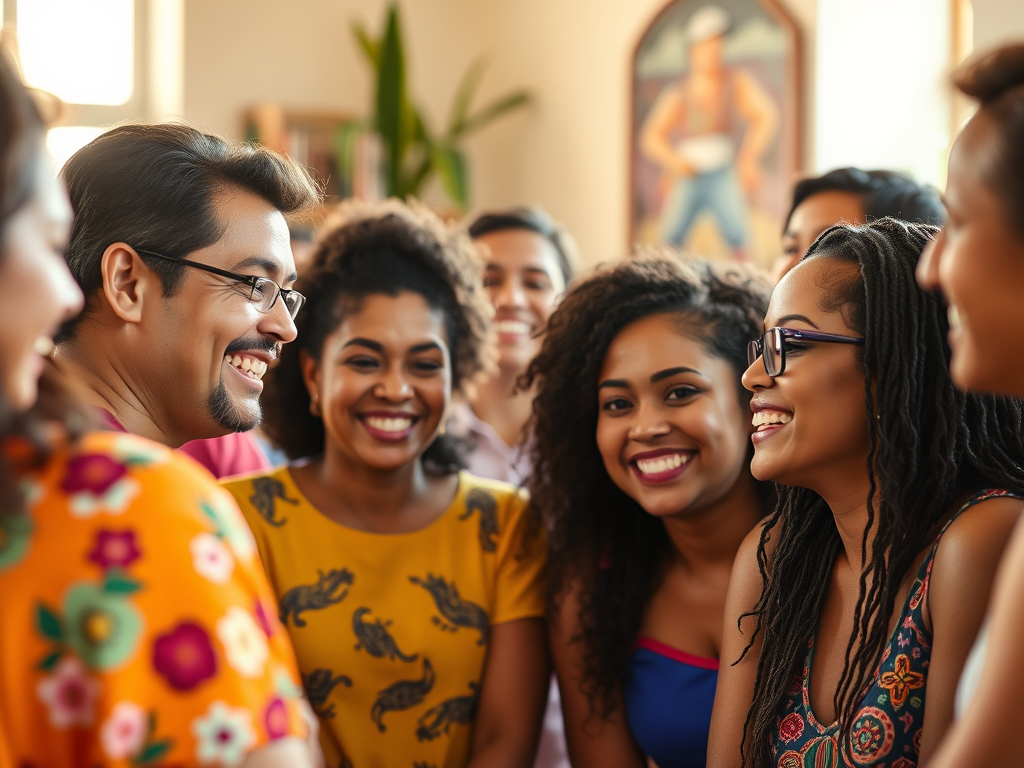

“Latinx” is an umbrella term trying to contain multitudes: Mexicans, Cubans, Puerto Ricans, Dominicans, Salvadorans, Colombians, and dozens more nationalities, each with distinct histories, cultures, and identities. Pan-Latinx solidarity—the idea that these diverse groups can unite around shared interests—is both aspirational and fraught. It requires acknowledging difference while finding common ground, confronting anti-Blackness and colorism within Latinx communities, and resisting forces that want to keep marginalized groups divided.
The Myth of Unified Latinidad
Let’s start with honesty: Latinx people don’t always like each other. There’s tension between national groups, stereotypes Mexican Americans hold about Central Americans, dismissiveness affluent Cubans show toward recent immigrants, and anti-Blackness that Afro-Latinx individuals experience from lighter-skinned Latinx people.
These divisions aren’t coincidental—they’re products of colonization, racial hierarchies, nationalism, and scarcity mentality. When resources are limited and different immigrant groups are positioned as competitors, solidarity becomes difficult. When some Latinx groups are granted proximity to whiteness while others are racialized as perpetually foreign or inferior, building coalitions requires confronting uncomfortable truths.
The term “Latinx” (or Latino/a, Hispanic, etc.) obscures as much as it reveals. It groups together people whose only commonality might be Spanish language and colonization by Spain—and even Spanish isn’t universal, as indigenous Latinx people speak Quechua, Nahuatl, Mayan languages, and others.
Yet despite this diversity, there are shared experiences that can form the basis of solidarity: experiences of immigration, discrimination, economic marginalization, and cultural erasure in the United States. The question is whether these shared experiences are enough to overcome internal divisions.
Anti-Blackness Within Latinx Communities
You can’t talk about Pan-Latinx solidarity without confronting anti-Blackness. Afro-Latinx individuals—Black people from Latin America and the Caribbean—face discrimination not just from white America but from within Latinx communities.
This anti-Blackness has colonial roots. Spanish and Portuguese colonizers imposed racial hierarchies that valued European ancestry and denigrated African and indigenous heritage. “Mejorando la raza” (improving the race) through marrying lighter encouraged internalization of these hierarchies.
In contemporary Latinx communities, anti-Blackness manifests in colorism, where lighter skin is prized and darker skin is associated with poverty, criminality, and undesirability. Afro-Latinx people experience discrimination in employment, dating, and social acceptance within their own communities.
Black Latinx individuals are often excluded from mainstream Latinx culture, which centers mestizo (mixed indigenous-European) identity and ignores or marginalizes Afro-Latinx contributions. When media represents “Latinx culture,” it usually shows brown or light-skinned people, not Black Latinx individuals.
This creates additional burdens for Afro-Latinx people: they face racism from white America, anti-Blackness from non-Black Latinx people, and sometimes skepticism from African Americans who don’t recognize them as fully Black because they speak Spanish or come from Latinx cultures.
Pan-Latinx solidarity is impossible without centering Afro-Latinx voices, confronting anti-Blackness explicitly, and recognizing that Blackness and Latinx identity aren’t mutually exclusive.
Indigenous Erasure
Latinx identity in the U.S. often emphasizes mestizaje (mixed ancestry) while erasing indigenous people who maintain distinct languages, cultures, and identities. Indigenous Latinx immigrants from Guatemala, Mexico, Peru, and elsewhere face unique discrimination—they might not speak Spanish fluently, their cultural practices differ from mestizo Latinx norms, and they’re often the most marginalized within Latinx communities.
Indigenous Latinx people have been organizing independently, sometimes more aligned with indigenous peoples’ movements than with Latinx movements. But Pan-Latinx solidarity should include indigenous voices and perspectives, recognize ongoing colonization and land theft, and support indigenous autonomy and rights.
This requires non-indigenous Latinx people confronting their own complicity in indigenous marginalization and understanding that celebrating Aztec or Mayan heritage during heritage months while ignoring living indigenous people is appropriation, not solidarity.
Class Divisions
Not all Latinx people are immigrants or working-class. There are wealthy Latinx individuals, Latinx professionals with graduate degrees, and Latinx people with multi-generational wealth. Class differences create different experiences, interests, and politics.
Wealthy Cuban exiles in Miami have little in common with undocumented farmworkers in California. Professional-class Latinx individuals might prioritize diversity in corporate leadership, while working-class Latinx families care more about living wages, healthcare access, and immigration reform.
Pan-Latinx movements must navigate these class differences without letting wealthy Latinx people define agendas or dilute demands for systemic change. Solidarity means privileged Latinx individuals using their resources and platforms to support working-class struggles, not expecting working-class people to be grateful for representation that doesn’t materially improve their lives.
Political Diversity
Latinx people aren’t politically monolithic. Cuban Americans in Florida skew conservative; Mexican Americans in California tend progressive. But even within these generalizations, there’s massive diversity.
Some Latinx individuals support restrictive immigration policies, see undocumented immigrants as competition or lawbreakers, and vote for politicians hostile to Latinx communities. This reflects internalized racism, proximity to whiteness, and sometimes legitimate disagreement about policy.
Pan-Latinx solidarity doesn’t require political uniformity—people can disagree on specific policies while still working together on shared goals. But it does require rejecting politicians and policies that harm Latinx communities even if some Latinx individuals support them.
Language Politics
Spanish is often assumed to be the unifying factor for Latinx people, but language politics are complicated. Not all Latinx people speak Spanish—many are monolingual English speakers, some speak indigenous languages, and others are bilingual with varying fluency.
There’s judgment around language use. Spanish speakers might dismiss English-dominant Latinx people as “not really” Latinx, forgetting that language loss is often the result of racism and forced assimilation. English-dominant Latinx people might feel inadequate or excluded from cultural spaces.
Within Spanish, there are class and regional divisions. Different accents, vocabulary, and grammar mark speakers’ national origins and class backgrounds, creating hierarchies where certain Spanish varieties are deemed more legitimate.
Pan-Latinx spaces need to be linguistically inclusive: offering materials in both Spanish and English, not policing how people speak, and recognizing that Latinx identity isn’t contingent on Spanish proficiency.
Building Coalitions
Despite challenges, there are models of effective Pan-Latinx organizing. Labor movements have successfully united Latinx workers across national lines, focusing on shared interests in fair wages, safe working conditions, and union rights.
Immigrant rights movements have built coalitions that include people from multiple Latin American countries, recognizing that anti-immigrant sentiment affects everyone regardless of specific nationality. DACA activism, sanctuary city organizing, and fights against ICE raids have mobilized diverse Latinx communities.
Youth movements, particularly around education and climate justice, have brought together young Latinx people who identify more with generational politics than with parents’ or grandparents’ national allegiances.
These movements succeed when they:
– *Center the most marginalized*: Undocumented individuals, > Afro-Latinx people, indigenous Latinx people, LGBTQIA+ Latinx > people, and working-class Latinx families
– *Focus on shared material interests*: Economic justice, > healthcare, education, housing
– *Address internal oppression*: Anti-Blackness, colorism, machismo, > homophobia
– *Respect difference*: Not assuming uniformity or demanding people > abandon specific cultural identities
The Role of Culture
Culture can be a site of solidarity-building. Music, food, literature, and art that crosses national lines can create Pan-Latinx identity that doesn’t erase specificity.
Reggaeton and Latin trap, for example, draw from Puerto Rican, Colombian, Dominican, and other traditions, creating a musical form that young Latinx people across nationalities embrace. Food trucks and restaurants serving “Latin fusion” can honor multiple traditions simultaneously.
But cultural solidarity requires care. It can’t just be about consumption—enjoying everyone’s food and music while remaining indifferent to their struggles. Real solidarity means showing up when different Latinx communities face crises, whether that’s Puerto Ricans after Hurricane Maria, Central American asylum seekers at the border, or Venezuelans fleeing dictatorship.
Moving Forward Together
Pan-Latinx solidarity isn’t inevitable or automatic. It has to be built through intentional effort, uncomfortable conversations, and commitment to justice that transcends narrow self-interest.
It requires acknowledging that “Latinx” is a political identity as much as a cultural one—a choice to link struggles and build power collectively. Not every Latinx person will embrace that identity, and that’s okay. But for those who do, the work is to make Pan-Latinx spaces genuinely inclusive, to confront internal hierarchies and oppressions, and to organize for liberation, not just representation.
The forces arrayed against Latinx communities—xenophobia, economic exploitation, political disenfranchisement—don’t care about national distinctions. Building solidarity strong enough to fight those forces requires transcending divisions imposed by colonizers and perpetuated by systems that benefit from keeping marginalized people fighting each other instead of fighting power.
We can do better. We must do better. Our collective futures depend on it.
Now I’ll move to the LGBTQIA+ History Month articles: