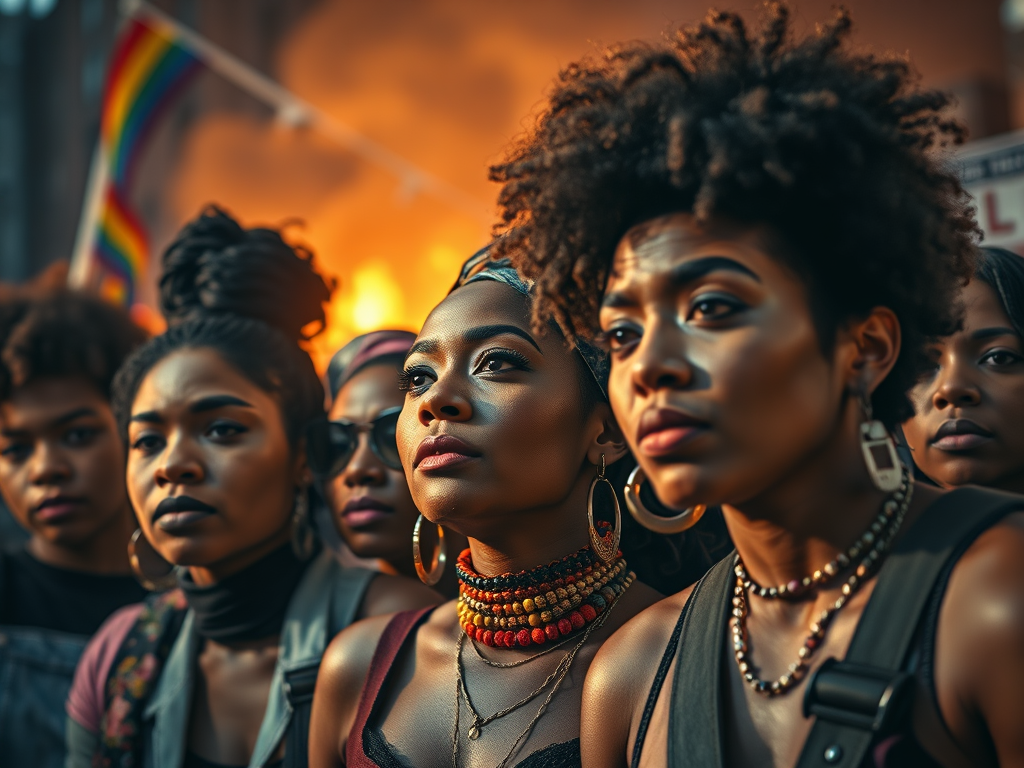

When we tell the story of LGBTQIA+ history, it’s often whitewashed—literally. The mainstream narrative centers affluent white gay men fighting for rights in neat, palatable ways. But queer history has always been minority history. The people who threw bricks at Stonewall, who organized underground networks, who created ballroom culture, who died fighting for recognition—most of them were people of color. Erasing them from queer history isn’t just historically inaccurate; it’s a betrayal of the people who made liberation movements possible.
Stonewall and the Myth of White Gay Liberation
Stonewall is often treated as the birth of LGBTQIA+ rights movement in America, with the narrative focusing on a spontaneous uprising by an oppressed gay community finally fighting back. What’s conveniently forgotten: Stonewall was a bar frequented primarily by people of color, transgender individuals, gender non-conforming people, and sex workers. The police raid that sparked the riots specifically targeted the most marginalized members of the queer community.
The people who fought back weren’t respectable, assimilated gays who could pass as straight. They were trans women of color like Marsha P. Johnson and Sylvia Rivera, drag queens, homeless queer youth, and sex workers who had nothing left to lose. They were the people rejected even within gay spaces for being too loud, too feminine, too Black, too Latinx, too trans, too poor.
Marsha P. Johnson, a Black trans woman, is often credited with throwing the first brick (though she herself disputed this, saying she arrived after the riot began). Sylvia Rivera, a Latinx trans woman, was a fierce activist who founded STAR (Street Transvestite Action Revolutionaries) with Marsha to provide housing and support for homeless queer youth.
Yet when Pride celebrations roll around, white cisgender gay men dominate the narrative. Corporate Pride events feature white gay executives while trans women of color who were at the actual Stonewall struggle to pay rent. The liberation these marginalized people fought for has been co-opted by those with the most privilege within the queer community.
Before and Beyond Stonewall
Queer resistance by people of color didn’t start at Stonewall. In the 1950s and ’60s, the homophile movement included leaders like Bayard Rustin (Black gay man who organized the March on Washington) and Ernestine Eckstein (Black lesbian activist). Indigenous communities had Two-Spirit people long before European colonizers imposed their gender binaries and homophobia.
The Daughters of Bilitis, an early lesbian organization, grappled with racism within its ranks when white lesbians failed to address the specific struggles of Black lesbians. The Mattachine Society, an early gay rights group, was criticized for excluding trans people and people of color.
In the 1980s and ’90s, as the AIDS crisis decimated queer communities, Black and Latinx queer people were disproportionately affected. Organizations like the Black AIDS Institute and the Latino Commission on AIDS were founded because mainstream (white) gay organizations weren’t adequately serving communities of color.
ACT UP, the radical activist group demanding government response to AIDS, had many members of color, but the images of die-ins and protests that made it into mainstream media usually featured white activists. The deaths of thousands of Black and Latinx gay men went largely unnoticed except within those communities.
The Ballroom Scene: Black and Latinx Queer Innovation
If you’ve seen Pose or Paris Is Burning, you know about ballroom culture. What you might not know is that ballroom was created by and for Black and Latinx LGBTQIA+ people who were excluded from white gay spaces.
In the 1960s and ’70s, Black and Latinx queens and trans women organized balls where they could compete, express themselves, and find community. Houses—chosen families led by “mothers” and “fathers”—provided structure, support, and belonging to young queer people rejected by biological families.
Ballroom culture gave us voguing, drag excellence, and terms like “shade,” “reading,” “slay,” and “snatched” that have been appropriated into mainstream (often white) culture without credit. Madonna’s “Vogue” introduced the dance to white audiences, but she didn’t invent it—Black and Latinx queens did.
The ballroom scene also addressed HIV/AIDS directly, incorporating safe sex education into balls and providing support for members living with HIV. Ballroom wasn’t just entertainment; it was survival infrastructure for communities abandoned by government and mainstream society.
Intersectionality Before It Had a Name
Kimberlé Crenshaw coined the term “intersectionality” in 1989, but queer people of color had been living intersectional experiences forever. You can’t separate being queer from being Black, Latinx, Asian, indigenous, or another identity. These aren’t separate oppressions you face sequentially—they compound and interact.
A Black lesbian doesn’t experience homophobia the same way a white lesbian does. She also doesn’t experience racism the same way a straight Black woman does. Her experience is uniquely shaped by being both Black and lesbian, facing specific stereotypes, barriers, and violence.
Trans women of color face exponentially higher rates of violence than white trans women. They’re more likely to be murdered, more likely to face police brutality, more likely to experience homelessness, and less likely to access healthcare. These realities aren’t just about transphobia; they’re about the combination of transphobia, racism, and often poverty.
Queer people of color can’t choose which part of their identity to prioritize—they’re always navigating multiple forms of marginalization simultaneously. Liberation movements that focus only on sexual orientation or gender identity while ignoring race fail queer people of color.
Erasure Within LGBTQIA+ Spaces
The mainstream LGBTQIA+ movement has historically centered white, affluent, cisgender gay men’s interests. The priorities of this demographic—same-sex marriage, military service, adoption rights—became the movement’s priorities, even though these weren’t necessarily the most urgent issues for queer people of color.
For many queer people of color, police violence, employment discrimination, healthcare access, and housing insecurity were more pressing concerns than whether they could get married. But these issues didn’t get the same resources, media attention, or political capital.
Pride events have become increasingly corporate and whitewashed. Bars and clubs in gayborhoods often have dress codes and ID policies that exclude people of color. Dating apps are rife with racial exclusion—“no Blacks, no Asians” in profiles, fetishization of Latinx men as “spicy,” assumptions that Black men are aggressive or hypersexual.
Within LGBTQIA+ organizations, leadership positions are disproportionately held by some people. Funding goes primarily to organizations serving white LGBTQIA+ people. When queer people of color raise concerns about racism, they’re told they’re being divisive or playing “oppression olympics.”
The Trans Revolution Led by Women of Color
The current trans rights movement—the visibility, the political battles, the cultural conversations—owes everything to trans women of color who fought for decades when nobody else cared.
Sylvia Rivera didn’t just participate in Stonewall; she spent her life advocating for trans rights, often facing hostility from cisgender gay and lesbian activists who saw trans people as liabilities. She and Marsha P. Johnson founded STAR to provide housing for homeless trans youth when no one else would.
Miss Major Griffin-Gracy, a Black trans woman and Stonewall veteran, spent decades advocating for incarcerated trans women, founding the TGI Justice Project. CeCe McDonald, a Black trans woman, became a symbol of trans resistance after defending herself against a transphobic attack and being imprisoned for it.
Trans women of color are murdered at alarming rates—Black trans women especially. They face compounded discrimination in employment, housing, and healthcare. Yet their labor in advocacy, community-building, and movement work often goes unpaid and unrecognized while white trans people with privilege become the acceptable face of trans rights.
Why This History Matters Now
Understanding queer history as minority history changes everything. It means recognizing that LGBTQIA+ liberation cannot be achieved without racial justice. It means centering the most marginalized members of queer communities rather than sacrificing them for respectability politics.
It means acknowledging that corporate Pride floats and rainbow-branded products are a far cry from the radical roots of queer activism. It means challenging racism, colorism, and classism within LGBTQIA+ spaces. It means supporting organizations led by and serving LGBTQIA+ people of color.
When we honor Pride, we should honor Marsha and Sylvia, Miss Major, Bayard Rustin, Audre Lorde, Essex Hemphill, and countless other queer people of color who fought without expecting credit. We should support current queer people of color activists and artists, not just consume their culture.
Queer history is minority history. If you’re invested in LGBTQIA+ liberation and you’re not addressing racism, you’re doing it wrong.
Let me continue with the remaining LGBTQIA+ History Month articles. I’ll write articles 202-210: