
The literary canon has a problem. For centuries, the stories we’ve been told to revere as “universal” have actually been quite specific: written by white Europeans, centered on white European experiences, and reinforcing white European worldviews. From Pride and Prejudice to Dracula, from Alice in Wonderland to The Count of Monte Cristo, the classics we inherit reflect a narrow slice of human experience dressed up as the whole pie.
But here’s the thing about public domain works: they belong to everyone now. And that means we get to do something revolutionary with them. We get to rewrite them.
At Rose Angel Publishing, we’re not just republishing old books with new covers. We’re reimagining these stories from the ground up, placing characters of color, diverse cultural settings, and marginalized perspectives at the center of narratives that once excluded them entirely. This isn’t vandalism. This is reclamation.
The Problem with “Universal” Stories
When we talk about classic literature, we use words like “timeless” and “universal.” But let’s be honest: a story set in the English countryside featuring only white aristocrats isn’t universal. It’s specific. The genius of these stories—the exploration of love, ambition, fear, identity—is indeed universal. But the execution has been painfully limited.
For generations, readers of color have been asked to see themselves in characters who don’t look like them, live like them, or share their cultural context. We’ve been told that great literature transcends identity, that we should be able to relate to Elizabeth Bennet or Victor Frankenstein regardless of race. And while there’s truth to the idea that human emotions transcend identity, there’s also something deeply alienating about never seeing yourself reflected in the stories deemed “important.”
Meanwhile, when diverse characters did appear in classic literature, they were often relegated to stereotypes: the savage, the exotic, the servant, the villain. These portrayals have done real harm, shaping perceptions and reinforcing hierarchies for generations.
Rewriting as Radical Love
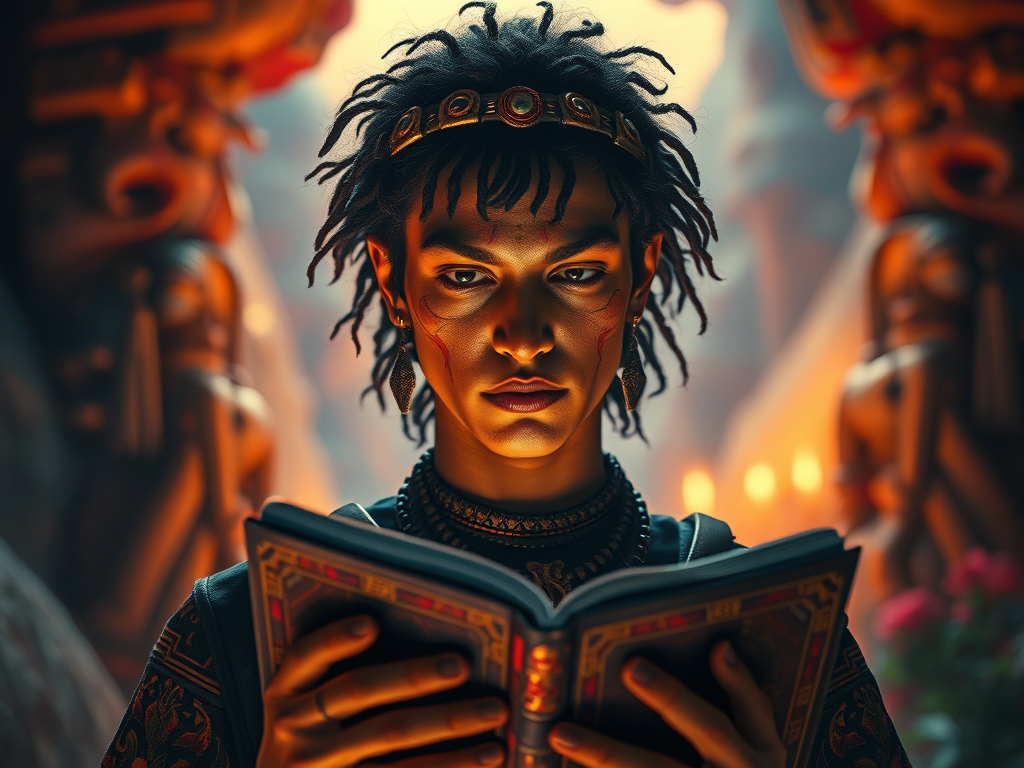
Our diversified classics aren’t about erasing the originals. Those books still exist. You can still read Bram Stoker’s Dracula anytime you want. What we’re doing is creating new versions that imagine: What if Dracula was reimagined through Aztec mythology? What if Beauty and the Beast was set in an African kingdom? What if Alice’s adventures took on the aesthetic of anime and Asian folklore?
These aren’t random choices. They’re deliberate acts of cultural reclamation and creative expansion. We’re taking the narrative structures and themes that made these stories compelling and filtering them through different cultural lenses, allowing new meanings to emerge.
When we reimagine The Picture of Dorian Gray with a protagonist of color navigating identity and self-image in a society that fetishizes and devalues them simultaneously, the story takes on new dimensions. The original themes of vanity, corruption, and the cost of beauty remain, but they’re enriched by the specific experiences of existing in a racialized body.
Why This Matters Now
We’re living in an era where representation in media is finally being taken seriously—at least in some spaces. We’re seeing more diverse casting in films, more books by authors of color, more stories centered on marginalized experiences. But the canon—that collection of works we’re supposed to read to be “educated”—remains stubbornly white.
By diversifying public domain classics, we’re doing several things at once:
We’re giving readers of color characters they can see themselves in within the framework of stories already deemed “important” by the literary establishment.
We’re proving that these narratives work just as well—if not better—when freed from their culturally limited origins.
We’re creating a new kind of canon, one that honors the storytelling techniques and themes of the classics while insisting that those techniques and themes belong to everyone.
We’re also training a new generation of readers to question the idea that the “original” version of a story is the only valid one. Adaptation, reinterpretation, and reimagining are ancient human practices. Every culture has retold its foundational stories across generations, adapting them to new contexts and audiences. We’re simply extending that tradition to works that have been treated as untouchable for too long.
The Rose Angel Publishing Mission
At Rose Angel Publishing, we believe that literature should give back. That’s why a portion of proceeds from our diversified classics goes toward supporting diverse authors and charitable causes that uplift marginalized communities. We’re not just rewriting stories; we’re redistributing literary power and economic resources.
When you buy one of our reimagined classics, you’re not just getting a fresh take on a familiar story. You’re supporting a mission to make literature more inclusive, more representative, and more reflective of the full spectrum of human experience.
The canon isn’t sacred. It’s a conversation. And for too long, too many voices have been excluded from that conversation. We’re changing that, one reimagined classic at a time.
The future of classic literature is diverse, dynamic, and unapologetically inclusive. And it starts with recognizing that these stories were never just theirs. They were always ours too.