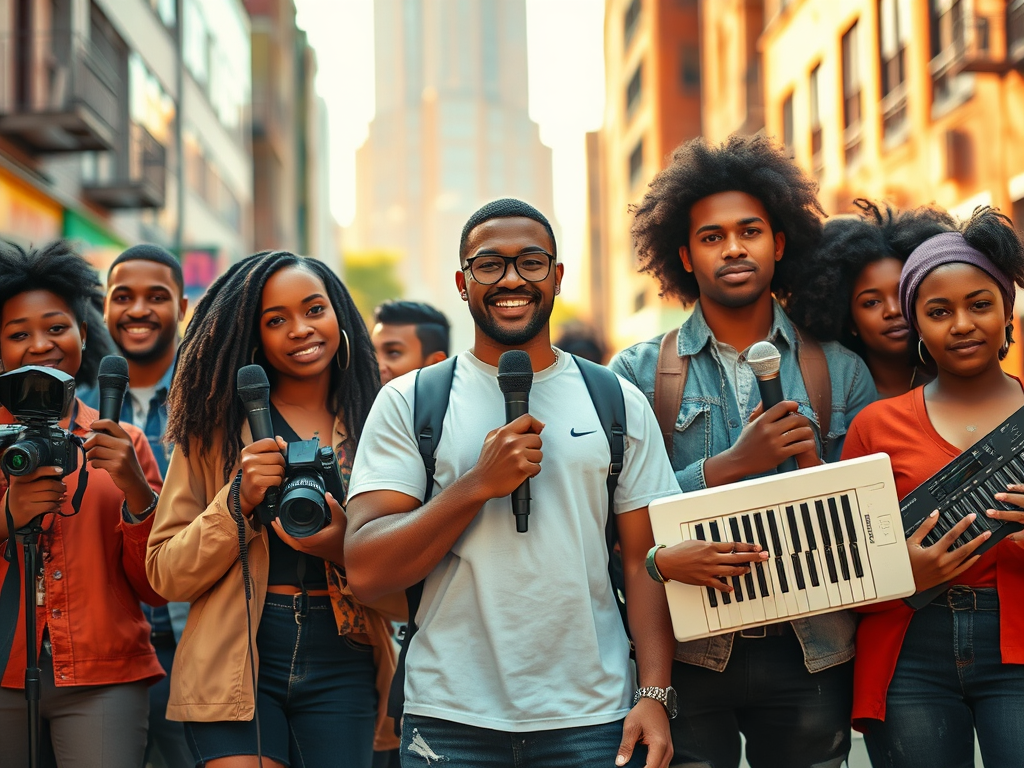

For most of history, our stories have been told by people who don’t look like us, don’t live like us, and definitely don’t understand us. We’ve been side characters in their narratives, plot devices in their redemption arcs, diversity tokens in their Oscar campaigns. But something fundamental has shifted: we’re no longer waiting for permission to tell our own stories. We’re grabbing the mic, the camera, the keyboard, and the boardroom—and we’re flipping the entire script.
The Old Script
Let’s talk about the script we inherited. You know the one. It goes something like this:
The minority character exists to teach the white protagonist a valuable lesson about life, humanity, or rhythm. The minority character is noble and wise, suffering gracefully to make others feel something. The minority character speaks in stereotypes—the sassy Black friend, the mystical Indigenous elder, the nerdy Asian sidekick, the spicy Latina love interest. The minority character’s culture is either exoticized or ignored entirely. And most importantly, the minority character never gets to be the fully realized, complex, flawed, brilliant protagonist of their own story.
This script was written by an industry—film, television, publishing—that was overwhelmingly white, male, and wealthy. It was written by people who genuinely believed their perspective was universal and everyone else’s was “niche.” It was written with the assumption that audiences couldn’t relate to stories about people of color unless those stories were filtered through white experiences or white saviors.
But here’s what they got wrong: our stories were always universal. They just weren’t centered.
Taking the Pen
The first step in flipping the script was claiming the right to write it ourselves. This didn’t happen because the gatekeepers had a change of heart—it happened because we built our own gates.
Social media gave us direct access to audiences. YouTube, TikTok, Instagram, and Twitter became platforms where we could tell stories without network approval or studio backing. We didn’t need a publisher to greenlight our novels—we could self-publish and build our own readerships. We didn’t need a record deal—we could drop music independently and let streaming numbers speak for themselves.
This democratization of storytelling has been revolutionary. Suddenly, a queer Black kid in Atlanta could create content that resonates with millions. A Filipina writer in San Francisco could build a dedicated following without ever pitching to a traditional publisher. A Muslim comedian could bypass network television and go straight to Netflix with a special that actually represents her experience accurately.
Owning the Narrative
But creating content is only part of flipping the script. The real power move is ownership—controlling not just what stories get told, but who profits from them, who makes decisions about them, and who gets credit for them.
This is why we’re seeing more creators insist on executive producer credits, why more authors are retaining film rights to their books, why more artists are starting their own labels and production companies. It’s why Issa Rae created her own production company rather than just acting in other people’s shows. It’s why Jordan Peele started Monkeypaw Productions instead of just directing. It’s why so many creators are turning down traditional deals in favor of maintaining creative control.
When we own our narratives, we get to decide how they’re told, who tells them, and what messages they send. We don’t have to compromise our vision to make white executives comfortable. We don’t have to explain why representation matters. We don’t have to accept notes about making our characters “more relatable”—which too often means more palatable to audiences who’ve never had to see the world through our eyes.
The Stories We’re Telling
With control comes freedom, and with freedom comes an explosion of diverse, complex, unapologetic storytelling. We’re telling stories where our characters aren’t defined by their trauma. Where they get to be silly, petty, ambitious, messy, brilliant. Where they fall in love without it being a “statement.” Where they save the world without it being a metaphor for racial justice.
We’re also telling stories that previous gatekeepers would have deemed “too ethnic” or “too specific.” Stories in languages other than English. Stories that don’t translate cultural references for white audiences. Stories that assume knowledge of our communities and don’t stop to explain every tradition or term. Stories that exist for us first, and if others want to understand, they can do the work.
This specificity, paradoxically, makes the stories more universal. When you write from a deeply authentic place instead of trying to appeal to everyone, you create something real. And real always resonates more than sanitized, focus-grouped, designed-by-committee content.
Rewriting History
We’re also going back and rewriting stories that excluded us in the first place. This is where projects like Rose Angel Publishing come in—taking public domain classics and reimagining them with diverse casts, different cultural contexts, and narratives that center marginalized voices.
This isn’t about erasing history. It’s about acknowledging that the canon we inherited was always partial, always biased, always presenting one narrow slice of humanity as if it were the whole picture. When we retell Dracula with an Aztec vampire or Beauty and the Beast set in Africa, we’re not diminishing the originals—we’re expanding the possibilities. We’re asking: What other stories could exist in these frameworks? Who else gets to be the hero?
These reimaginings matter because they show young readers and viewers that they belong in every genre, every story type, every narrative tradition. They don’t have to wait for someone to write “the Black version” of a story—they can see themselves in classics, in fairy tales, in mythology, in science fiction, in everything.
The Ripple Effect
When we flip the script, it doesn’t just change our stories—it changes the entire industry. Suddenly, executives realize that “niche” stories can be blockbusters. Publishers discover that diverse books can top bestseller lists. Streaming platforms learn that international audiences exist and have buying power. The old gatekeepers adapt or become irrelevant.
This shift is about power redistribution. It’s about who gets to decide what stories matter, what constitutes quality, what deserves investment and promotion. For too long, those decisions were made by a small, homogeneous group. Now, the power is spreading—still not evenly, still not fairly, but undeniably spreading.
What Comes Next
The script-flipping is just beginning. We’re still fighting for equitable pay, appropriate budgets, and fair marketing. We’re still battling tokenism and performative diversity. We’re still pushing back against the expectation that we have to be twice as good for half the recognition.
But we’re not going back. We’ve tasted creative freedom and ownership, and there’s no returning to being grateful for scraps of representation. We’ve proven that our stories sell, that our perspectives matter, that we can be commercially successful without compromising our vision.
The future of storytelling is one where we’re not the exception or the diversity hire or the experimental project. We’re the default. We’re the center. We’re the ones with the pen, the camera, the power—and we’re writing ourselves into every story, every genre, every medium.
Because these stories were always ours to tell. We’re just finally claiming them.