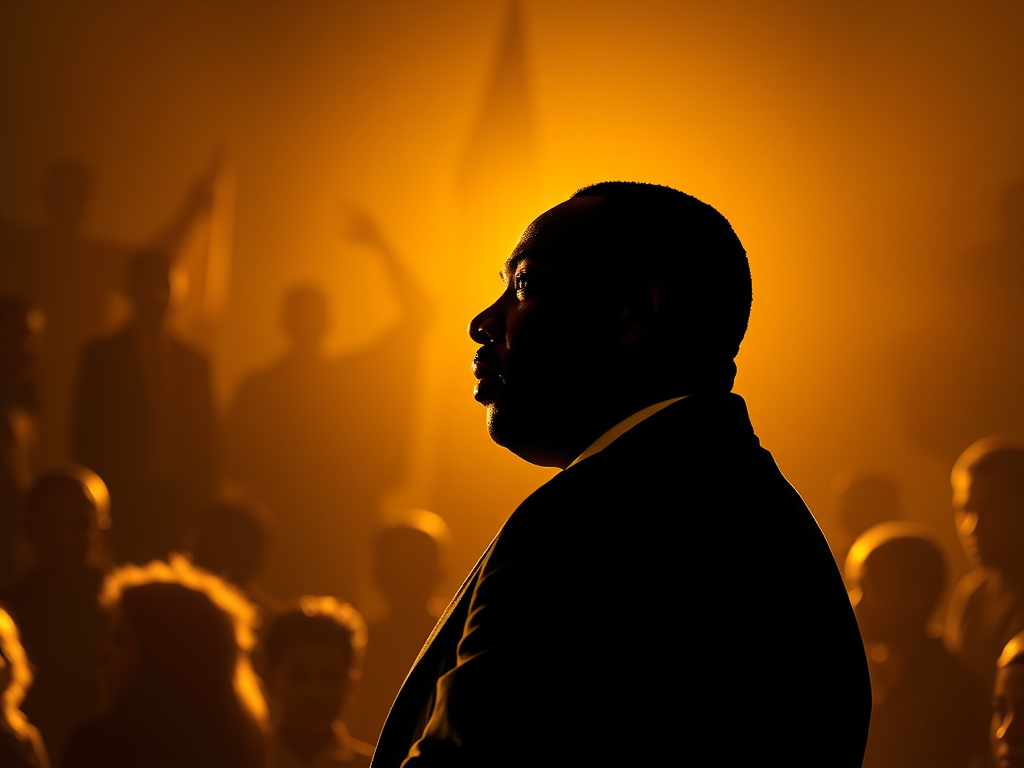

Martin Luther King Jr. is remembered for “I Have a Dream.” He should also be remembered for demanding guaranteed income, full employment, and a radical restructuring of the American economy.
But that history has been buried under feel-good quotes and sanitized narratives. Let’s dig it up.
“True compassion is more than flinging a coin to a beggar”
King didn’t believe in charity. He believed in justice.
In his book Where Do We Go from Here: Chaos or Community?, he wrote: “True compassion is more than flinging a coin to a beggar; it comes to see that an edifice which produces beggars needs restructuring.”
He wasn’t asking for incremental change. He was demanding the system itself be rebuilt.
The Guaranteed Income
King advocated for a guaranteed income, an idea closely related to what many now call Universal Basic Income (UBI). He believed every American should receive enough money to live on, regardless of employment.
From Where Do We Go from Here: “I am now convinced that the simplest approach will prove to be the most effective—the solution to poverty is to abolish it directly by a now widely discussed measure: the guaranteed income.”
This wasn’t a fringe idea. It was central to his vision of economic justice.
Why? Because he understood that Black Americans had been systematically denied wealth accumulation through slavery, sharecropping, discriminatory lending, and employment discrimination. A “level playing field” wasn’t enough when some people had been kneecapped for centuries.
Guaranteed income would provide baseline economic security that allowed people to negotiate for fair wages, escape exploitation, and build stability.
Jobs as a Human Right
King believed in full employment—not as a goal, but as a guarantee.
He demanded that the government serve as employer of last resort. If the private sector wouldn’t provide jobs, the government must. Everyone willing to work deserved a job that paid a living wage.
This wasn’t just about employment. It was about dignity. He wrote, “If a man doesn’t have a job or an income, he has neither life nor liberty nor the possibility for the pursuit of happiness. He merely exists.”
Housing as a Human Right
King advocated for universal affordable housing. Not subsidized housing for the poor while the rich lived in luxury—but quality housing as a baseline for all.
He understood that housing segregation maintained racial and economic inequality. Redlining kept Black families from building wealth. Discriminatory lending kept them poor. Substandard housing kept them sick.
His solution wasn’t charity. It was making housing a guaranteed right, funded by the government and available to all.
Healthcare as a Human Right
King spoke out against health care inequality decades before it became a central political debate.
He said, “Of all the forms of inequality, injustice in health care is the most shocking and inhumane.”
He saw healthcare as intertwined with economic justice. Medical debt destroyed families. Lack of preventive care kept people trapped in poverty. Discriminatory healthcare meant Black Americans died younger.
Universal healthcare wasn’t a nice idea. It was essential to economic liberation.
Unions and Labor Rights
King was murdered in Memphis while supporting striking sanitation workers fighting for fair wages and dignity.
He understood that labor unions were essential to economic justice. Without collective bargaining power, workers were at the mercy of employers who would always choose profit over people.
He stood with striking workers. He walked picket lines. He understood that economic justice required worker power, and worker power required organization.
He was killed while organizing for economic power, not while dreaming.
The Critique of Capitalism
King’s economic vision went beyond reform. He questioned capitalism itself.
“We must recognize that we can’t solve our problem now until there is a radical redistribution of economic and political power.”
“Call it democracy, or call it democratic socialism, but there must be a better distribution of wealth within this country for all God’s children.”
He argued that American capitalism, left unchecked, concentrated wealth at the top, left the bottom to struggle, and too often valued profit over people.
He wasn’t trying to make capitalism work better. He was envisioning something different.
Why This History Was Erased
MLK’s economic radicalism is dangerous to power. If people understand that he demanded guaranteed income, full employment, universal healthcare, and economic reparations—they might start demanding it too.
So history erases it. Schools teach the “I Have a Dream” speech and nothing else. Corporations use his image to sell products. Politicians quote him while enacting the opposite of his vision.
The sanitized King is safe. The revolutionary King is a threat.
What We’re Still Fighting For
Every economic justice movement today is fighting for what King demanded:
Fight for $15 demands living wages—King demanded full employment at living wages.
Medicare for All demands universal healthcare—King demanded healthcare as a human right.
Universal Basic Income proposals—King demanded guaranteed income.
Reparations movements—King demanded economic reparations for slavery and discrimination.
Tenant rights and housing justice—King demanded universal affordable housing.
Labor organizing—King stood with unions and striking workers.
None of this is new. We’re just continuing the fight he started.
What It Means Today
If you honor King, take his economic vision as seriously as his dream. Wrestle with what guaranteed income, living wages, universal health care, and worker power would mean today, and put his vision into action.
The real Martin Luther King Jr. would be at the forefront of every economic justice movement today. He’d be fighting for policies that guarantee everyone can live with dignity regardless of their ability to produce profit for capitalism.
He’d be calling out performative allyship from people who quote him on Monday and vote against economic justice on Tuesday.
He’d be demanding we finish what he started.
How to Honor His Economic Vision
Learn it. Read Where Do We Go from Here: Chaos or Community? Read his speeches on economic justice. Stop relying on the greatest hits.
Teach it. Share his economic vision. Tell people about guaranteed income, about full employment, about his critique of capitalism.
Organize for it. Join movements fighting for living wages, universal healthcare, housing justice, labor rights. This is how you honor King—by doing the work.
Connect the dots. Economic justice and racial justice are inseparable. You can’t achieve one without the other.
Demand more. Incremental change wasn’t enough for King. It’s not enough now. Demand systemic transformation.
Martin Luther King Jr. didn’t die for your inspirational Instagram post. He died organizing for economic justice.
Act like it.
Keep reading: The Women Behind the Civil Rights Movement · How to Honor MLK Through Action, Not Just Words · Black History Beyond February: Why 28 Days Isn’t Enough