
The world wants Black people exhausted, traumatized, and too tired to fight. Black joy says: not today.
Black joy isn’t frivolous. It’s not ignoring oppression or pretending everything’s fine. It’s a refusal to let white supremacy have the last word on our lives.
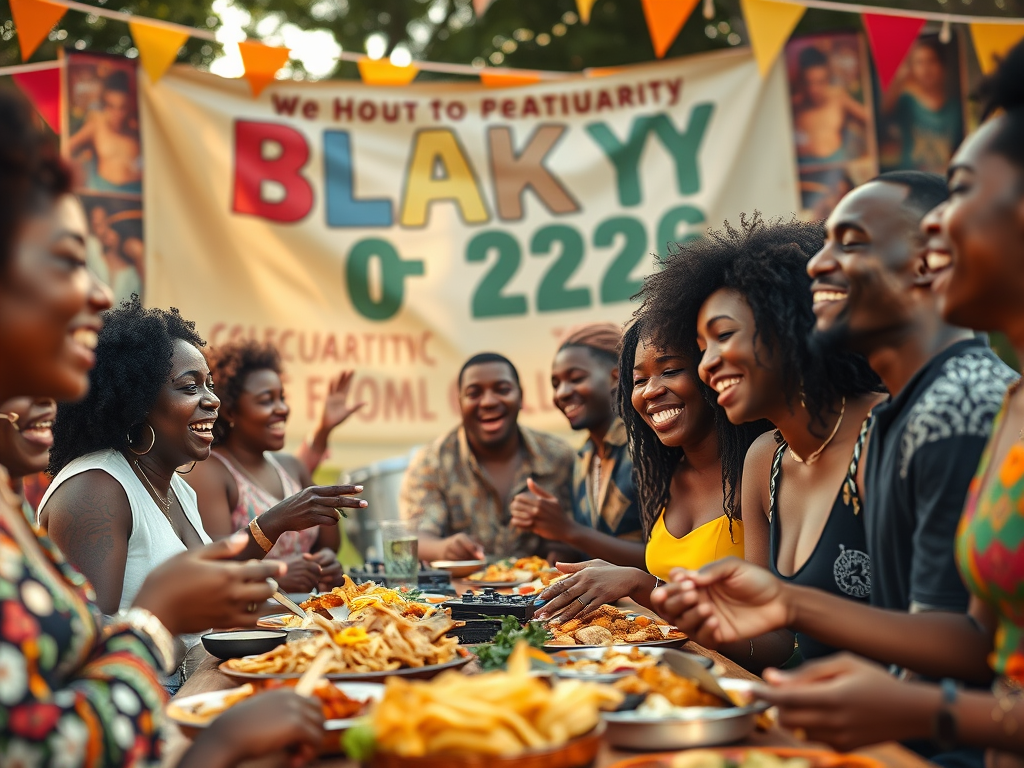
It’s dancing at a cookout after a protest. It’s laughter in the face of systems designed to break us. It’s building, creating, and loving ourselves even when the world says we shouldn’t exist.
Black joy is resistance.
What Black Joy Looks Like
Black joy is Sunday dinners with too much food and family that won’t let you leave without a plate.
It’s the auntie who always has something to say and the uncle whose jokes are terrible but we laugh anyway.
It’s Black Twitter turning trauma into memes—not because the pain isn’t real, but because laughter helps us survive it.
It’s the choreography in a viral TikTok dance. The harmonies in a church choir. The artistry in a barber’s fade.
It’s a Black-owned coffee shop where you can exist without code-switching. A bookstore with shelves full of Black authors. A festival celebrating Afrobeat, dancehall, or bounce music.
Black joy is everywhere we create space for ourselves.
Why Joy Is Political
Oppression thrives on despair. If Black people believe we’re only worth our trauma, we stop imagining futures beyond survival.
Black joy disrupts that. It says: we deserve pleasure, rest, celebration, and freedom from constant vigilance.
White supremacy wants us afraid, hypervigilant, and traumatized. Black joy refuses.
Every time Black people laugh, dance, create, or rest despite the world telling us we should only suffer—that’s resistance.
Joy vs. Toxic Positivity
Black joy isn’t “good vibes only” or “don’t worry, be happy.” That’s toxic positivity, and it’s harmful.
Black joy coexists with anger, grief, and exhaustion. It doesn’t deny pain—it insists on joy anyway.
You can march against police brutality on Saturday and celebrate a wedding on Sunday. You can grieve victims of violence and still dance at the cookout. Holding both is not contradictory—it’s survival.
Toxic positivity tells you to smile through oppression. Black joy says: I will feel everything, and I will still choose moments of happiness.
Cultural Expressions of Joy
Music: From gospel to hip-hop to Afrobeats, Black music is joy embodied. Even songs about struggle make you move. That’s intentional. Our ancestors sang in fields, in churches, in clubs—because music was freedom when nothing else was.
Dance: The electric slide at every Black family reunion. The wobble. Line dancing. TikTok challenges that go viral because Black people make rhythm look effortless.
Food: Cooking is an act of love in Black culture. The care in a pot of collard greens, the time in slow-cooked ribs, the artistry in a sweet potato pie—these are offerings of joy.
Fashion: Black people have always turned clothing into expression—from Harlem Renaissance elegance to hip-hop streetwear to natural hair as a political statement. We reclaim ourselves through style.
Community: Block parties. Family reunions. Juneteenth celebrations. Spaces where Black people gather, unbothered and unfiltered—that’s where joy lives loudest.
Joy in the Face of Trauma
2020 was a year of collective Black trauma. We watched George Floyd murdered. We protested police brutality. We grieved Breonna Taylor, Ahmaud Arbery, and too many others.
And we also celebrated Kamala Harris becoming the first Black and South Asian woman vice president. We danced on TikTok. We supported Black-owned businesses. We held each other.
Joy didn’t erase grief. It coexisted with it.
2026 looks different but similar. New struggles, ongoing fights, and moments where we still choose joy because the alternative is letting them win.
Rest as Resistance
Black joy includes rest. Naps. Boundaries. Saying “no” to things that drain us.
Rest is revolutionary in a culture that demands Black people work twice as hard for half the recognition. Choosing to rest is choosing to value ourselves over productivity.
The Nap Ministry, founded by Tricia Hersey, has built an entire movement around rest as resistance. It reclaims rest as a human right, not a luxury, and centers Black people’s need to recover from systemic exhaustion.
Protecting Joy from Exploitation
Black joy is profitable. Brands want it for ads. Influencers want it for engagement. Too many people want to consume it without addressing the systems that make it necessary.
That’s theft.
When a white influencer does a viral Black dance without credit, that’s theft. When brands use Black aesthetics to sell products but don’t hire Black people, that’s theft. When Black culture is celebrated but Black people are criminalized, that’s theft.
Protecting Black joy means gatekeeping when necessary. Not everything is for everyone. Some spaces need to stay ours.
Joy as Legacy
Our ancestors survived the Middle Passage, slavery, lynching, Jim Crow, and every attempt to destroy us. They survived—and they still sang, danced, laughed, loved, and created.
They passed down resilience, but they also passed down joy. The songs, the recipes, the traditions—all of it is inheritance.
When we choose joy, we honor them. We prove they didn’t suffer in vain. We live the freedom they fought for.
Joy Doesn’t Mean Complacency
Choosing joy doesn’t mean ignoring injustice or stopping the fight. Activists rest. Organizers celebrate. You can demand justice and still take care of yourself.
Burnout helps no one. Martyrdom doesn’t free anyone.
Black joy sustains the movement by keeping us whole enough to keep fighting.
What You Can Do
Create spaces for joy. Host cookouts, game nights, book clubs. Build community where Black people can be fully themselves.
Support Black joy. Attend Black cultural events. Buy from Black artists. Stream Black creators’ content. Put money into what brings us happiness.
Rest without guilt. You don’t have to be productive every second. Rest is not laziness—it’s self-preservation.
Celebrate wins. Every small victory—personal, communal, systemic—deserves recognition. Don’t wait for “big enough” moments to be happy.
Protect your peace. Block negativity. Set boundaries. Leave spaces that drain you. Your joy matters.
Black joy isn’t escapism. It’s proof that we’re still here, still thriving, still refusing to be broken.
They tried to take everything from us. They didn’t get our joy.
And they never will.
Keep reading: Juneteenth vs. Independence Day: Whose Freedom? · Bayard Rustin: The Gay Man Behind the March on Washington · Martin Luther King Jr. Day: Beyond the Quotes-His Radical Legacy
If you’re struggling, you don’t have to carry it alone. In the U.S., call or text 988 to reach the Suicide & Crisis Lifeline any time (press 2 for Spanish), text HOME to 741741 for the Crisis Text Line, or, for LGBTQ+ young people, contact The Trevor Project. If you’re in immediate danger, call 911.