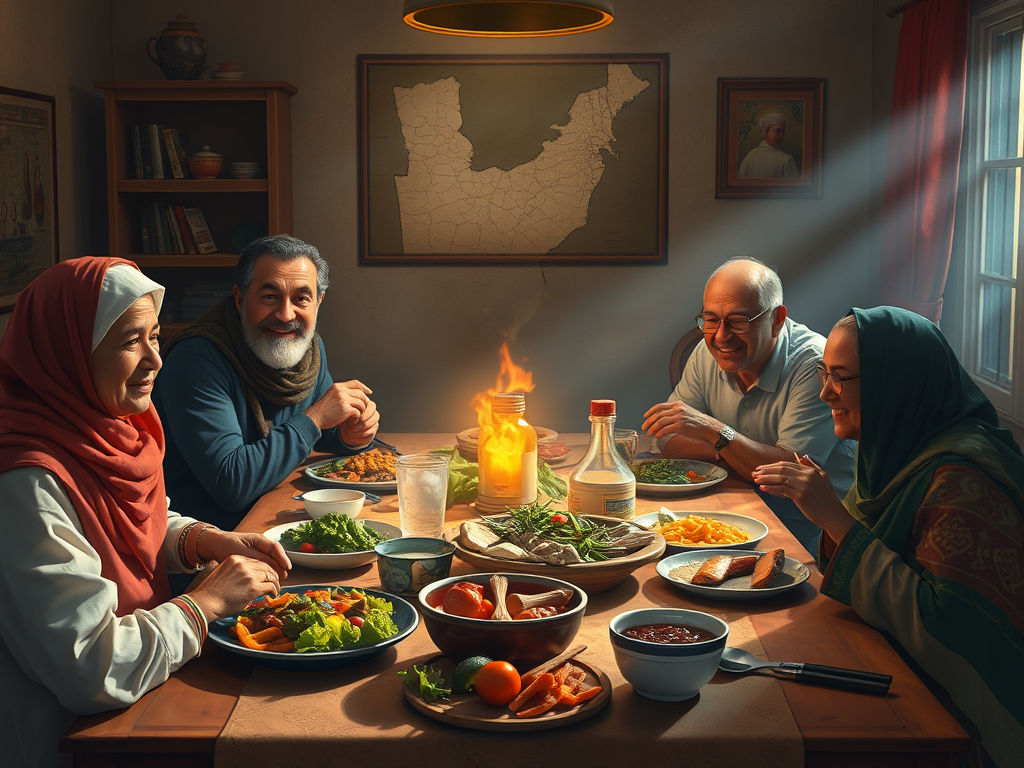

Being Palestinian in America means carrying a homeland that doesn’t appear on most maps, defending your right to exist to people who deny you ever existed, and explaining your identity to those who only know Palestine through propaganda.
It means diaspora isn’t just geographical—it’s existential.
The Historical Context Americans Ignore
Before 1948, Palestine existed. Palestinian cities thrived. Palestinian families lived on land they’d cultivated for generations. Then the Nakba—“the catastrophe”—forcibly displaced over 750,000 Palestinians from their homes. Villages were destroyed. Families were separated. People became refugees overnight.
For Palestinians, this isn’t ancient history. It’s grandparents’ stories. It’s keys to houses that no longer exist. It’s property deeds for land someone else claims. It’s a loss that compounds with every generation.
Most Americans don’t learn this history. They learn a narrative that erases Palestinian existence entirely or frames Palestinian resistance to displacement as terrorism. When you’re Palestinian American, you spend your life correcting that record.
Growing Up Palestinian in America
Palestinian American children learn early that their identity is political whether they want it to be or not. Mentioning Palestine at school invites questions, debates, accusations. Teachers who’d never challenge a child’s Irish or Italian heritage suddenly become Middle East policy experts when a Palestinian child shares their background.
You learn to:
- Prepare for geography lessons about the Middle East
- Expect classmates to confuse Palestine with Pakistan
- Anticipate “but Israel has a right to exist” responses
- Navigate teachers who treat your family history as propaganda
- Decide how much to reveal about your identity
Many Palestinian American students face direct hostility. College campuses are particularly hostile spaces, where Palestinian activism is labeled antisemitic and Palestinian student groups face disproportionate scrutiny.
The Diaspora Experience
Palestinian diaspora spans the globe: Jordan, Lebanon, Syria, Egypt, Gulf countries, Europe, Latin America, and the United States. Each community carries specific experiences of displacement, but all share the loss of homeland.
In the U.S., Palestinian Americans cluster in certain areas—Dearborn, Michigan; Paterson, New Jersey; Chicago; Los Angeles—creating communities that maintain culture through food, language, and collective memory. But thousands of Palestinian Americans live in isolation, the only Palestinian family in their town.
Dual Consciousness
Palestinian Americans navigate a particular form of double consciousness. You’re American but treated as perpetually foreign. You’re Arab but your specific Palestinian identity often gets erased within broader Arab identity. You’re from a place many people insist doesn’t exist.
This creates complicated relationships with identity:
Language: Many third and fourth-generation Palestinian Americans speak little Arabic, creating gaps with elders. But the Palestinian dialect carries specific history, humor, and connection to land.
Food: Palestinian cuisine connects diaspora to homeland. Making maftoul, musakhan, or knafeh becomes an act of cultural preservation. But food also highlights what’s lost—ingredients that don’t exist in America, recipes that died with grandmothers.
Memory: Palestinian Americans are tasked with remembering a place many have never seen. Grandparents describe orchards, beaches, markets. Parents show keys and deeds. Children inherit memory of a homeland they can’t visit.
The Political Burden
Every Palestinian American faces pressure to be an ambassador, educator, and activist for Palestinian rights. Random people expect you to:
- Explain the Israeli-Palestinian conflict
- Defend Palestinian resistance
- Justify your existence
- Prove you’re not a terrorist
- Denounce Hamas (even though you’re Christian, from the West Bank, or literally never been to Palestine)
This is exhausting. You didn’t ask to be a spokesperson. You just want to exist.
But silence isn’t an option either. When violence escalates in Palestine, Palestinian Americans watch their family members die in real-time on social media while colleagues ask how their weekend was. When American politicians fund weapons that kill Palestinians, staying silent feels like complicity.
Intergenerational Trauma and Resilience
Palestinian American families carry trauma that compounds across generations:
First generation often experienced displacement directly, carrying survivor’s guilt for escaping while family remained.
Second generation grew up with parents’ trauma while facing discrimination in America, often serving as cultural translators and mediators.
Third and fourth generations inherit collective trauma without direct connection to the source, navigating identity shaped by loss they didn’t experience firsthand.
But trauma isn’t the whole story. Palestinian Americans also inherit:
- Fierce commitment to education (Palestine has one of the highest literacy rates in the Arab world)
- Strong family bonds and community solidarity
- Deep connection to land, agriculture, and environment
- Rich cultural traditions in music, dance, food, and storytelling
- Sumud (steadfastness) as a way of life
Palestinian American Identity Today
Younger Palestinian Americans are refusing to shrink their identity or apologize for it. They’re:
Reclaiming narrative: Through social media, art, writing, and organizing. They’re telling their own stories without asking permission.
Building visibility: Palestinian Americans are running for office, teaching in universities, creating media, and leading businesses. They’re making Palestinian American excellence undeniable.
Demanding accountability: For U.S. foreign policy, for media bias, for academic institutions that silence Palestinian voices.
Creating community: Digital and physical spaces where Palestinian Americans support each other without having to explain or defend.
Connecting across diaspora: Building solidarity with Palestinians globally and with other displaced communities.
The Cost of Visibility
Palestinian visibility in America carries risks. Speaking openly about Palestine can cost:
- Job opportunities
- Educational advancement
- Social relationships
- Physical safety
Doxxing campaigns target Palestinian activists. Employers fire workers for pro-Palestinian social media posts. Students face disciplinary action for organizing. The message is clear: Palestinians can exist in America as long as they stay quiet about Palestine.
Many Palestinian Americans navigate this by:
- Using pseudonyms online
- Avoiding explicitly political content
- Focusing on cultural rather than political identity
- Compartmentalizing their Palestinian and American selves
That survival strategy makes sense, but it also means continued erasure.
Homeland You’ve Never Seen
Many Palestinian Americans have never been to Palestine. Israeli restrictions make travel difficult, and sometimes impossible, for diaspora Palestinians. Even Palestinian Americans with U.S. passports face harassment, denial of entry, or worse at Israeli borders.
This creates a strange grief: mourning a place you’ve never been, longing for a home you’ve only seen in photos, fighting for land you may never walk on.
Yet that connection remains visceral. When bombs fall on Gaza, Palestinian Americans feel it in their bodies. When settlers destroy olive trees in the West Bank, it’s personal. When Palestinians are killed at checkpoints, it’s family—even if you’ve never met them.
Moving Forward
Being Palestinian American in 2026 means:
- Refusing erasure
- Demanding recognition
- Building institutions and infrastructure
- Preserving culture and memory
- Fighting for justice without apology
It means knowing that diaspora isn’t just distance from homeland—it’s carrying homeland within you, in language, in food, in stories, in resistance.
Your Palestinian identity isn’t a debate. It’s not a political position. It’s who you are. And no one can take that from you.
You exist. Palestine exists. And that existence is revolution enough.
Keep reading: Arab Women Breaking Cultural and Professional Barriers · Second-Generation Arab Americans: Bridging Two Worlds · Arab American LGBTQIA+ Experiences