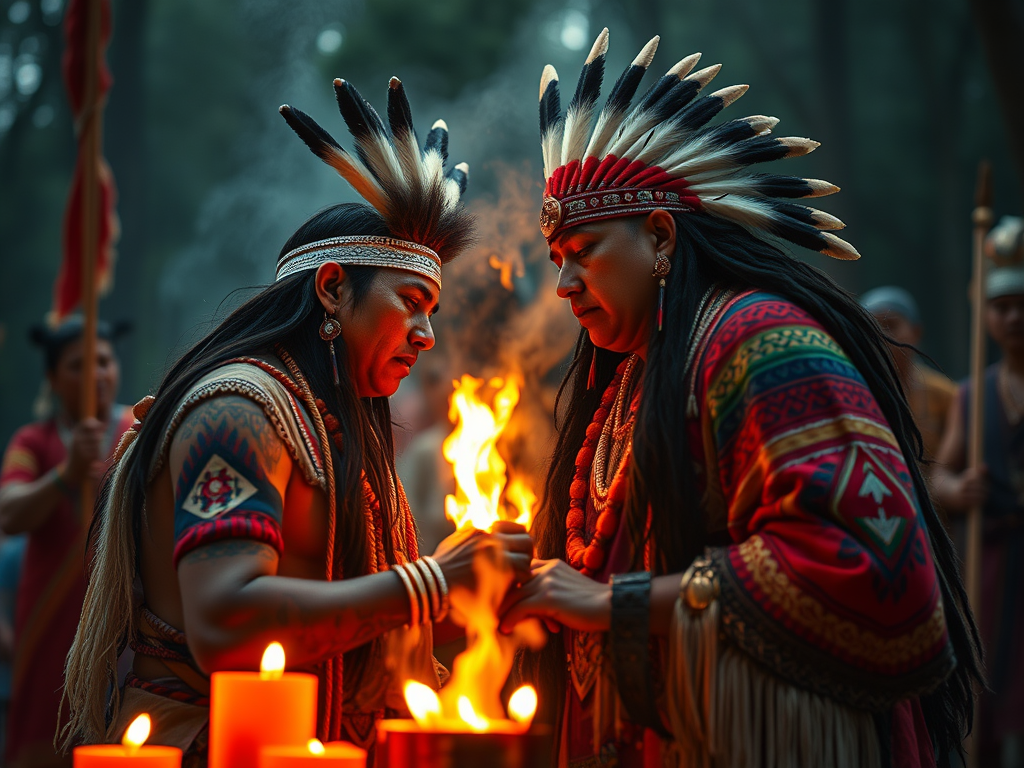

Before European colonization imposed rigid gender binaries and homophobia on Indigenous peoples, many Native nations recognized and honored people we might today call LGBTQIA+. They had their own terms, traditions, and sacred roles for these community members.
Two-Spirit is a contemporary pan-Indian term, but the concept—people embodying both masculine and feminine spirits, people whose gender identity doesn’t fit binary categories, people whose relationships don’t conform to heteronormative expectations—existed across hundreds of Indigenous nations with their own specific traditions and terms.
Colonization violently suppressed these traditions. Missionaries and government agents enforced Christian sexual and gender norms, punishing Indigenous people who didn’t conform. But despite centuries of suppression, Two-Spirit and Indigenous LGBTQIA+ people are reclaiming their sacred place in their communities.
Understanding Two-Spirit
Two-Spirit is not simply the Indigenous equivalent of LGBTQIA+. It’s a specific identity rooted in Indigenous cultural contexts, often (but not always) involving spiritual roles, ceremonies, and community responsibilities beyond gender identity or sexual orientation.
Historically, people we might call Two-Spirit today held special roles in many Indigenous communities. They were often healers, ceremonial leaders, mediators, artists, or warriors. They were seen as having unique spiritual gifts precisely because they existed outside gender binaries.
Different nations had different terms and traditions. Navajo recognized nádleehí. Lakota had winkté. Ojibwe had niizh manidoowag. Cherokee recognized various gender-diverse people. These weren’t exactly the same as each other or as Two-Spirit—each nation had specific traditions and understandings.
The modern term Two-Spirit emerged in 1990 at an Indigenous LGBTQIA+ gathering. It was chosen as a pan-Indian term that Indigenous people could identify with while also maintaining their specific tribal traditions and terms.
Pre-Contact Traditions
Anthropological and Indigenous oral history records document that many pre-contact Indigenous societies accepted and honored gender diversity in ways European cultures did not. People who would today be called transgender, non-binary, gay, lesbian, or bisexual existed in Indigenous communities and often held respected roles.
This doesn’t mean every Indigenous nation was always accepting of gender and sexual diversity in the same ways. Different nations had different traditions. But the violent enforcement of binary gender and heterosexuality was imposed through colonization, not inherent to Indigenous cultures.
Some Two-Spirit people were seen as having special spiritual powers. They might serve as healers, conduct specific ceremonies, or mediate between different realms. Their liminal status—existing between or beyond binary categories—was seen as spiritually significant.
Colonial Suppression
European colonizers and missionaries viewed Indigenous gender and sexual diversity as evidence of “savagery” requiring “civilizing.” They violently suppressed Two-Spirit traditions. They punished people who didn’t conform to Christian gender and sexual norms. They taught Indigenous peoples to be ashamed of their own traditions.
Boarding schools specifically targeted gender non-conformity, punishing children who didn’t conform to white Christian gender expectations. Boys who seemed feminine were beaten. Girls who seemed masculine were punished. The goal was to eliminate gender diversity from Indigenous communities.
Legal systems criminalized same-sex relationships and gender non-conformity. Social services removed children from families with Two-Spirit parents or relatives. The full force of colonial institutions worked to suppress Indigenous traditions of honoring gender and sexual diversity.
Many Indigenous communities internalized these colonial attitudes. Christian churches in Native communities often promoted homophobia and transphobia. Some Native people learned to reject their own traditions of gender diversity, seeing them as shameful rather than sacred.
Reclaiming Two-Spirit Identity
Two-Spirit people today are reclaiming their place in Indigenous communities. They’re researching their nations’ specific traditions around gender and sexuality. They’re demanding recognition and respect within their tribes. They’re creating communities for other Two-Spirit people.
This reclamation isn’t easy. Two-Spirit people often face discrimination both within Indigenous communities (where colonial attitudes persist) and in broader LGBTQIA+ communities (where racism and ignorance about Indigenous cultures are common).
They navigate multiple marginalizations: racism, homophobia, transphobia, and colonization. They may be rejected by their tribes for being Two-Spirit or rejected by non-Native LGBTQIA+ communities for centering their Indigenous identity.
But they persist, creating organizations like Bay Area American Indian Two-Spirits (BAAITS), teaching about Two-Spirit traditions, and building community across tribes.
Two-Spirit vs. LGBTQIA+
Two-Spirit identity is culturally specific to Indigenous peoples and cannot be appropriated by non-Indigenous people. It’s rooted in Indigenous spiritual traditions, tribal cultures, and specific histories that non-Native people don’t share.
Some Two-Spirit people also identify with LGBTQIA+ labels. Others don’t, seeing Two-Spirit as distinct from Western sexual and gender identity categories. There’s no one way to be Two-Spirit, just as there’s no one Indigenous culture.
What’s crucial is understanding that Two-Spirit is not simply a different word for LGBTQIA+. It carries specific cultural and spiritual meanings that developed in Indigenous contexts and can’t be separated from those contexts.
Contemporary Roles and Activism
Two-Spirit people are often at the forefront of Indigenous activism. They connect LGBTQIA+ rights with broader Indigenous struggles for sovereignty, decolonization, and cultural revitalization. They understand that colonial gender norms are part of the larger colonial project.
They’re also preserving and revitalizing cultural traditions that colonization tried to destroy. They’re teaching their communities about historical Two-Spirit roles. They’re conducting ceremonies and maintaining spiritual practices. They’re showing that honoring Two-Spirit people is part of decolonization.
Many Two-Spirit people work in healthcare, education, social services, and other fields serving Indigenous communities. They bring unique perspectives on cultural preservation, health equity, and community wellbeing.
Challenges Within Indigenous Communities
Two-Spirit people often face rejection within their own tribal communities. Centuries of Christian missionary influence created homophobia and transphobia that persists today. Some tribal members view LGBTQIA+ identity as “white” and inconsistent with traditional Indigenous culture—despite historical evidence to the contrary.
Two-Spirit people may be excluded from ceremonies, denied leadership roles, or face harassment within their communities. Some have been banned from traditional gatherings or religious practices because of their gender identity or sexual orientation.
This rejection is particularly painful because it comes from people who share their cultural background and whom they expect to understand their experiences. It reflects how deeply colonization damaged Indigenous cultures by suppressing traditions of honoring gender diversity.
Challenges in Non-Native LGBTQIA+ Spaces
In mainstream LGBTQIA+ spaces, Two-Spirit people often face racism, cultural appropriation, and ignorance about Indigenous issues. Pride events may ignore Indigenous presence. LGBTQIA+ organizations may not address issues specific to Indigenous communities.
Non-Native people sometimes appropriate the term Two-Spirit or treat it as just another identity label rather than a culturally specific tradition. This is harmful and disrespectful—Two-Spirit identity belongs to Indigenous peoples and should not be claimed by others.
Two-Spirit people also navigate racism within LGBTQIA+ communities: being fetishized, stereotyped, or treated as cultural artifacts rather than contemporary people with agency and complexity.
Healing and Cultural Revitalization
Reclaiming Two-Spirit traditions is part of broader Indigenous cultural revitalization efforts. It requires researching tribal-specific traditions, interviewing elders who remember pre-suppression practices, and creating space for Two-Spirit people in contemporary tribal life.
Some tribes are formally recognizing Two-Spirit people and their traditional roles. They’re incorporating Two-Spirit perspectives into cultural education programs. They’re teaching younger generations that honoring gender and sexual diversity is traditional, not a betrayal of culture.
This work is healing for entire communities, not just Two-Spirit people. It addresses the harm colonization did to Indigenous understandings of gender, sexuality, and community belonging. It restores traditions that made Indigenous communities more inclusive and spiritually rich.
What Non-Native People Need to Know
Two-Spirit is not an identity for non-Native people. Period. If you’re not Indigenous, don’t use this term for yourself, no matter how you identify.
Don’t treat Two-Spirit identity as exotic or mystical. Two-Spirit people are contemporary people navigating modern life, not magical beings existing outside time. They face real discrimination, violence, and challenges.
Support Two-Spirit-led organizations and initiatives. Amplify Two-Spirit voices. Advocate for Indigenous LGBTQIA+ rights. But don’t speak over or for Two-Spirit people. Follow their leadership.
Understand that accepting Two-Spirit people isn’t about being progressive according to Western standards—it’s about respecting Indigenous traditions that colonization tried to destroy. It’s about decolonization and cultural revitalization, not just LGBTQIA+ rights.
The Spiritual Significance
For many Two-Spirit people, their identity is deeply spiritual, not just about gender or sexuality. They may have specific ceremonial roles, spiritual responsibilities, or gifts that relate to their status as Two-Spirit.
This spiritual dimension can’t be separated from Two-Spirit identity. It’s part of what makes Two-Spirit distinct from Western LGBTQIA+ identities. It connects to broader Indigenous understandings of the sacred, of balance, and of the importance of people who exist between or beyond binary categories.
Honoring Two-Spirit people is honoring Indigenous spiritual traditions. It’s recognizing that colonization didn’t just take land—it also tried to destroy Indigenous spiritual practices, including those honoring gender and sexual diversity.
Moving Forward
Reclaiming Two-Spirit traditions requires work from both Two-Spirit people and their communities. Two-Spirit people need support, recognition, and space to revitalize and practice traditions. Communities need to unlearn colonial attitudes about gender and sexuality and relearn their own traditions.
This is ongoing work. It requires challenging deeply embedded homophobia and transphobia. It requires research and cultural education. It requires Two-Spirit people having platforms to share their knowledge and experiences.
But it’s happening. Two-Spirit people are increasingly visible in Indigenous communities and movements. They’re teaching, organizing, and leading. They’re showing that honoring gender and sexual diversity is part of Indigenous tradition and decolonization.
Because Two-Spirit people have always been here. Colonization tried to erase them, but it failed. They survived, they persisted, and now they’re reclaiming their sacred place in their communities.
That’s not just LGBTQIA+ rights. That’s cultural survival. That’s resistance. That’s Indigenous people saying that colonizers don’t get to define who they are or how they honor their own traditions.
And it’s a reminder that before European colonizers arrived, many Indigenous peoples had more inclusive and sophisticated understandings of gender and sexuality than the cultures that tried to destroy them.
Keep reading: Land Acknowledgment: Action, Not Performance · Indigenous Language Revitalization: Fighting Extinction With Every Word · Urban Native Americans: Invisible in Plain Sight