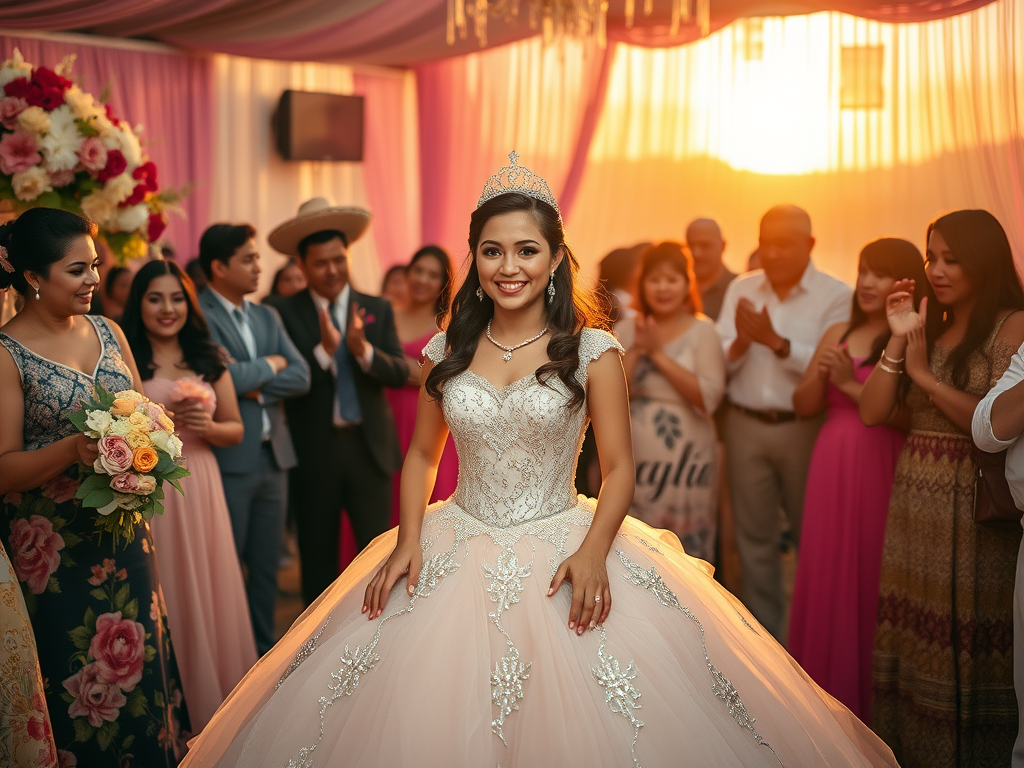

The quinceañera is often reduced to a sweet sixteen on steroids, a princess party with a Spanish soundtrack. But for Latinx families, it’s so much more—it’s a rite of passage, a declaration of cultural identity, and a complex negotiation between tradition and modernity that reflects larger conversations about what it means to be Latina in America.
The Historical Roots
The quinceañera tradition is often traced to Mesoamerican coming-of-age rituals, though historians also tie it to Spanish and European court traditions, where girls’ transition into womanhood was marked with specific rituals and celebrations. When Spanish colonizers arrived, they merged these indigenous practices with Catholic traditions, creating the modern quinceañera.
Traditionally, the celebration marked a girl’s 15th birthday as the moment she transitioned from childhood to womanhood, signaling her readiness for marriage and adult responsibilities. The religious mass emphasized her commitment to faith and community, while the reception celebrated her family’s ability to throw a party that demonstrated their social standing.
In many ways, the quinceañera was less about the girl herself and more about family honor, religious devotion, and reinforcing traditional gender roles. The girl was presented to society as a woman, expected to embody specific ideals of femininity, modesty, and domesticity.
What It Means Today
For contemporary Latinx families, the quinceañera has evolved while maintaining its cultural significance. It’s still a major milestone, but the emphasis has shifted. Today’s quinceañeras are more likely to focus on the girl’s personal growth, achievements, and future aspirations rather than just her availability for marriage.
Many families see the quinceañera as a way to maintain cultural connections in a country that often pressures immigrants and their descendants to assimilate. Planning the event involves learning about family history, connecting with extended relatives, and participating in traditions that might otherwise fade away.
For girls, especially those raised in predominantly non-Latinx communities, the quinceañera can be a powerful affirmation of their identity. It’s a moment when their culture is centered and celebrated rather than marginalized or exoticized.
The Planning and the Politics
Let’s talk about what planning a quinceañera actually involves. There’s the church ceremony, which requires months of preparation including catechism classes if the girl hasn’t been confirmed. There’s selecting the court of honor (damas and chambelanes), choosing dresses, booking venues, hiring photographers and videographers, arranging for food and entertainment, and organizing the reception’s choreographed dances.
It’s expensive—often $10,000 to $30,000 or more for an elaborate celebration. For working-class families, this can represent a significant financial strain. Some families start saving from the moment their daughter is born. Others rely on padrinos (godparents) who sponsor different elements of the celebration as a way of demonstrating support and maintaining community bonds.
Critics argue that the money could be better spent on the girl’s education or future. Supporters counter that cultural traditions have value beyond economics and that the celebration creates memories and community connections that last a lifetime.
This tension—between honoring tradition and making practical decisions—plays out differently in every family. Some opt for smaller celebrations or “quinceañera-themed” parties without the full traditional elements. Others go all in, seeing it as a once-in-a-lifetime opportunity.
The Evolution of the Celebration
Modern quinceañeras are breaking from tradition in creative ways. Some girls skip the religious ceremony entirely, especially in non-Catholic or secular families. Others replace the mass with community service projects, using the celebration to give back rather than just receive attention.
The traditional waltz with family members is sometimes swapped for hip-hop choreography or reggaeton routines. The princess-style ball gown might be replaced with a suit if the quinceañera identifies as non-binary or simply prefers a different aesthetic. Some celebrations incorporate elements from other cultural traditions, reflecting mixed heritage families.
Destination quinceañeras are becoming more common, with families traveling to ancestral hometowns or beach resorts. Some combine the quinceañera with a trip that has educational value, like visiting historical sites or participating in cultural programs.
The rise of social media has also changed quinceañeras. Professional photographers and videographers are standard, and many celebrations include hashtags, Instagram-worthy moments, and viral dance routines. This visibility has both amplified Latinx culture and invited criticism about commercialization and showiness.
Gender and Modern Womanhood
Here’s where things get complicated. The traditional quinceañera is steeped in patriarchal values: the father presenting his daughter to society, the emphasis on purity and modesty, the symbolic transition to marriageability. For feminists, especially young feminists, these elements can feel regressive.
Some families are adapting the celebration to reflect more progressive values. Instead of the father’s speech being about protection and guidance, it might focus on the girl’s independence and achievements. The religious ceremony might emphasize service and justice rather than obedience and submission.
But there’s tension here too. Rejecting traditional elements can be seen as rejecting culture itself, especially by older family members who view the quinceañera as an important link to their heritage. Navigating these conversations requires balancing respect for elders with authenticity to oneself.
For LGBTQIA+ Latinx youth, the quinceañera can be particularly fraught. Some families refuse to honor trans girls or non-binary youth with a celebration. Others adapt the tradition, using it as an opportunity to affirm their child’s identity and demonstrate that cultural tradition and LGBTQIA+ identity aren’t mutually exclusive.
Class and Cultural Capital
The quinceañera has become a marker of class and cultural identity in complex ways. Elaborate celebrations can be a way for immigrant families to demonstrate their success and integration while maintaining cultural distinctiveness. But they can also create pressure and competition, with families feeling obligated to match or exceed others’ celebrations.
There’s also the question of who gets to have a quinceañera. In working-class communities, some families simply can’t afford it, creating feelings of exclusion or inadequacy for girls who don’t get to participate in this cultural milestone. In wealthier Latinx communities, quinceañeras can become status symbols, with families competing over venue, designer dresses, and celebrity appearances.
The commercialization of quinceañeras has created an entire industry—boutiques, event planners, choreographers, and vendors specifically catering to these celebrations. While this provides economic opportunities, it also raises questions about authenticity and accessibility.
Why It Still Matters
Despite the debates and tensions, the quinceañera endures because it serves multiple purposes. It’s a celebration of family and community, a public affirmation of cultural identity, and a moment when a young person is recognized and honored by those who matter most.
For girls transitioning into young adulthood, the quinceañera can be empowering. It’s a day when they’re centered, when their growth is acknowledged, and when they’re surrounded by love and support. The preparation process—learning dances, making decisions about the celebration, giving a speech—builds confidence and skills.
For families, especially immigrant families, the quinceañera is a way of saying: we’re here, our culture matters, and we’re raising our children to honor where they come from while embracing where they’re going.
Reimagining Tradition
The future of the quinceañera will likely involve continued evolution. More families will adapt the tradition to reflect their values, incorporate modern elements, and challenge aspects that no longer serve. Some will abandon it entirely; others will hold fast to traditional forms.
What matters is that Latinx families get to make these decisions for themselves without judgment from outsiders who don’t understand the cultural significance or from community members who police authenticity.
The quinceañera, like all cultural traditions, is a living practice—one that each generation interprets, challenges, and makes their own. And that’s exactly as it should be.
Keep reading: Latinx Mental Health and Familismo · Latinx in the South: Growing Communities · What If You’re White But Don’t Feel Like You Have a Culture?