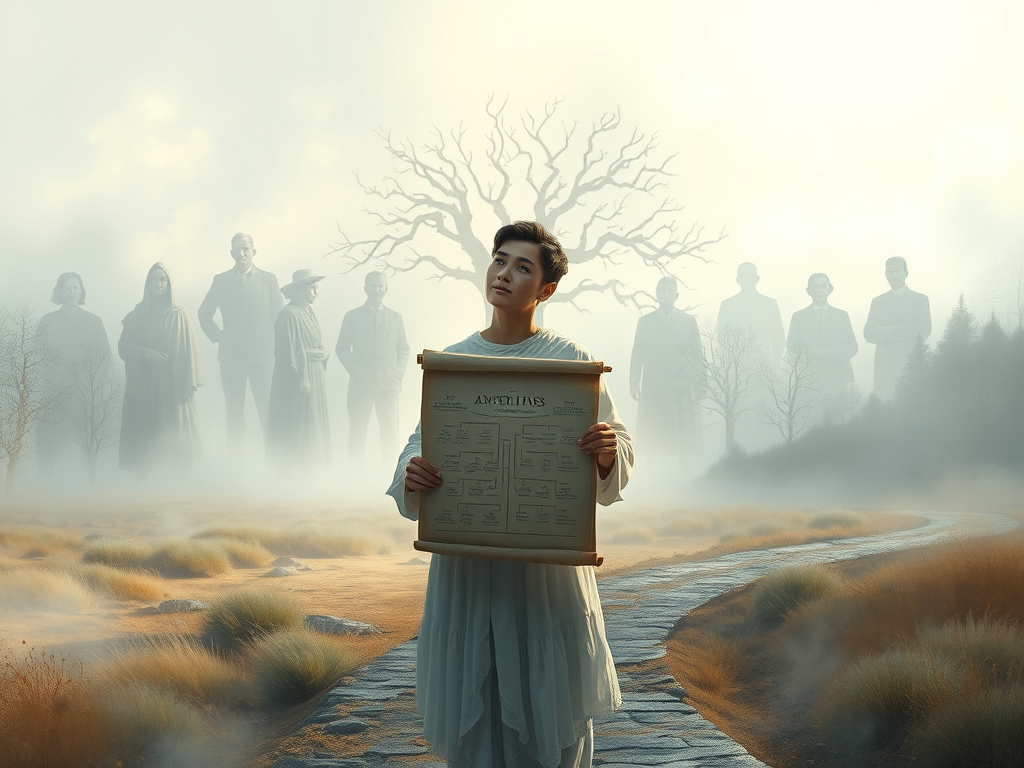

You’ve probably felt it before—that strange hollowness when someone asks about your heritage, your traditions, your cultural background. You pause. You might say “I’m just… white” or list off a few European countries like a menu you can’t quite taste. Maybe you’ve watched friends celebrate vibrant cultural holidays, speak beautiful languages with their grandparents, or cook recipes passed down through generations, and felt a quiet ache you couldn’t name.
You’re not imagining it. That emptiness is real, and it has a history.
The Myth of Default
Somewhere along the way, “white” became synonymous with “default”—the neutral, the standard, the baseline against which everyone else is measured. But here’s the truth: white isn’t a culture. It never was. It’s a political category that was created to consolidate power, to draw lines between who belonged and who didn’t, who could own property and who could be property.
Your actual ancestors didn’t think of themselves as “white.” They were Irish Catholics fleeing famine, Italian fishermen building new lives in hostile cities, Polish farmers who couldn’t read the signs in their new country, Greek Orthodox families maintaining ancient rituals in a Protestant land. They had cultures—rich, specific, complicated cultures with their own languages, foods, music, stories, and ways of being in the world.
But assimilation demanded they trade all of that for admission into “whiteness.” And several generations later, you’re left holding the bag—or rather, holding nothing at all.
The Cost of Admission
Becoming “white” in America required cultural amnesia. Names weren’t actually changed at Ellis Island (that’s a myth). More often, families changed them later, sometimes children embarrassed by their parents’ accents. Languages were abandoned, sometimes forcibly, as schools punished students for speaking anything but English. Traditional foods were mocked as peasant fare, too garlicky, too foreign, too other. Religious practices that didn’t fit Protestant norms were quietly dropped or practiced only in private.
Each generation gave up a little more, believing they were doing their children a favor. Blend in. Don’t make waves. Be American. And for a while, it worked. Your grandparents or great-grandparents got better jobs, moved to better neighborhoods, sent their kids to college. They achieved the American Dream by leaving their culture behind.
But now you’re standing in the inheritance of that trade-off, and it feels less like a dream and more like a theft.
The Permission You Don’t Need
Here’s something important: you don’t need anyone’s permission to feel this loss. You don’t need to prove your grief is valid or compare your cultural emptiness to someone else’s struggle. The fact that you have white privilege in America doesn’t mean you can’t also feel unmoored from any meaningful cultural identity.
These two things can be true at the same time: you benefit from racial privilege in a society structured by white supremacy, AND you have been robbed of the specific cultural heritage that could have given you roots, language, belonging, and meaning.
One doesn’t cancel out the other. Your privilege doesn’t make the hollowness less real. It just means you have the responsibility to name it accurately and not appropriate someone else’s culture to fill the void.
What Culture Isn’t
Before you go looking for what you’ve lost, it’s worth understanding what culture isn’t.
Culture isn’t genetic. You can’t find it in a DNA test, though 23andMe will try to sell you percentages. Culture is learned, practiced, lived. It’s the songs your grandmother sang while cooking, the prayers your grandfather knew by heart, the stories that shaped how your family understood the world.
Culture isn’t consumption. Buying Irish whiskey or hanging an Italian flag doesn’t reconnect you to anything real. Neither does getting a tattoo in a language you don’t speak or wearing traditional clothing to a music festival. That’s tourism, not belonging.
Culture isn’t racial identity. “White culture” as it exists in America is largely about dominance, about being the norm against which others are measured. That’s not heritage—that’s hierarchy. The culture you’re looking for existed before whiteness, in the specific places and practices your ancestors left behind.
What You Can Reclaim
The good news is that cultural reclamation is possible, even three or four generations removed from the source. It’s harder than inheriting it intact, and it will never be exactly what your great-grandparents knew, but it can still be real and meaningful.
Start by asking questions. Who in your family can still tell the old stories? Who remembers the town or village your people came from? What recipes, if any, survived? What holidays were observed, and how? Write it all down before it’s gone.
Learn the language, even if you’ll never be fluent. Duolingo won’t make you a native speaker, but learning even basic phrases connects you to the way your ancestors thought and expressed themselves. Languages carry worldviews; recovering the language helps recover the perspective.
Cook the food. Track down traditional recipes and learn to make them. Food is memory made tangible. The smell of slow-cooked tomato sauce or fresh-baked soda bread can unlock something in you that words never could.
Study the history—not just the glossy immigrant success stories, but the real, complicated truth of who your people were, how they survived, what they sacrificed, and what they carried with them even as they tried to leave it behind.
Find community. Whether it’s a cultural organization, a language class, or a heritage festival, connecting with others who share your background can help you build something new from the fragments that remain.
Building New Traditions
You might discover that what’s left of your heritage is just scraps—a few words, a recipe or two, some old photographs, a last name that’s been anglicized almost beyond recognition. That’s okay. You can build from scraps.
Cultural revival doesn’t mean perfectly reconstructing the past. It means taking what’s left, honoring it, learning from it, and creating something living that works for your life now. Maybe you can’t speak fluent Polish, but you can name your daughter after your great-grandmother. Maybe you don’t remember all the words to your grandfather’s prayers, but you can light the same kind of candles he did.
You can create new traditions that honor the old ones—Sunday dinners with foods from your heritage, annual trips to the regions your family came from, teaching your children the few phrases you’ve learned, telling them stories about who they came from and what was lost along the way.
The Responsibility That Comes With It
As you reclaim your heritage, remember this: your cultural rootlessness is real, but it’s not the same as the systematic oppression faced by communities of color. Don’t use your cultural revival as a way to center yourself in conversations about race or to claim a minority status you don’t have.
You can honor your Italian grandparents without pretending Italian Americans face the same barriers as Black Americans. You can learn Irish Gaelic without comparing the Irish experience to ongoing Indigenous genocide. You can celebrate your Polish heritage without claiming you’re oppressed.
Your cultural work should lead you toward deeper empathy and solidarity with other marginalized communities, not toward competition or resentment.
The Difference It Makes
Knowing where you come from changes how you move through the world. It gives you substance, complexity, history. It helps you understand that you’re not just “white”—you’re the descendant of specific people who made specific choices, who survived specific hardships, who carried specific dreams.
It won’t solve everything. You’ll still benefit from racial privilege in America. You’ll still have to reckon with how your ancestors’ whiteness was used as a weapon against others. But you’ll do that reckoning from a place of cultural rootedness rather than defensive emptiness.
And maybe, just maybe, you’ll be able to answer the question “what’s your cultural background?” with something real—something that connects you to the complicated, beautiful, difficult story of who your people actually were, before they became “just white.”
That story is yours. It always was. You just have to be willing to go looking for it.
Keep reading: Tex-Mex, Cuban, and Regional Latinx Cuisines · Latinx Voting Power and Political Mobilization · Domestic Workers’ Rights in Latinx Communities