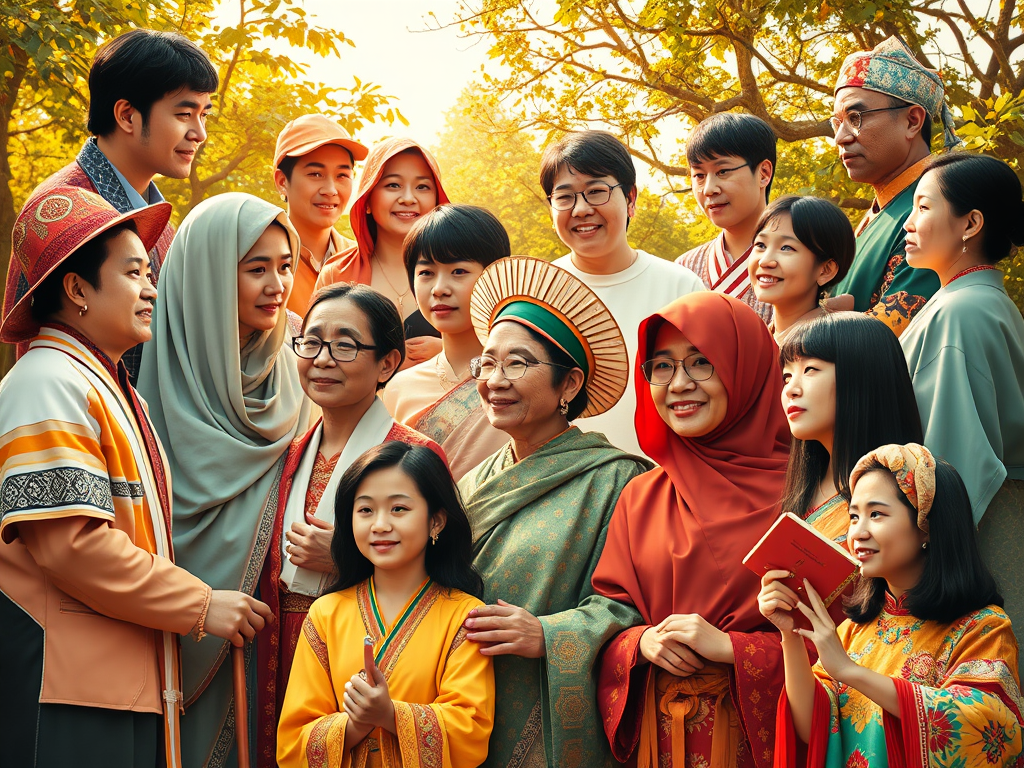

You’ve heard it before: “Asian American and Pacific Islander community.” Like we’re all one big happy family with the same experiences, struggles, and dreams. Spoiler alert—we’re not.
The AAPI umbrella covers more than 50 ethnic groups, dozens of languages, and a spectrum of experiences that range from multigenerational wealth to refugee survival. Lumping us all together doesn’t just erase our differences—it obscures the specific challenges each community faces and makes it easier for systems to ignore us.
The Numbers Tell a Story
When people talk about “Asian Americans,” they’re usually picturing East Asians—Chinese, Japanese, Korean. But that’s only part of the picture. South Asians (Indian, Pakistani, Bangladeshi, Nepali) make up a massive portion of the community. Southeast Asians (Vietnamese, Cambodian, Laotian, Thai, Filipino, Indonesian) have completely different immigration histories and socioeconomic realities. And Pacific Islanders (Native Hawaiian, Samoan, Tongan, Chamorro) often get erased entirely from the conversation.
According to Pew Research Center, the median household income for Indian Americans is around $119,000. For Bangladeshi Americans, it’s closer to $50,000. Lumping those experiences together under “AAPI” hides the fact that some communities are thriving while others are struggling.
Immigration Status Matters
Not all of us came here the same way. Some AAPI families have been in the U.S. for generations. Others arrived as refugees fleeing war and genocide. Some came on H-1B visas with advanced degrees. Others crossed borders seeking asylum.
The Vietnamese, Cambodian, and Laotian communities largely came as refugees after the Vietnam War, often with nothing but the clothes on their backs. Many are still dealing with the trauma of war, displacement, and poverty. Meanwhile, the stereotype of the “successful Asian” ignores their reality completely.
Filipino Americans have a unique colonial relationship with the U.S., having been under American rule for decades. Chinese and Japanese Americans faced exclusion acts and incarceration camps. South Asians often navigate post-9/11 Islamophobia regardless of their actual religion.
These aren’t minor details—they’re foundational to understanding our communities.
Language and Culture Aren’t Universal
There’s no single “Asian language” or “Asian culture.” A Korean American in Los Angeles has about as much in common with a Tongan American in Utah as an Irish American has with a Greek American, which is to say not much beyond how outsiders categorize them.
The foods we eat, the religions we practice, the values we hold, the languages we speak—they’re all different. Grouping us together erases those distinctions and makes it easier to apply lazy stereotypes.
The Model Minority Myth Doesn’t Serve Anyone
The myth that all AAPI people are high-achieving, well-educated, and financially successful doesn’t just harm other communities—it harms us too. It hides the poverty, mental health struggles, and educational gaps within our communities. It pits us against other marginalized groups. And it lets institutions off the hook for providing real support.
Southeast Asian Americans have some of the highest poverty rates of any demographic. Pacific Islanders face significant health disparities and lower educational attainment. But because the data gets aggregated under “AAPI,” those realities disappear.
What Needs to Change
We need disaggregated data. When schools, governments, and organizations collect information about AAPI communities, they need to break it down by ethnicity. Otherwise, the needs of smaller, struggling communities get buried under the success of larger, more established ones.
We need to tell our own stories. Don’t let people collapse your identity into a convenient box. If you’re Hmong, say Hmong. If you’re Samoan, say Samoan. If you’re Pakistani, say Pakistani. Specificity matters.
We need solidarity without erasure. Yes, there’s power in coalition-building under the AAPI umbrella. But that only works if we acknowledge our differences and make sure every voice gets heard.
Moving Forward
Being part of the AAPI community doesn’t mean abandoning your specific identity. It means standing together while honoring what makes each of us unique. It means fighting for policies that help all our communities, not just the ones already doing well. It means refusing to let systems use our diversity as an excuse to ignore our struggles.
You’re not a monolith. Your community isn’t a monolith. And it’s time the world started treating us that way.
Keep reading: The Model Minority Myth and Its Deadly Consequences · Southeast Asian American Experiences Often Ignored · Pacific Islander Identity and Colonial Erasure