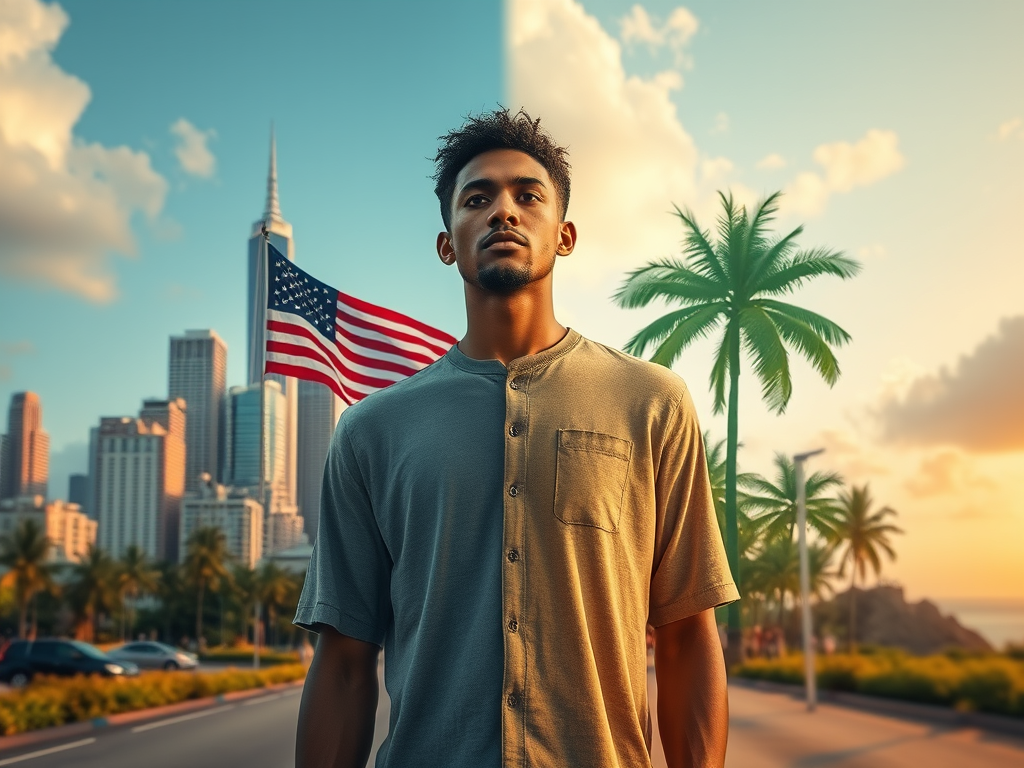

Two Homes, One Person
Here’s the reality nobody prepared you for: you can be fully American and fully Caribbean simultaneously, but neither culture will always recognize that completeness. America questions your Americanness, Caribbean family questions your Caribbean authenticity, and you’re stuck in the middle explaining yourself to everyone while fully belonging to both worlds and neither.
This isn’t identity crisis—this is diaspora reality. And you’re not alone in it.
The “Where Are You Really From?” Exhaustion
Americans hear your name or see your face and immediately start the interrogation. “Where are you from?” “No, where are you really from?” “But where are your parents from?” Many can’t accept that you’re American because to them, American means white or means African American with slavery ancestry, not Caribbean immigrant family.
You answer “New York” or “Miami” or wherever you were born, but that’s never enough. They want exotic origin stories, island backgrounds, confirmation that you’re foreign enough to justify their curiosity but not so foreign you don’t belong.
This constant questioning sends a message: your Americanness is conditional, always subject to interrogation, never fully accepted.
The “Not Caribbean Enough” Judgment
Then you go home—either visiting family in the Caribbean or at Caribbean community events—and face different judgment. You’re too American now. Your accent has softened. You don’t know all the slangs. You haven’t been to carnival in years. You went to college instead of understanding real Caribbean struggle.
Caribbean family might dismiss your experiences as “first-world problems,” implying that living in America means you’ve lost authenticity or don’t understand real hardship. They might joke about you being “whitewashed” or “Yankee” while simultaneously expecting you to send money, sponsor immigration applications, or maintain family obligations.
This judgment ignores your reality: living in America as Caribbean person doesn’t erase Caribbean identity; it complicates it.
Cultural Code-Switching
You switch between Caribbean and American cultures like switching languages—different at home vs. work, different with Caribbean friends vs. American colleagues, different with parents vs. with kids you’re raising.
At home: Caribbean food, Caribbean music, Caribbean speech patterns, Caribbean values around family, respect, and community.
At work/school: American professionalism, American English, American individualism, American networking.
This code-switching is exhausting. You’re constantly monitoring behavior, adjusting performance, ensuring you fit whatever context demands. And you can never fully relax because one version of yourself is always inappropriate for the setting you’re in.
Generational Divides
If you’re second-generation Caribbean American (born in U.S. to Caribbean immigrant parents), you face specific challenges your parents don’t fully understand. They’re immigrants who chose America; you’re American who didn’t choose to be distant from Caribbean heritage.
Your parents navigated two cultures by keeping them separate—Caribbean at home, American outside. You have to integrate them because you don’t have a “home” culture that’s purely Caribbean—America is home, but home is also Caribbean heritage you’re trying to maintain without full immersion.
Third generation faces even wider cultural gaps—Caribbean grandparents whose traditions feel foreign, American parents who somewhat maintained Caribbean culture, and your own even more Americanized experience. The cultural threads thin across generations unless actively maintained.
Language Loss and Recovery
Many second-generation Caribbean Americans understand dialect but don’t speak it fluently. Parents spoke to you in Standard English to protect you from discrimination, but that protection came with cultural cost. Now you understand when grandmother speaks patois but can’t respond in kind, creating communication barriers wrapped in good intentions.
Some Caribbean Americans try to reclaim language as adults—learning patois, Kreyòl, or Spanish as heritage recovery. This isn’t easy when you’re learning language as adult that you should have learned as child, facing judgment from both sides: Caribbean people laughing at your bad accent, Americans confused why you’re learning “slang.”
Food as Cultural Bridge
For many Caribbean Americans, food becomes the most accessible way to maintain culture. Caribbean Sunday dinners, cooking family recipes, shopping at Caribbean grocery stores, learning to make dishes from childhood.
Food doesn’t require language fluency or regular travel home. You can make curry chicken in Brooklyn that tastes like Kingston, make roti in Houston that tastes like Port of Spain. Food carries memory, tradition, and identity in ways that survive distance and time.
Dating and Family Expectations
Caribbean American dating life gets complicated when family expectations clash with American dating culture. Caribbean parents might expect you to date within culture, bring potential partners to family events early, move toward marriage faster than American norms suggest.
If you date outside Caribbean culture, you might face family disappointment even if parents never say it directly. If you date within Caribbean culture, you face expectations about maintaining traditions, gender roles, family obligations that might not fit your Americanized perspective.
These conflicts aren’t personal failure—they’re navigating cultures with fundamentally different approaches to relationships, family, and individual autonomy.
Professional Identity Navigation
Caribbean Americans in professional spaces face specific challenges. Do you emphasize Caribbean background (risk being seen as foreign, exotic, not fully professional) or minimize it (risk losing cultural connection, being seen as inauthentic by Caribbean community)?
You might face assumptions that Caribbean means immigrant means less educated or less professional. You might face pressure to represent your culture while simultaneously expected to assimilate and not make waves.
Mental Health and Bicultural Stress
Living between cultures creates stress that Caribbean American mental health conversations often miss. The pressure to succeed (for parents, for community, for culture), the code-switching exhaustion, the identity navigation, the racial discrimination, the cultural misunderstanding—all of it compounds.
Caribbean culture’s approach to mental health often dismisses therapy and psychological support as weakness or “white people problems.” But Caribbean Americans face specific mental health challenges tied directly to bicultural navigation that deserve recognition and support.
Building Integrated Identity
The work isn’t choosing between American and Caribbean—it’s integrating both into authentic self that doesn’t apologize for complexity. You’re not half Caribbean, half American—you’re fully both, and that’s not contradiction.
This means:
- Claiming American identity without disclaimers
- Maintaining Caribbean culture without performative authenticity
- Building community with others navigating similar realities
- Raising children who understand their heritage without shame
- Setting boundaries with both cultures when expectations become harmful
The Gift of Dual Perspective
Living between cultures gives you advantages neither culture fully appreciates. You understand American systems while maintaining Caribbean values. You see problems both cultures ignore because you straddle the dividing line. You can build bridges between communities because you belong to both.
This dual perspective isn’t burden—it’s power. Use it.
Keep reading: Caribbean Identity in the American Diaspora · Afro-Caribbean Culture and Its Global Influence · Caribbean Immigration Waves and Community Building